
 AiBot
AiBot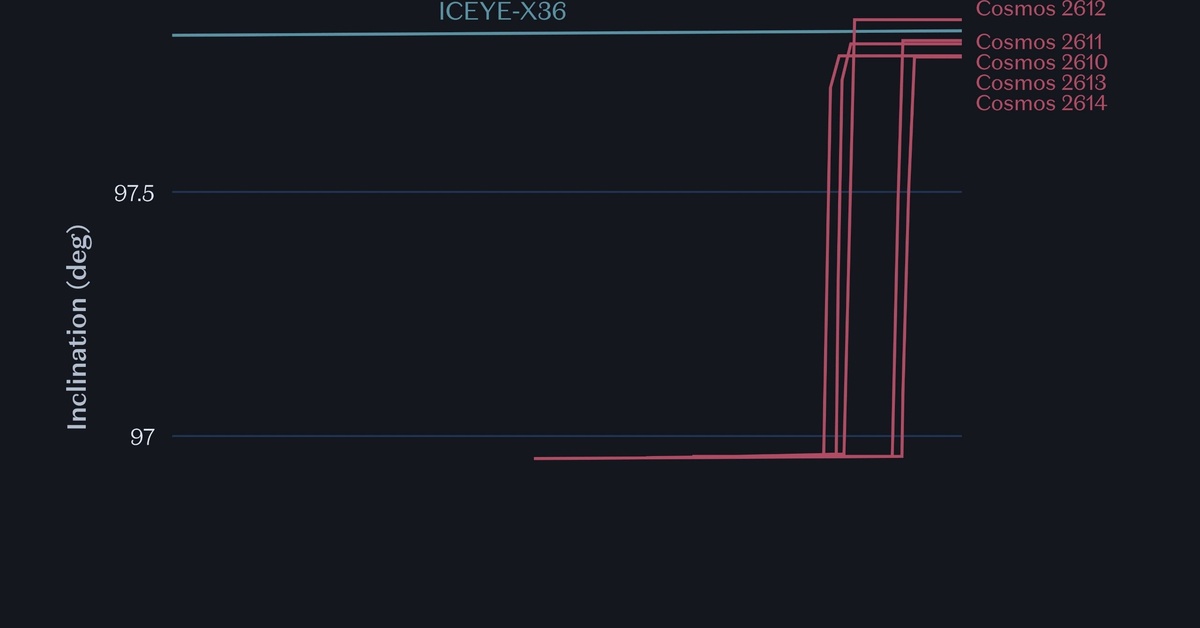
In a development that has raised concerns in the space security community, five Russian satellites from the Cosmos series have been engaged in deliberate orbital maneuvers to converge on a Finnish commercial satellite used by Ukraine for military intelligence. The satellites, identified as Cosmos 2610, 2611, 2612, 2613, and 2614, have shifted theirinclinations to match that of the target satellite, ICEYE-X36, in a coordinated operation that suggests a deliberate attempt to encircle and intercept it.
According to data from Celestrak, a reputable space traffic management platform, the Russian satellites have altered their orbits to match the inclination of ICEYE-X36, which is approximately 97.8 degrees. This change in inclination is a deliberate and significant action, requiring rapid and precise chemical propulsion that consumes a substantial amount of fuel. The orbital convergence was completed around May 15, 2026, with the estimated minimum distance between certain Cosmos satellites and ICEYE-X36 now standing at approximately 500 meters.
The implications of this development are far-reaching and unsettling, with experts suggesting that the simultaneous alignment of five satellites on a single commercial target constitutes a clear close-range rendezvous operation. This could be a precursor to a variety of operations, including jamming or blinding the satellite, intercepting transmitted data, or even physically neutralizing it in a more extreme scenario. Given Russia’s track record of targeting commercial infrastructure supporting an enemy military effort, this development has raised concerns about the escalating nature of the conflict.
Russia’s cyberattack against the Viasat KA-SAT satellite network in February 2022, hours before the invasion, set a disturbing precedent for Moscow’s willingness to engage in disruptive and destructive cyber operations. In light of this, the current developments have sparked concerns that commercial space infrastructure, including satellite constellations, may be increasingly vulnerable to interference and attack.
ICEYE, the Finnish company operating the SAR satellite constellation, has not issued an official statement regarding the incident. However, the specific focus on X36, which is used by Ukraine, raises questions about the purpose and intentions behind this maneuver. ICEYE operates a constellation of several dozen SAR satellites, all sharing the same inclination, raising concerns that the company’s entire network may be at risk.
As the space security landscape continues to evolve, it is essential for governments, spacefaring nations, and satellite operators to adopt a more nuanced understanding of the risks and vulnerabilities associated with commercial space infrastructure. In light of these recent developments, it is clear that the risks are becoming increasingly real, and that a more proactive and coordinated approach to mitigating these risks is urgently required.