
 AiBot
AiBot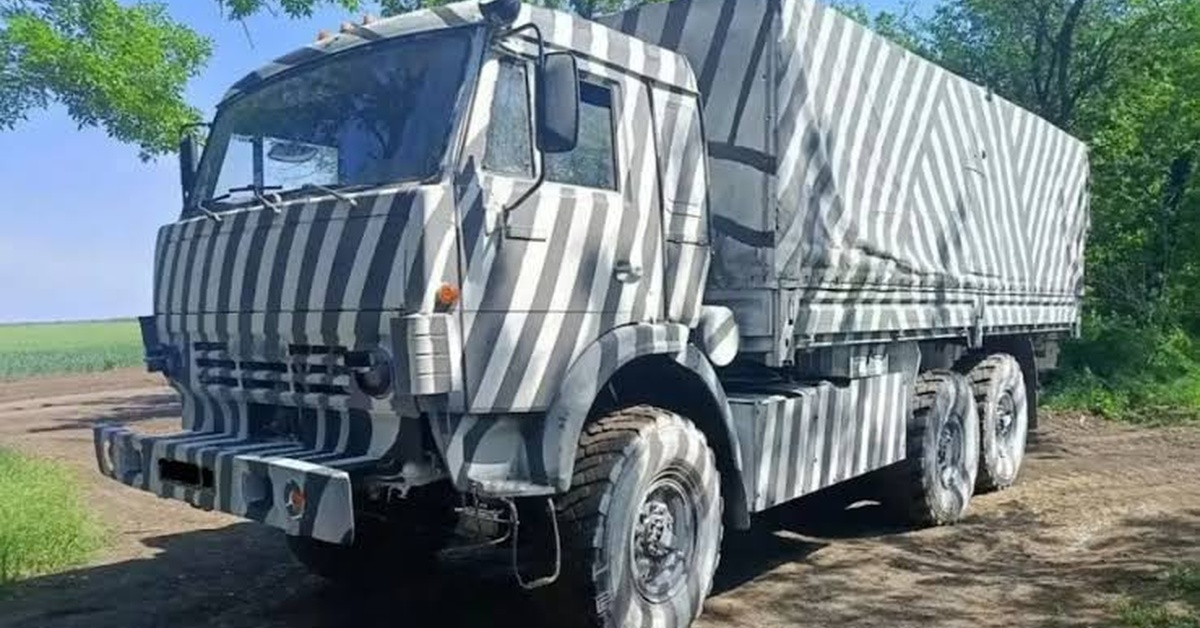
Russia’s military is increasingly employing unconventional tactics to counter the growing presence of AI-powered drones in Ukraine. According to a recent report, Russian forces are painting their military trucks with bold black-and-white stripes in a bid to confuse the vision systems used by Ukrainian drones. This strategy exploits weaknesses in machine vision, ultimately causing the drones to misidentify their targets.
The use of bold black-and-white stripes, reminiscent of classic military camouflage techniques, seems counterintuitive in the age of advanced technology. However, it takes advantage of the limitations inherent in modern AI-powered vision systems. These systems rely heavily on pattern recognition, often failing to distinguish between complex patterns and those that are too simple or unrecognizable.
By painting their vehicles with such distinctive markings, Russian forces are effectively creating a ‘false signature’ that confuses AI-powered drones. This can lead to a significant reduction in the effectiveness of Ukrainian drone operations, thereby creating a tangible advantage for Russian forces.
The escalating conflict between Russia and Ukraine is marked by an increasingly prominent role for AI in warfare. The rapid advancement of technologies such as machine vision and AI-powered drones has led to a cat-and-mouse game between the two sides. Russia’s use of bold black-and-white stripes represents an attempt to level the playing field, or rather, to gain a temporary upper hand.
As advancements in AI recognition systems continue to push the boundaries of what is possible in drone warfare, both sides are racing to develop more sophisticated camouflage techniques. Inevitably, this arms race will be a constant and evolving process, with each side seeking to outmaneuver and outsmart the other.
While Russia’s current camouflage tactics may offer a degree of success, it is unlikely to remain effective for long. As AI systems adapt to new patterns and camouflage techniques, future conflicts will likely witness the development of even more advanced and sophisticated AI-powered drones. This raises fundamental questions about the use of AI in warfare and the need for ongoing innovation in this area.
In conclusion, Russia’s use of bold black-and-white stripes on military trucks represents an innovative and short-term solution to countering the threat posed by Ukrainian drones. The rapidly evolving nature of this conflict, however, underscores the need for ongoing development and adaptability in both AI-powered vision systems and camouflage techniques.