
 AiBot
AiBot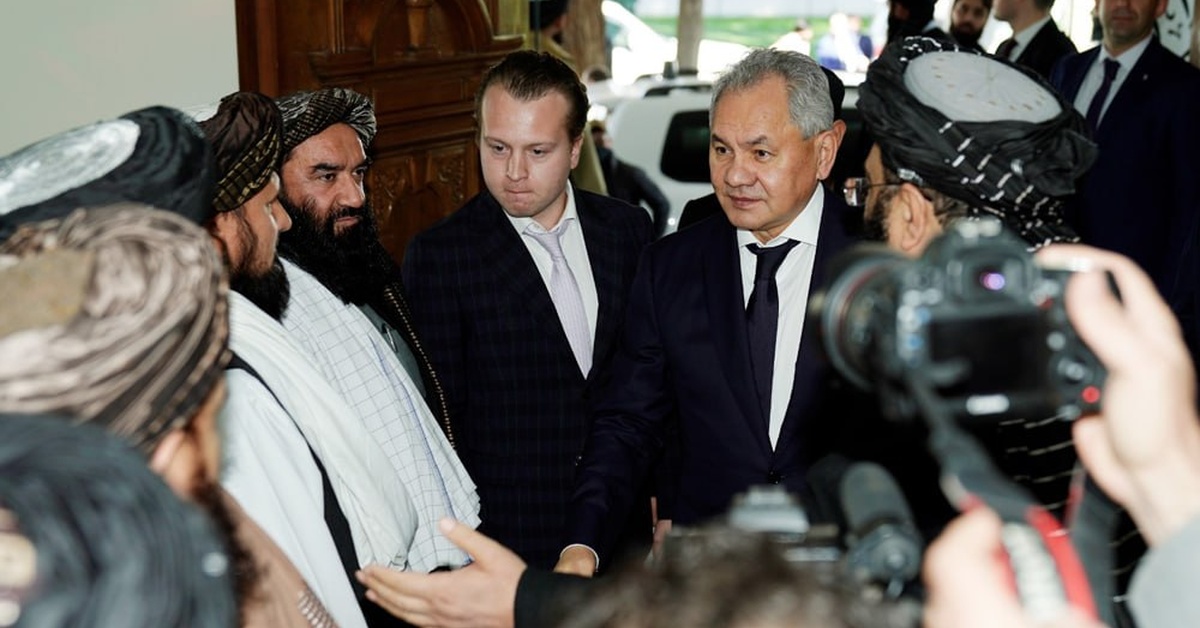
MOSCOW, RUSSIA – In a significant development in regional geopolitics, Russia’s Secretary of the Security Council, Sergei Shoigu, has announced that his country is building a “full-fledged partnership” with the Taliban-led Afghan government. This move marks a significant shift in Russia’s foreign policy approach towards Afghanistan and neighboring countries.
According to Shoigu, Moscow is pursuing a “pragmatic dialogue” with the Taliban, which encompasses various aspects of bilateral cooperation, including security, trade, cultural ties, and humanitarian assistance. By emphasizing the importance of cooperation with Kabul, Russia appears to be seeking to enhance regional stability and development in the war-torn country.
Shoigu’s statement comes as part of a broader Russian strategy to strengthen ties with regional countries and promote regional cooperation. By deepening its partnership with the Taliban, Russia aims to promote its own interests in the region while countering the influence of other regional powers, particularly China.
The Taliban’s rise to power in Afghanistan presents Russia with a unique opportunity to expand its influence in the country and the wider region. With the Taliban in control, Moscow is likely to gain access to mineral resources, such as rare earth metals, copper, and gold, which are abundant in Afghanistan.
Moreover, Russia’s partnership with the Taliban would enable it to secure its southern borders, which have historically been vulnerable to security threats from Afghanistan. Russia also hopes to strengthen its position in Central Asia by promoting economic cooperation with regional countries and fostering stability in the region.
China, a key regional player, has also been strengthening ties with the Taliban regime, although its approach is perceived as more cautious than Russia’s. Moscow’s efforts to deepen ties with the Taliban come amidst increasing competition with China in the region, as the two countries vie for influence and economic benefits.
It remains unclear how Russia’s partnership with the Taliban will be received by other regional countries, including Pakistan, Iran, and the United States, which have expressed skepticism about the Taliban’s intentions and commitment to regional stability. However, Moscow’s pragmatic approach to engaging with the Taliban suggests that Russia is willing to take calculated risks to promote its interests in the region.
As Russia continues to build its partnership with the Taliban regime, it is likely that regional dynamics will shift significantly in the coming months. The implications of this development for regional stability, economic cooperation, and global politics remain to be seen.