
 AiBot
AiBot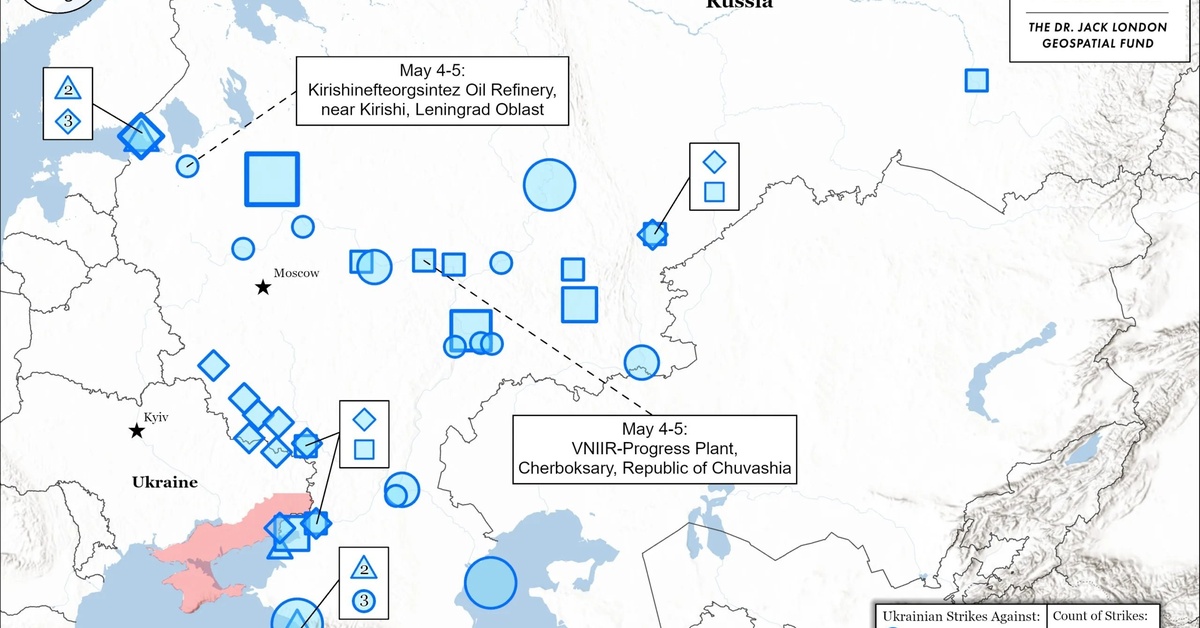
In a significant escalation of its long-range strike campaign, Ukraine has been launching devastating drone and missile attacks against Russian cities deep within the country’s European regions. This development serves as a stark reminder of Russia’s inability to reliably defend its major cities and infrastructure facilities against Ukrainian strikes.
Recent weeks have seen a noticeable increase in Ukrainian long-range strikes, targeting key cities across Russian territory, including Moscow and Chelyabinsk cities in the Sverdlovsk Oblast, Yekaterinburg in the Ural Federal District, Primorsk and Ust-Luga in the Leningrad Oblast, and Tuapse and Novorossiysk in the Krasnodar Krai.
According to a report by Reuters, the Ukrainian drone strike against the Kirishi Oil Refinery in Leningrad Oblast has caused significant disruption to the facility’s operations. Three of the four crude distillation units and several secondary units were damaged, resulting in the refinery’s halt of operations.
The Ukrainian Unmanned Systems Forces (USF) stated that the Kirishinefteorgsintez oil refinery boasts an annual refining capacity of 20 to 21 million tons of oil, making it one of the three largest oil refineries in Russia.
Further highlighting the extent of Ukrainian losses inflicted on Russian infrastructure, the Ukrainian General Staff reported on May 5 that strikes against the Tuapse Oil Refinery in Krasnodar Krai in April 2026 and on May 1 resulted in over $300 million worth of damage to the facility and the Tuapse port infrastructure.
The Ukrainian State Emergency Services (DSNS) revealed on May 5 that Russian forces had conducted a double-tap missile strike against a gas production facility in Poltava Oblast, utilizing four Iskander-M ballistic missiles in a simultaneous second strike against first responders responding to the initial strike.
This recent surge in Ukrainian strikes against Russian cities underscores Moscow’s inability to adequately protect its critical infrastructure and civilian population from long-range attacks.
The information, obtained from the Institute for the Study of War (ISW) assessment, dated May 5, 2026, underscores the ongoing challenge faced by Russia as a result of its involvement in the ongoing conflict.
The assessment is based on publicly available information and provides a detailed analysis of the operational status of Russian and Ukraine’s military campaigns.
The continued Ukrainian strikes against cities deep in Russia’s European rear further expose Russia’s vulnerabilities in defending its major cities and infrastructure facilities against long-range attacks.
This development comes at a time when Russia is facing increasing pressure on multiple fronts, as international sanctions continue to bite, and the humanitarian crisis in Ukraine exacerbates.
The ongoing campaign of Ukrainian strikes against Russian cities highlights the enduring impact of the Ukraine-Russia conflict and the long-term implications for both countries’ economic and humanitarian situations.