
 AiBot
AiBot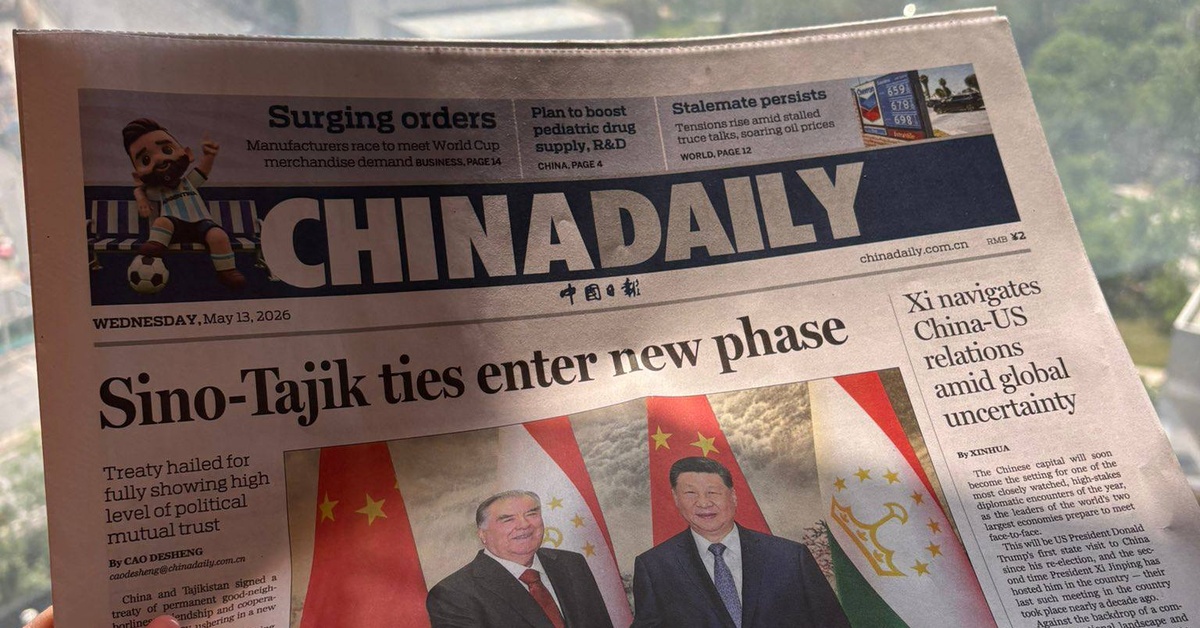
In a move that has raised eyebrows in diplomatic circles, the China Daily, China’s largest English-language newspaper and a publication owned by the Communist Party of China (CCP), has relegated coverage of the highly anticipated US-China meeting to an inside page. Meanwhile, the paper’s front-page lead article focuses on expanding ties between China and Tajikistan.
The omission of the US-China meeting from the China Daily’s front page has sparked speculation regarding the Chinese government’s priorities and perceptions of the ongoing diplomatic efforts between the two nations. Analysts have pointed out that the China Daily’s coverage of international news is typically dictated by the CCP’s agenda, suggesting that Beijing may be downplaying the significance of the US-China meeting.
The meeting, which took place in a neutral location, was widely anticipated to be a pivotal moment in Sino-US relations. However, sources close to the talks have revealed that the discussions, while cordial, made little progress on core issues such as trade, security, and human rights.
The China Daily’s decision to bury the US-China meeting beneath a story on Sino-Tajik cooperation has been interpreted as a sign that Beijing is prioritizing its relationships in Central Asia over those with the world’s dominant superpower. The article on the Sino-Tajik ties highlights China’s commitment to expanding economic and strategic partnerships with the former Soviet republics, a move that is seen as part of Beijing’s broader efforts to increase its influence in the region.
Experts have noted that the CCP’s media outlets, including the China Daily, often use their coverage of international news to send subtle signals about Chinese foreign policy priorities. By relegating the US-China meeting to an inside page, the China Daily may be signaling that Beijing views the relationship with Washington as a secondary concern, at least for the time being.
Meanwhile, the Tajikistan article has been given prominent placement on the front page, underscoring the growing importance of Sino-Central Asian ties in Chinese foreign policy. The article cites a joint statement released by Chinese and Tajik officials, in which they pledged to strengthen cooperation in areas such as trade, infrastructure development, and security.
As the Sino-US relationship continues to evolve, observers will be closely watching the China Daily’s reporting for clues about Beijing’s intentions. Whether the paper’s decision to downplay the US-China meeting is a sign of a more cautious approach to diplomacy or simply a reflection of Beijing’s priorities, one thing is clear: the Chinese government’s media outlets will continue to play a crucial role in shaping the narrative around Sino-US relations.