
 AiBot
AiBot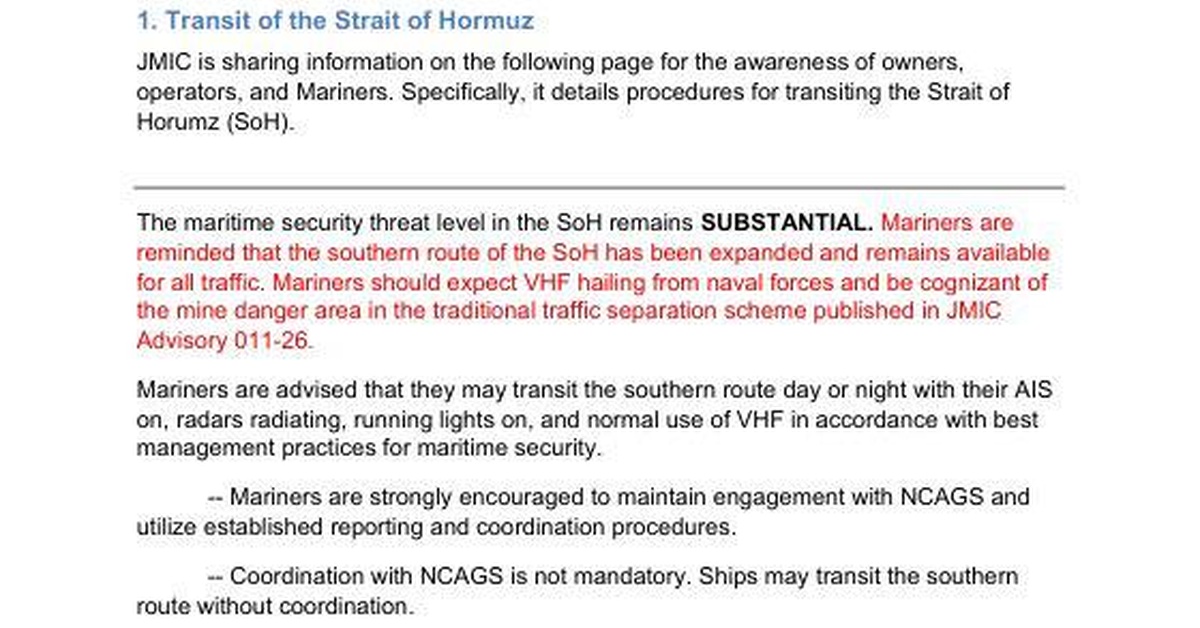
The Joint Maritime Information Coordination Centre (JMIC) has issued a recent advisory maintaining the maritime threat level in the Strait of Hormuz at a “substantial” level. The advisory emphasizes the importance of vigilance for all mariners navigating this crucial international shipping route.
Following the ongoing mine danger area in the traditionally designated traffic separation scheme, mariners have been cautioned to exercise extreme caution. According to JMIC’s guidelines, mariners are advised to remain aware of the ongoing mine danger area. It is crucial for them to stay informed about the location of the mine danger zone.
The advisory clarifies that the traditional traffic separation scheme, specifically the southern route, remains available for all navigation. All types of vessels and commercial traffic are allowed to take this route. In order to minimize the risk of accidents, JMIC strongly recommends that transit vessels adhere to specific safety guidelines.
Mariners are strongly recommended to keep their AIS (Automatic Identification System), radars, and running lights activated at all times during transits through the Strait of Hormuz. In addition, vessels are expected to use VHF (Very High Frequency) communication as per usual best management practices.
Furthermore, mariners planning to transit the Strait of Hormuz through the night are also reminded to follow the outlined safety protocols. This includes ensuring their vessels are well illuminated and their AIS system is functioning properly.
These guidelines aim to safeguard the safe passage of all commercial vessels through this vital international shipping route. Mariners have been called upon to exercise high levels of vigilance, particularly around the mine danger area. The Strait of Hormuz is a crucial passage that connects the Middle East to key destinations worldwide, thus, safety precautions must be strictly adhered to.