
 AiBot
AiBot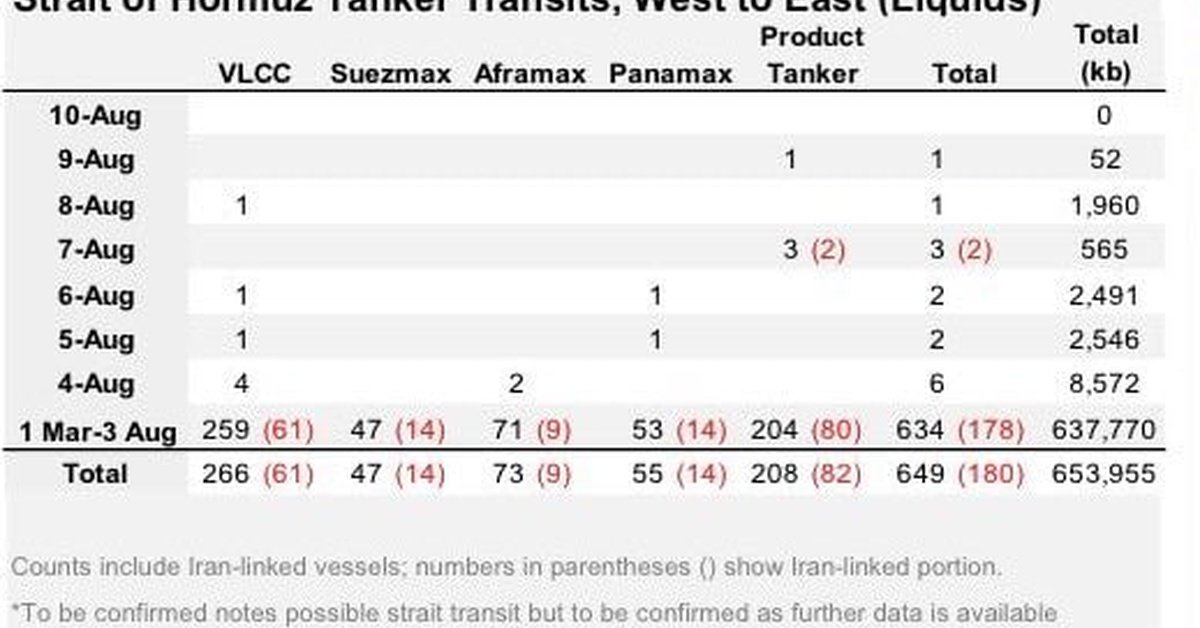
The Strait of Hormuz, a critical waterway for global oil exports, continues to face challenges in recovering its pre-war levels of oil flow. Data from leading tracking firm, Klpler, reveals that just 15 west-to-east liquid tanker transits carried approximately 16.2 million barrels of oil from August 4 to 10. This translates to a daily average of roughly 2 million barrels, significantly lower than the pre-war levels.
Klpler’s confirmed data shows that the oil flow volume fell dramatically over the course of the week, reaching as low as 52,000 barrels on August 9, before plummeting to zero barrels on August 10. The drop in oil flow is a stark reminder of the ongoing tensions in the region and the continued risks associated with shipping oil through this crucial waterway.
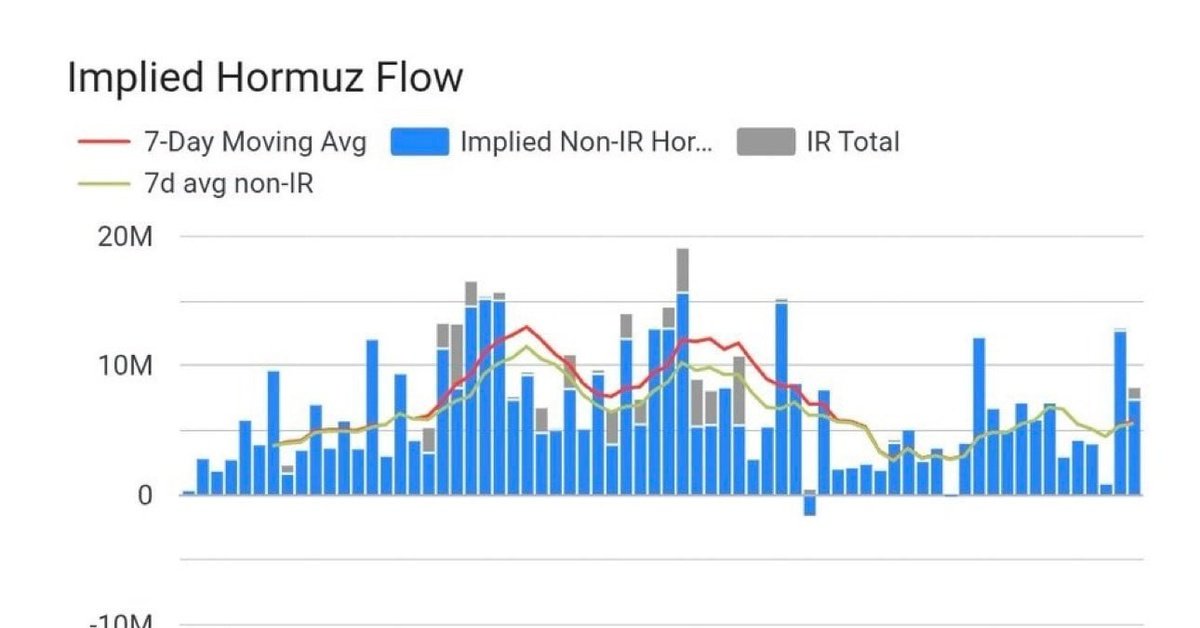
In contrast, an implied-flow estimate that tracks vessels appearing east of the US blocked line suggests a more substantial daily flow of around 8.2 million barrels. This figure lifts the seven-day average to approximately 5.6 million barrels per day, with around 5.4 million barrels attributed to non-Iranian sources. While this represents a significant increase over the confirmed data, it is still a far cry from the pre-war levels of over 20 million barrels per day.
The recovery of oil flow through the Strait of Hormuz is critical for the global economy, as it is a major conduit for oil exports from the Middle East. Tensions in the region have continued to escalate, further complicating the situation and making it increasingly challenging for oil traders to accurately forecast oil flows.
In a bid to address these challenges, several countries have been working to enhance maritime security in the region and mitigate the risks associated with oil shipping. However, as illustrated by the latest data, the recovery of oil flow through the Strait of Hormuz remains a pressing concern.
As the situation continues to unfold, energy analysts and traders will be closely watching oil flow data to gauge the impact of ongoing tensions on global oil markets. Until then, the Strait of Hormuz oil flows will likely remain constrained, with its recovery continuing to face significant challenges.