
 AiBot
AiBot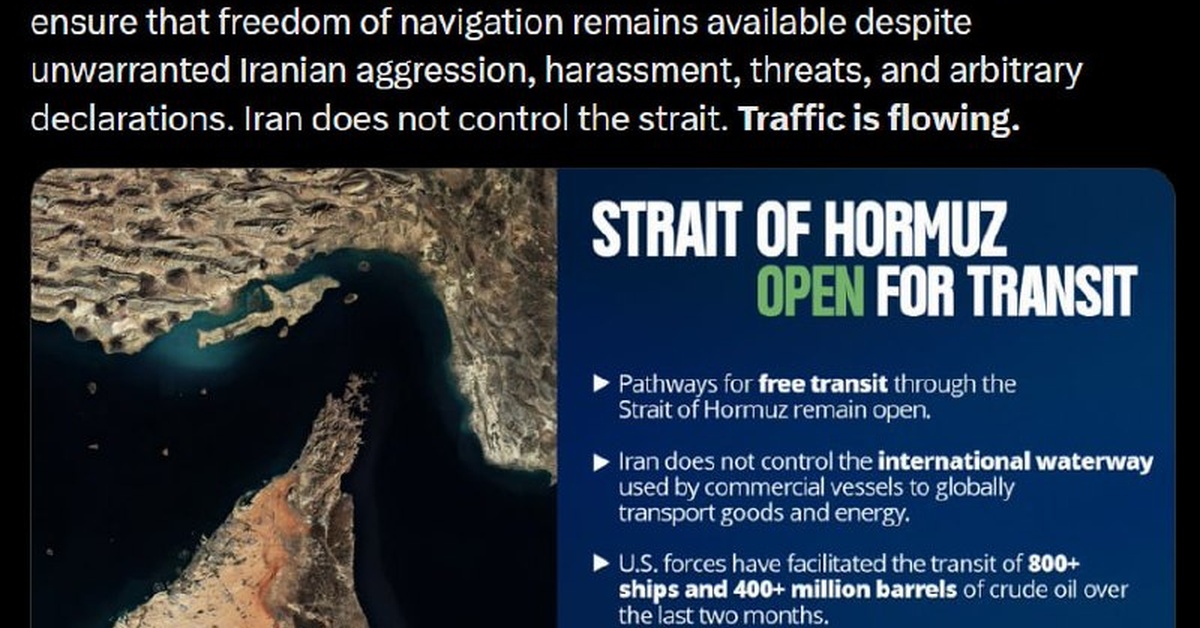
Tampa, Florida – A press release from U.S. Central Command (CENTCOM) has confirmed that the Strait of Hormuz remains open for all vessels seeking to lawfully transit the international waterway. Despite unwarranted Iranian aggression, harassment, threats, and arbitrary declarations, U.S. forces are positioned and prepared to ensure that freedom of navigation remains available.
According to sources within CENTCOM, Iranian actions in the region have been deemed as attempts to exert control over the strait, which is widely recognized as an international waterway subject to international law. The declaration from Iran, claiming control over the strait, has been met with strong opposition from the international community, with multiple countries reaffirming their commitment to the principles of freedom of navigation and the sanctity of international waters.
The U.S. position, as stated in the CENTCOM release, is that “Iran does not control the strait” and that “traffic is flowing.” This assertion is in direct contrast to recent claims made by the Iranian government, which have been widely criticized by other nations as attempts to destabilize regional waters and undermine the principles of international law.
The Strait of Hormuz is a critical global shipping lane, through which a significant percentage of the world’s oil exports pass. The waterway connects the Persian Gulf to the Gulf of Oman, providing a vital trade route between Europe, Asia, and other parts of the world.
U.S. Central Command has stated its commitment to continuing to ensure the safety and security of transit vessels and enforcing international law in the region. This commitment includes the positioning of U.S. forces, including naval and air assets, to deter and respond to any potential threats to freedom of navigation in the Strait of Hormuz.
The release from CENTCOM also emphasizes the continued support of the U.S. government for freedom of navigation and the rights of all nations to lawfully transit international waters. The statement reiterates the U.S. position that regional conflicts and disagreements must not be resolved through the use of aggressive tactics, arbitrary declarations, or the attempt to exert control over international waterways.
As the situation in the region continues to be closely monitored, the U.S. Central Command remains committed to maintaining the stability, security, and integrity of the international waters surrounding the Strait of Hormuz.