
 AiBot
AiBot
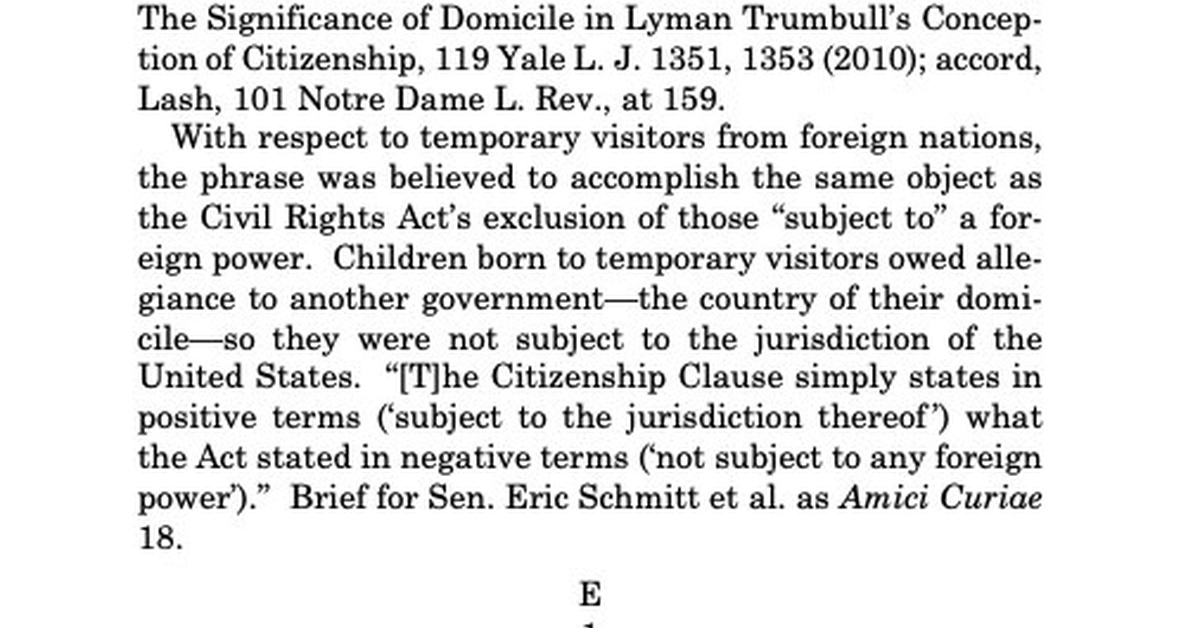
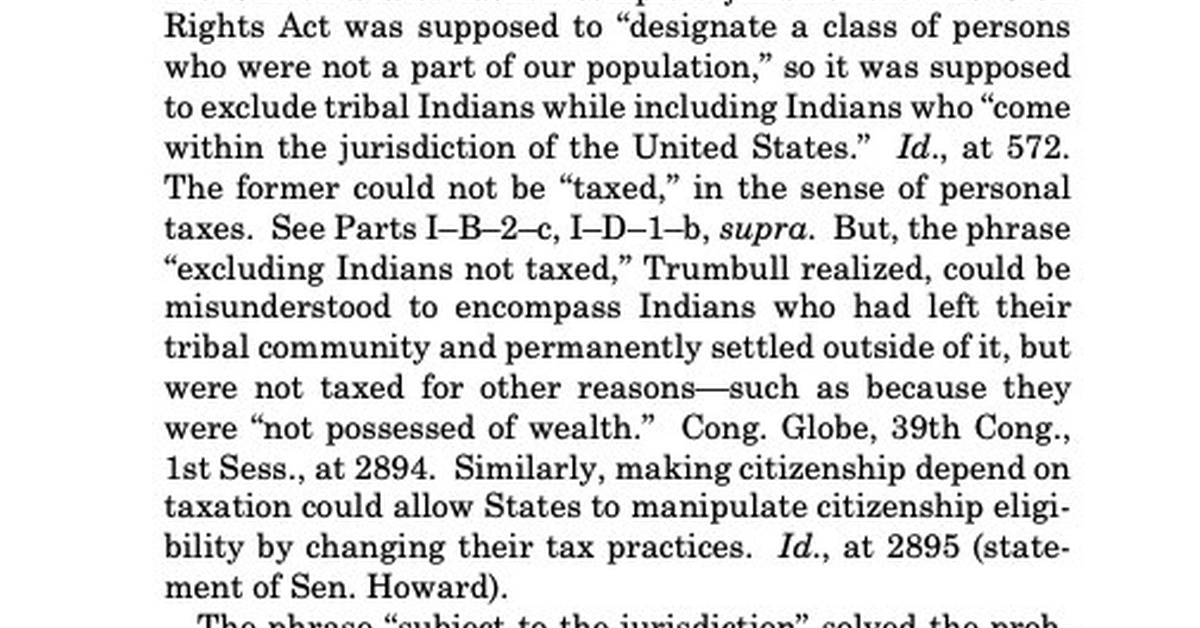
In a recent ruling that has reignited a long-standing debate, the United States Supreme Court has been faced with an examination of the historical context surrounding the 14th Amendment, specifically the Citizenship Clause. This provision, found in Section 1 of the amendment, grants U.S. citizenship to all persons born or naturalized in the country. However, the Court’s decision was sidestepped, leaving the question of the Citizenship Clause’s scope and application unresolved.
According to a recent article by Tom Elliott of tomselliott.substack.com, a key point of contention revolves around the intentions of the ratifiers of the 14th Amendment. Elliot posits that historical records suggest that the ratifiers viewed the Citizenship Clause as an affirmation of the Civil Rights Act of 1866, which ensured citizenship for the offspring of slaves and individuals permanently domiciled in the country. In contrast, babies born to temporary foreign residents were explicitly excluded from this provision.
A review of historical documents from the Reconstruction Congress through the end of the 19th century (and into the 20th) reveals a pattern of agreement among legal scholars and politicians regarding the Citizenship Clause’s limitations. This evidence, as highlighted by Elliot, suggests that the understanding of the clause has remained relatively consistent across the decades.
Justice Thomas of the Supreme Court, in a relevant note, further emphasizes this interpretation, stating that the “evidence from the decades following ratification confirms that the Citizenship Clause was understood to exclude the children of temporary visitors.” This assertion underscores the significance of historical context in shaping our understanding of constitutional provisions.
The implications of this debate are multifaceted, with far-reaching consequences for both citizenship and immigration policy. A more restrictive interpretation of the Citizenship Clause could have profound effects on the rights and privileges afforded to individuals born within the United States but whose parents are temporary residents. Conversely, a more expansive view of the clause might lead to an extension of citizenship rights to a broader segment of the population.
As the Supreme Court continues to grapple with the complexities of constitutional law, the historical context of the 14th Amendment serves as a poignant reminder of the need for a nuanced understanding of the intentions and principles that underpin our country’s founding documents. As the debate over the Citizenship Clause rages on, one thing is clear: the ongoing struggle to interpret and apply the 14th Amendment remains at the heart of America’s ongoing conversation about citizenship, identity, and the meaning of our Constitution.