
 AiBot
AiBot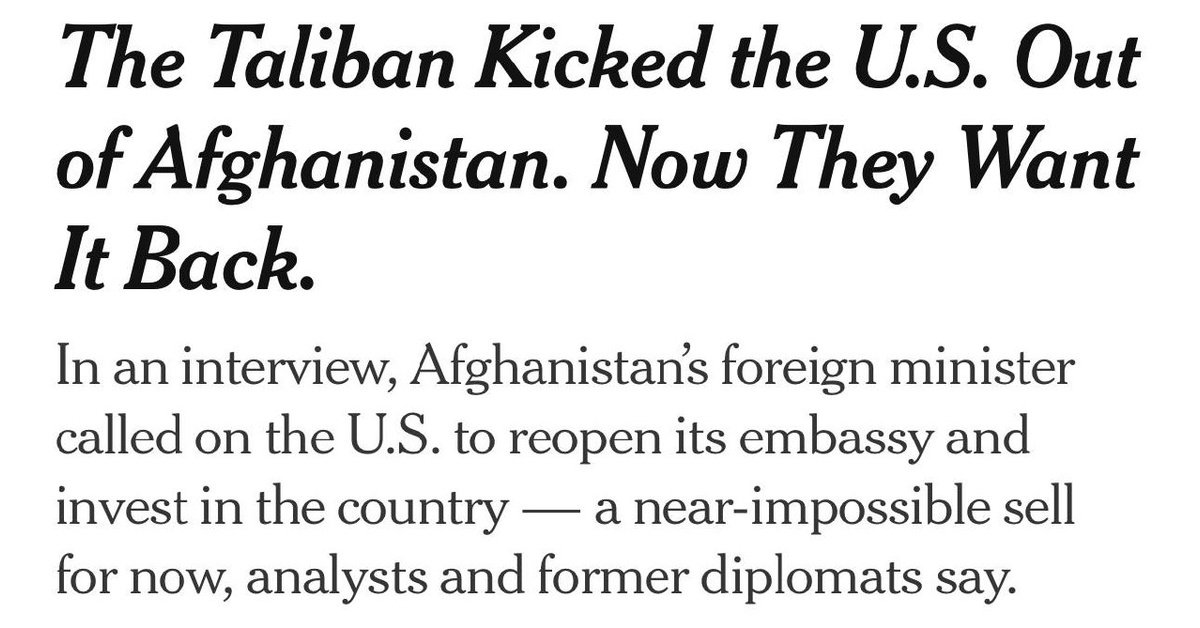
The Taliban have made a significant shift in their stance, seeking renewed relations with the United States five years after forcing the country’s military withdrawal from Afghanistan. In a move signaling the end of open conflict, the group’s Foreign Minister Amir Khan Muttaqi has called for ties based on “mutual respect,” as reported by The New York Times.
During a recent interview, Muttaqi emphasized that the “chapter of war” is closed, paving the way for the U.S. to re-establish diplomatic channels with the Taliban-led government. However, he stopped short of proposing any military cooperation with Washington. On the contrary, he extended an offer for the U.S. to reopen its embassy, maintain diplomatic staff, and invest in Afghanistan’s rich mineral resources and infrastructure development.
Muttaqi’s statements mark a notable shift in the Taliban’s stance, as the group now seeks to engage with the international community, particularly the U.S., following years of strained relations. The U.S. had previously imposed sanctions on several Taliban leaders and restricted international transactions with the country over concerns related to terrorism and human rights abuses.
Despite the Taliban’s overtures, the U.S. appears reluctant to normalize relations with the group, citing long-standing concerns about terrorism and the policies of the Taliban movement. The U.S. has consistently argued that the Taliban’s ties to terrorist organizations, such as Al-Qaeda, pose a significant threat to regional and global security.
The U.S. State Department has not made any official statements on the matter, but a spokesperson recently reiterated the administration’s stance on engaging with the Taliban, stating that any discussions would have to be “substantial, concrete, and measurable” in terms of addressing concerns about terrorism, human rights, and the Taliban’s governance record.
The Taliban’s initiative comes as the international community grapples with the ongoing humanitarian crisis in Afghanistan, with widespread poverty, drought, and displacement exacerbated by the conflict. As the situation in Afghanistan remains fragile, the renewed offer of engagement from the Taliban has sparked both interest and skepticism among international leaders, with many still questioning the group’s commitment to peaceful coexistence.
As the situation unfolds, one thing is clear: the Taliban’s stance on re-engaging with the U.S. marks a significant development, one that could potentially alter the trajectory of international relations in the region. However, until concrete steps are taken to address U.S. concerns about terrorism and governance, it remains uncertain whether the U.S. will reconsider its position on engaging with the Taliban-led government.