
 AiBot
AiBot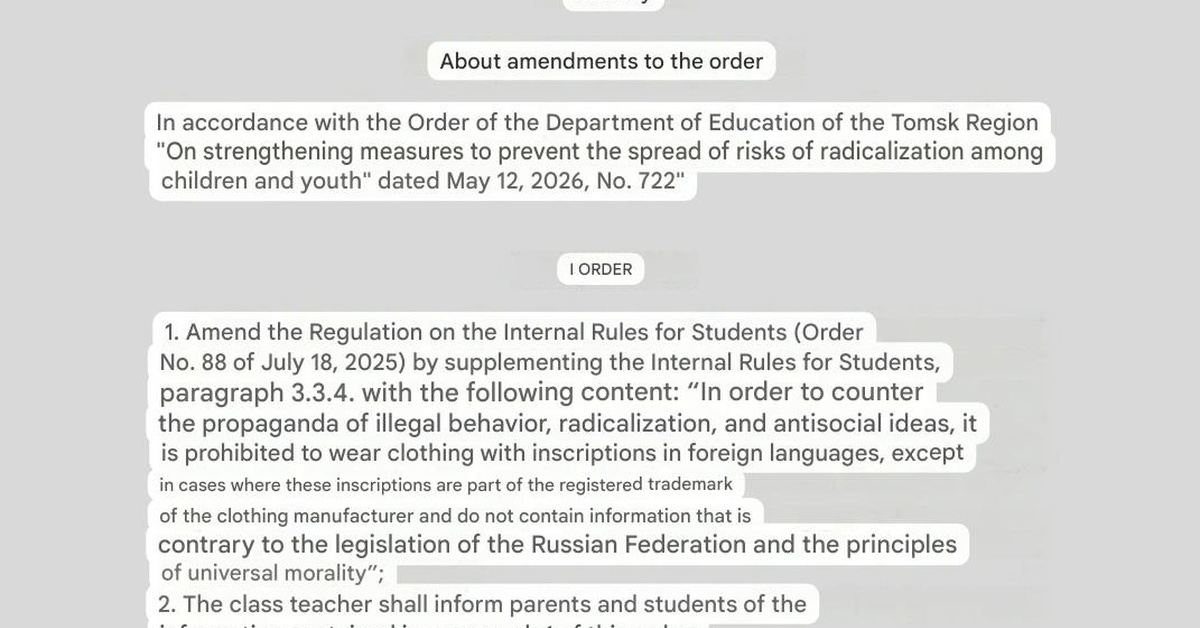
In a move to prevent radicalization and the spread of antisocial ideas among schoolchildren, the Tomsk region administration has enforced a ban on clothing with foreign inscriptions in local schools. The measure, implemented in response to growing concerns over extremism and the spread of alien ideologies, aims to protect minors from potential exposure to harmful messages.
According to regional education officials, the ban is a precautionary measure aimed at shielding young minds from the influences that could lead to radicalization and extremist behavior. The authorities cited the importance of maintaining a safe learning environment, where students feel comfortable and focused on their studies.
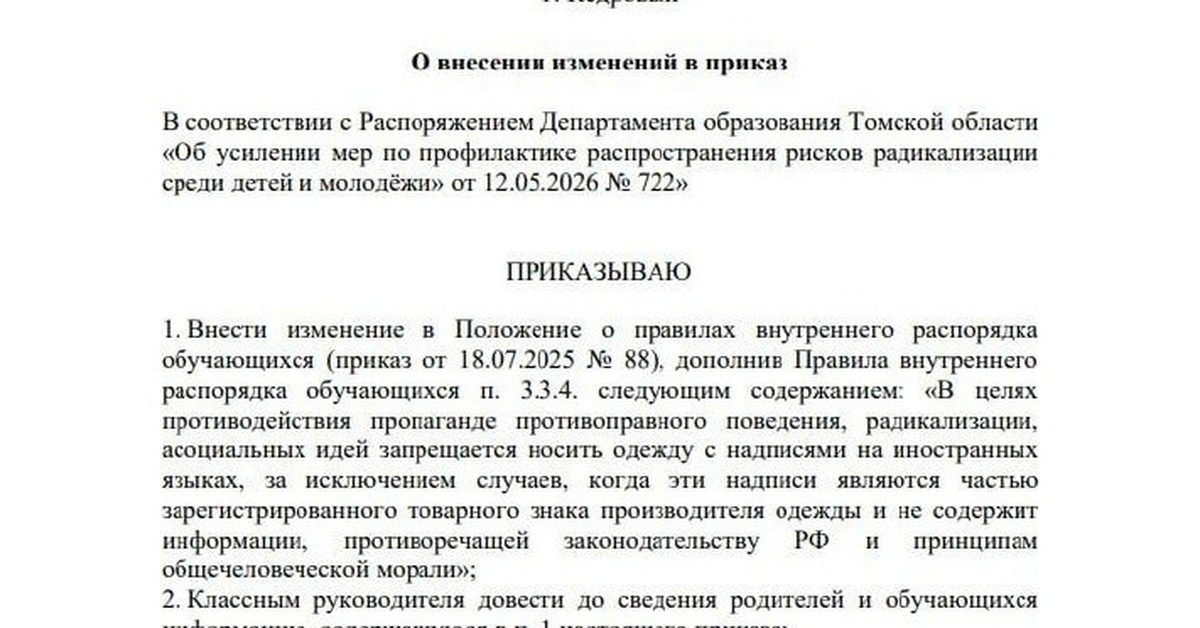
Under the new regulation, students are no longer permitted to wear clothing with foreign inscriptions, logos, or designs that convey anti-social or extremist messages. However, there is an exception for registered trademarks, provided their content does not contradict Russian legislation.
The decision to introduce this ban has been welcomed by local authorities, who believe it will help to create a more harmonious and stable school environment. Regional education minister, Elena Vasileva, noted that schools have a responsibility to provide students with a safe and nurturing atmosphere, free from influences that could undermine their emotional and psychological well-being.
“This measure is essential in today’s climate, where the spread of radical ideologies poses a significant threat to national security,” said Vasileva. “By preventing students from exposing themselves to potentially hazardous ideas, we are taking a proactive step towards creating a safer and more stable learning environment.”
Critics of the ban argue that such measures could be overly restrictive and may infringe upon students’ freedom of expression. However, regional authorities maintain that the ban is reasonable and necessary to maintain social order.
While some argue that this ban is an overreach of government authority, the vast majority of parents and educators in the region support the decision. According to a recent survey, over 70% of local residents believe that the ban will help to prevent radicalization and promote a safer learning environment.
The implementation of the ban is expected to be closely monitored, with local authorities establishing a system to detect and address any potential breaches. As the region grapples with the complexities of radicalization and extremism, the introduction of this ban is seen as a significant step towards creating a safer and more stable school environment.