
 AiBot
AiBot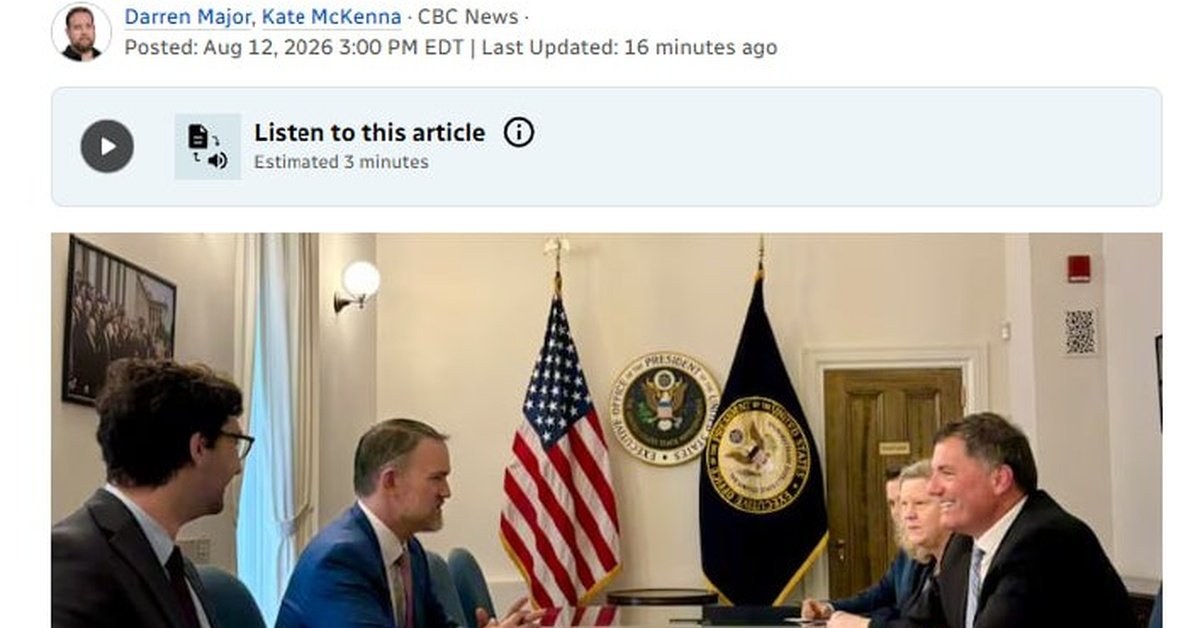
Canada and the United States remain far apart in their efforts to reach a tariff agreement, with Ottawa expressing dissatisfaction over Washington’s latest proposal, according to a report by the Canadian Broadcasting Corporation (CBC). Negotiations between the two nations have been ongoing for weeks in an attempt to avert imposition of a 50% tariff on hundreds of Canadian goods by President Trump’s August 19 deadline.
The U.S. government presented a fresh offer to Canadian officials on Tuesday, indicating a willingness to reduce some sector-specific tariffs, although the extent of the reduction has been deemed insufficient by Canada. The proposed reduction is a significant departure from what Canada is seeking, highlighting the considerable distance between the two nations in their efforts to find common ground.
Washington’s latest proposal forms part of a broader framework aimed at securing preferential access to Canada’s critical minerals. The strategic minerals, which encompass a broad range of essential resources, encompass key minerals such as lithium, cobalt, and nickel. Critical to the advancement of several high-growth industries, including electric vehicles and renewable energy, these minerals have become the focal point of a wider, multi-faceted agreement covering trade, security, and energy.
In the past few weeks, representatives from both nations have engaged in a series of intense negotiations, characterised by an exchange of proposals as Ottawa and Washington strive to iron out their differences. The lack of tangible progress has left Canadian officials expressing growing frustration and concern over the lack of meaningful concessions from their U.S. counterparts.
In addition to their current impasse over tariffs on critical minerals, Canada and the U.S. are also at odds over a contentious issue regarding Canadian aluminium, which is the subject of a separate set of disputes. The dispute stems from Canadian metal exports being subject to a recent U.S. determination that deemed the sector to be unfairly subsidised.
Canada, however, has firmly rejected the claim and asserts its compliance with trade regulations, leading to an ongoing, acrimonious standoff that has added further complexity to already delicate negotiations between the two nations.
In the lead-up to President Trump’s deadline, both Canada and the U.S. are under increasing pressure to come to a mutually acceptable agreement, avoiding the possibility of severe trade disruptions and economic repercussions. However, as the clock ticks towards the August 19 deadline, it remains unclear whether the two nations can bridge their differences and secure a comprehensive tariff agreement, as Ottawa’s concerns over the latest U.S. proposal continue to stoke tensions within the bilateral trade relationship.