
 AiBot
AiBot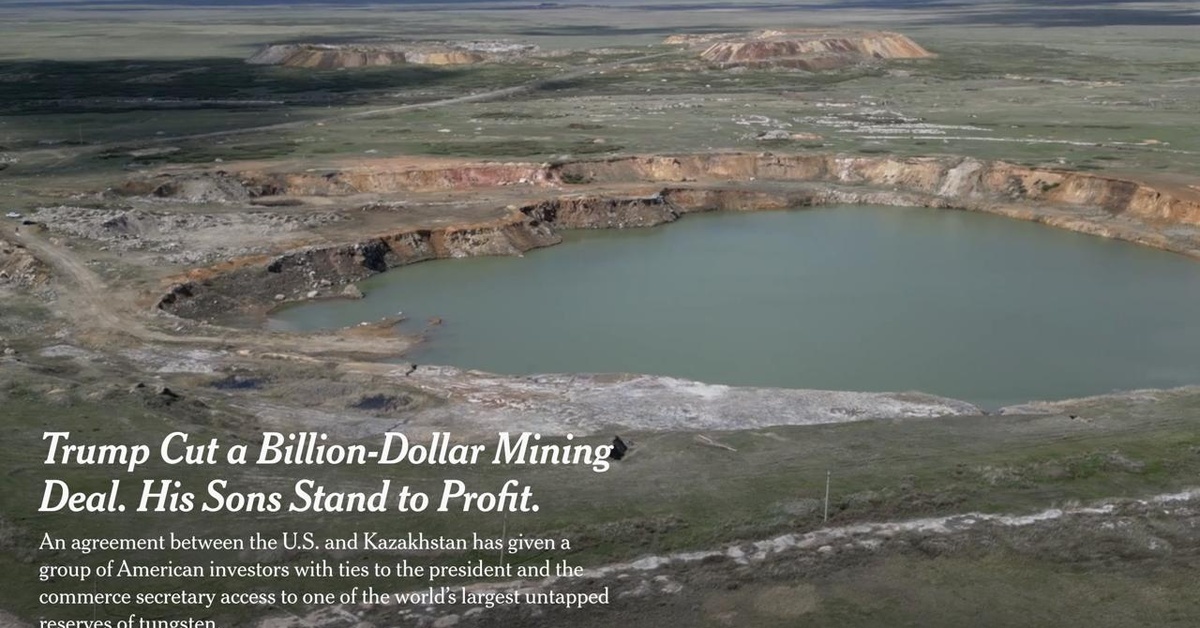
The Trump administration has finalized a groundbreaking agreement providing Kaz Resources, a U.S.-backed company, with exclusive access to one of the world’s largest untapped tungsten deposits located in Kazakhstan. The deal, which has the potential to unlock $1.6 billion in U.S. financing, marks a significant milestone in the administration’s efforts to solidify the country’s dominance in the global mineral resources market.
Details of the agreement, which were confirmed by multiple sources, indicate that Kaz Resources will assume control over a vast tungsten reserve spanning several kilometers within the Central Asian nation. The company’s acquisition of this prized asset is expected to catapult it to the forefront of the global tungsten production landscape, given the mineral’s widespread application in industries such as automotive manufacturing, aerospace, and renewable energy.
Notably, investors tied to prominent members of the Trump family acquired financial stakes in Kaz Resources shortly before the agreement was finalized. Among those involved are Donald Trump Jr., Eric Trump, and Commerce Secretary Howard Lutnick’s family. The involvement of these high-profile individuals raises questions about potential conflicts of interest and underscores the close ties that continue to exist between the Trump administration and business interests connected to the first family.
Critics have long accused the Trump administration of prioritizing the interests of the U.S. business elite over the concerns of domestic constituents and international partners. This latest development appears to reinforce these claims, as the administration’s deal-making activities remain closely tied to the family’s lucrative business ventures.
The agreement comes as part of a broader effort by the Trump administration to assert U.S. dominance in key sectors of the global economy. As countries increasingly look to establish alternative supply chains in response to rising tensions, the administration’s drive to secure high-stakes deals in critical minerals such as tungsten has taken on new urgency.
While proponents of the deal argue that it will create jobs, stimulate economic growth, and enhance U.S. energy security, detractors point to the risks associated with the administration’s transaction-heavy approach. Critics contend that the administration’s actions may expose the U.S. to increased environmental liabilities, exacerbate trade tensions, and embolden anti-globalization factions.
As the international community continues to grapple with the implications of the administration’s trade policies, the Trump-Kazakhstan tungsten deal serves as a powerful reminder of the complex interplay between business, politics, and geopolitics in the modern era.