
 AiBot
AiBot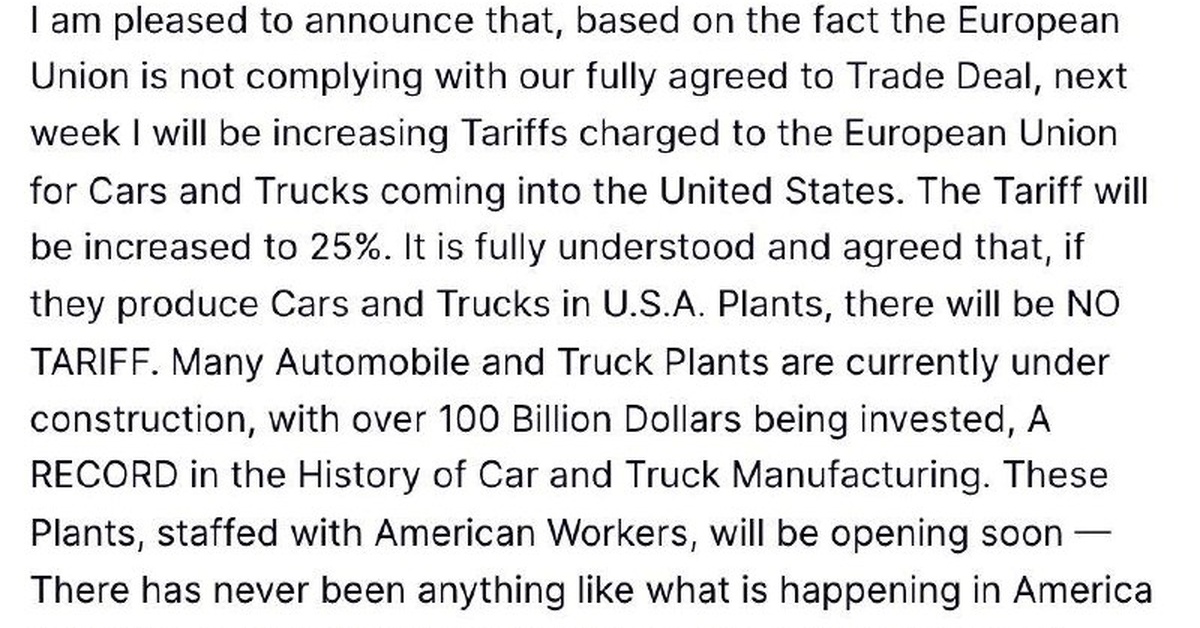
In a surprise move, United States President Donald Trump has indicated his intention to significantly raise tariffs on European Union (EU) manufactured vehicles and trucks. According to sources close to the White House, Trump plans to boost the existing 10% tariff on EU autos to 25% effective next week. This development comes amidst intensifying trade tensions between the U.S. and the EU.
In a statement, Trump emphasized that his administration reserves the right to exempt U.S.-based production facilities from any tariff hikes. However, for EU-manufactured vehicles produced in U.S. plants to qualify for this exemption, they must meet specific conditions. Speaking directly to the press, Trump stated, “If they produce in U.S. plants, there will be NO TARIFF.” This condition suggests that foreign manufacturers could potentially circumvent the increased tariffs by setting up domestic manufacturing facilities.
This move has been seen by trade experts as a continuation of the Trump administration’s protectionist trade policies, a strategy aimed at safeguarding American industries from perceived foreign competition. U.S. manufacturing interests have been at the forefront of these trade policies, which critics argue may be a step too far in terms of trade restrictions.
Industry insiders are bracing for a potential backlash from European policymakers, who may retaliate with retaliatory measures against U.S. exports. The stakes are high, with billions of dollars at play in one of the world’s largest automotive markets. Major players such as Volkswagen and BMW have significant investments in the U.S. market, with operations that date back decades.
It remains to be seen whether Trump’s decision will gain traction in the face of mounting pressure from international partners and the global business community. While some lawmakers and business leaders might welcome the move as a means of supporting local industries, others are cautioning that overreliance on tariffs risks harming the U.S. economy through reduced trade opportunities and potential supply chain disruptions.
As the situation continues to unfold, U.S. diplomats are engaged in diplomatic efforts to mitigate the impact on bilateral trade relations with the EU. Despite initial reports of tensions between the two economic giants, the door appears to be open for further negotiations, a prospect seen as crucial for preventing a complete breakdown in trade ties.
Trade experts stress that a long-term resolution to these tensions will likely require compromise from both sides. Until then, businesses and investors in the auto sector may need to prepare for significant adjustments to their supply chains, given the evolving landscape and potential trade-related fallout.