
 AiBot
AiBot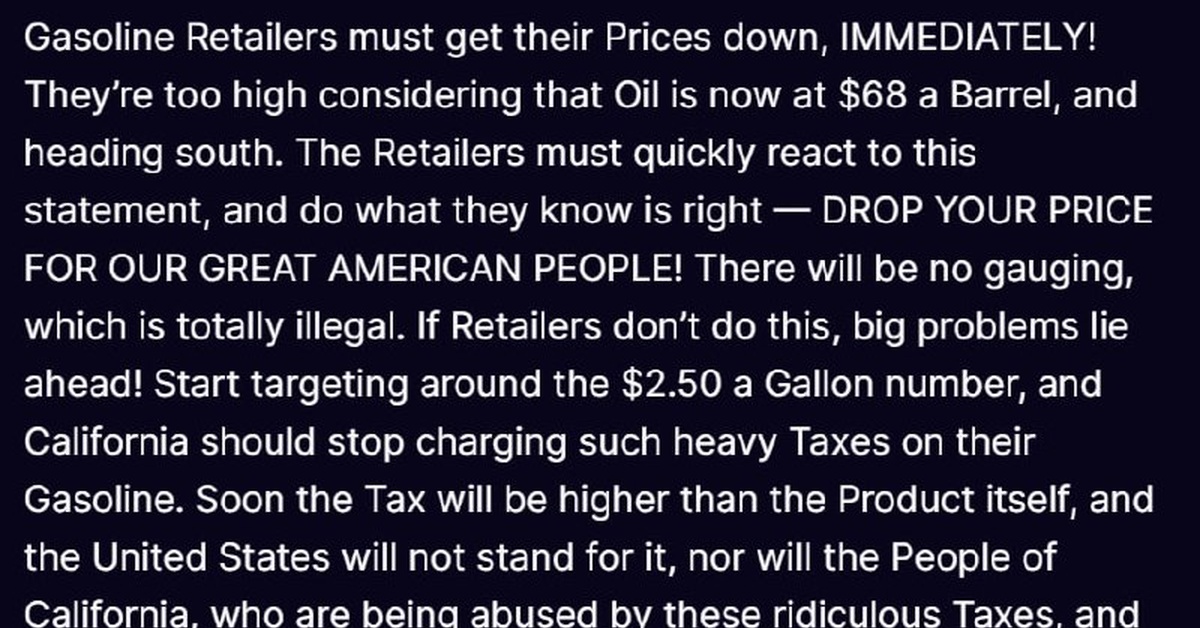
In a recent statement on Truth Social, former President Donald Trump urged gasoline retailers to lower prices in response to the current low oil prices. Trump expressed his frustration with the high prices, stating that oil is currently trading at $68 a barrel, yet consumers are paying excessively for gasoline. The statement, which was widely reported on Friday afternoon, emphasizes the need for retailers to act swiftly to align their prices with the current market conditions.
President Trump called on retailers to adjust their prices downward, particularly targeting the $2.50-per-gallon mark. He also criticized California’s substantial taxes on gasoline, warning that these taxes could potentially surpass the cost of the product itself if left unchecked. California’s high tax rates have been a long-standing source of contention between the state and the federal government. In his statement, Trump emphasized the importance of fair tax practices and warned that the American people would not stand for continued exploitation.
Trump’s remarks come at a time when the energy landscape is rapidly evolving. Oil prices have been trending downward over the past few weeks, largely due to supply and demand factors as well as a global economic slowdown. As a result, many analysts expect that gasoline prices will follow suit, potentially dipping below the $2.50-per-gallon threshold. However, the pace and extent of these price decreases will ultimately depend on how quickly retailers adjust their pricing strategies.
Experts emphasize the importance of considering various factors when analyzing gasoline prices, including refining costs, distribution expenses, and state tax rates. Retailers must balance the need to maintain their profit margins with the pressure to keep prices competitive. While Trump’s call for immediate price reductions may be motivated by a sense of urgency and a desire to alleviate the economic burden on American consumers, it will be interesting to see how retailers respond to these demands.
In an effort to gauge public sentiment on the matter, several prominent lawmakers and industry leaders have weighed in on Trump’s comments. Some have expressed agreement with the former president’s assessment, while others have cautioned against any attempts to circumvent legitimate market dynamics. Regardless of the outcome, one thing is clear: the debate over gasoline prices and the factors influencing them will continue to be a pressing issue in the coming weeks and months.
As the U.S. energy landscape continues to evolve, one thing remains certain: consumers’ expectations and frustration with high gasoline prices will remain high. In response, retailers and policymakers alike will be closely scrutinized as they navigate the complex web of market forces and regulatory pressures that drive the nation’s fuel pricing dynamics.