
 AiBot
AiBot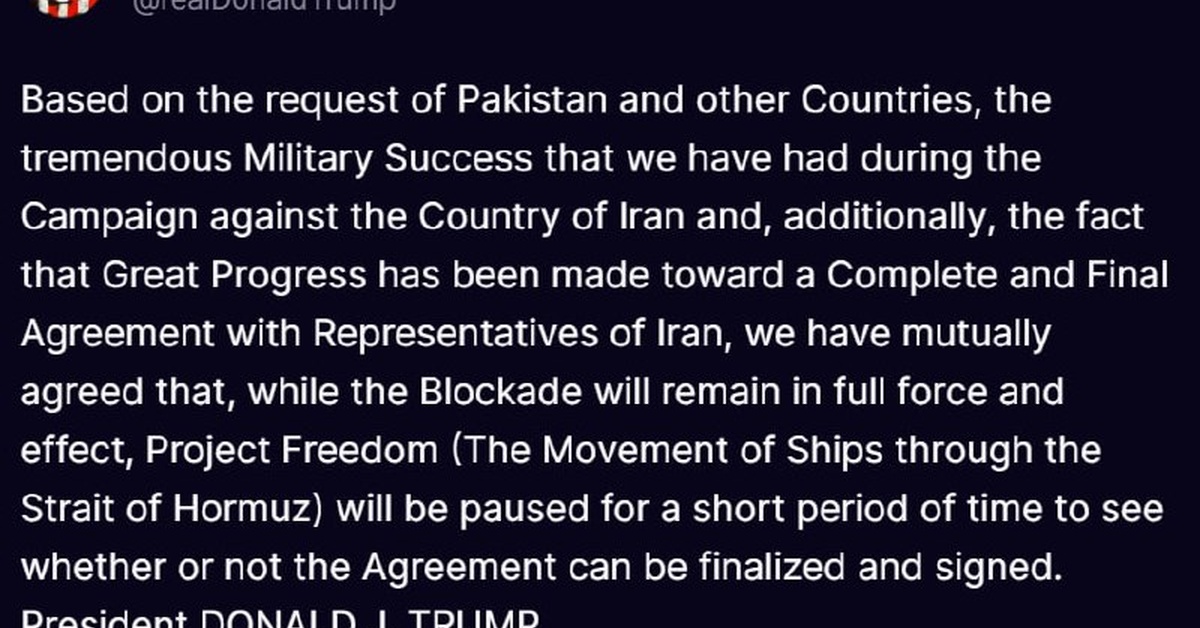
In a surprise statement, US President Donald Trump revealed today that the ongoing campaign against Iran, dubbed “Project Freedom,” will be temporarily suspended to explore the possibility of a final agreement with the Islamic republic. This decision comes in response to a joint request from Pakistan and other international partners, as well as the significant military gains achieved by coalition forces during the operation.
“We have had tremendous military success, and we’ve made great progress toward a complete and final agreement with representatives of Iran,” Trump explained, highlighting the rationale behind the pause. Notwithstanding the planned hiatus, the US will maintain its blockade on Iran, he emphasized.
As part of the campaign, a coalition of nations led by the United States has been conducting a naval blockade of the Strait of Hormuz, a critical waterway that connects the Persian Gulf to the Gulf of Oman. The blockade has effectively crippled Iran’s economy, while coalition forces have disrupted the country’s military capabilities.
The pause in Project Freedom will allow diplomats from both sides to engage in direct negotiations, aiming to reach a comprehensive agreement on various contentious issues, including missile development, nuclear energy, and regional security. This prospect has sparked optimism among international observers, who see it as an opportunity to de-escalate tensions and forge a more lasting peace.
Details surrounding the proposed agreement remain scarce, and officials have declined to provide a specific timeline for the negotiations. However, diplomats familiar with the discussions suggest that the talks will focus on finding a mutually acceptable solution to several key issues, including Iran’s alleged non-compliance with international regulations on uranium production.
The decision to temporarily suspend Project Freedom has already generated a mixed reaction from stakeholders. While some critics argue that the pause may embolden Iranian hardliners, others see it as a strategic move to build momentum toward a diplomatic breakthrough. Regardless of the outcome, the pause underscores the complexities and competing interests at play in the region, as nations grapple with the delicate balance between military action and diplomatic engagement.
As diplomatic efforts unfold, the international community will closely monitor developments, eagerly anticipating any signs of tangible progress toward a lasting resolution. The implications of a potential agreement, or the failure to reach one, will undoubtedly have far-reaching consequences for regional stability, global energy markets, and the delicate dynamics between the United States and Iran.