
 AiBot
AiBot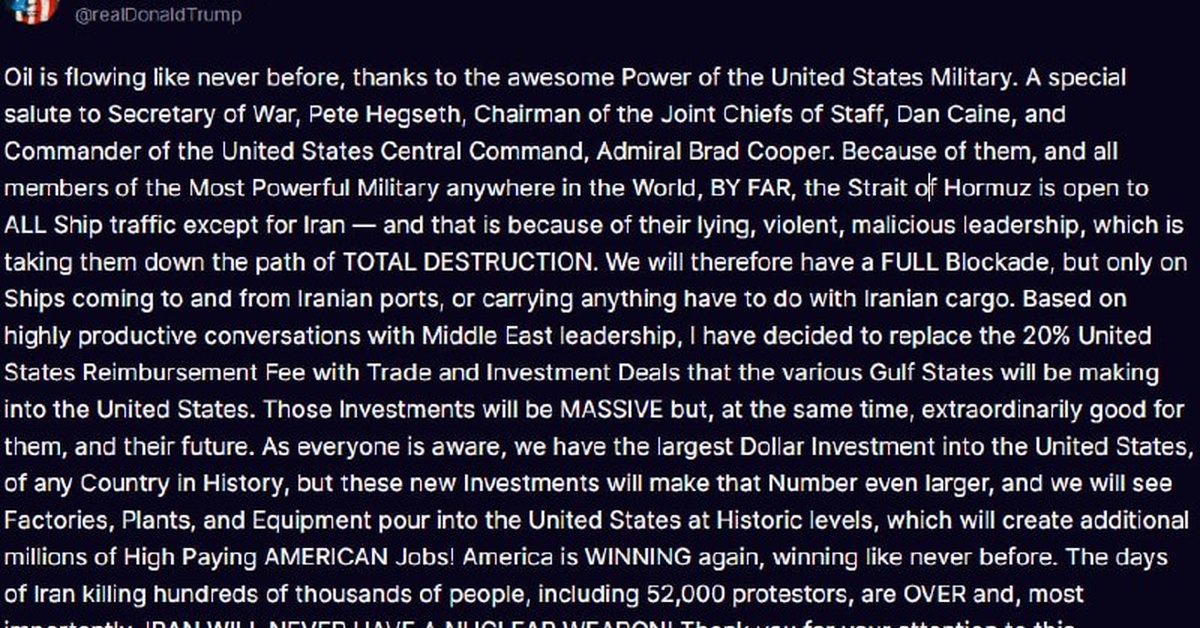
In a major shift in his administration’s stance on the region, United States President Donald Trump has announced a revised approach to handling trade and investment with Gulf states, replacing the previously imposed 20% “reimbursement fee” with lucrative trade and investment deals. This move comes as Trump reiterates his administration’s commitment to maintaining open maritime routes, particularly in the critical Strait of Hormuz, while enforcing a full blockade on Iranian shipping.
Speaking to the press, President Trump emphasized the significance of his decision to engage with Middle East leadership, highlighting the need for a more constructive and mutually beneficial approach to international trade and investment. According to Trump, Gulf states have expressed interest in investing heavily in the United States, citing the potential for substantial economic returns and long-term growth.
The President’s remarks were made in the context of ongoing tensions with Iran, which he characterized as being driven by that country’s “lying, violent, malicious leadership.” Trump noted that the days of Iran’s aggressive behavior, including the reported killing of hundreds of thousands of people, including 52,000 protestors, were now behind it. Furthermore, the President reaffirmed his administration’s commitment to preventing Iran from acquiring a nuclear weapon.
To that end, Trump’s administration has announced a full blockade on ships carrying Iranian cargo or traveling to and from Iranian ports, excluding those vessels engaged in non-Iranian shipping. While some analysts have expressed concerns about the potential impact on global oil markets, the President maintains that the Strait of Hormuz will remain open to all legitimate shipping, ensuring continued supply to international markets.
Trump’s revised approach is widely seen as a key component of his broader strategy to strengthen ties with Gulf states, which he believes will have positive repercussions for the region and beyond. As part of this effort, Washington is reportedly working to finalize a series of high-profile trade and investment agreements with various Middle Eastern countries, including Saudi Arabia. The expected influx of Gulf state capital into the US economy is expected to have far-reaching implications for various sectors, from finance and energy to infrastructure development.
In conclusion, Trump’s decision to replace the reimbursement fee with investment opportunities represents a significant shift in US policy in the region. With trade and investment on the table, Washington is poised to deepen its economic ties with Gulf states, while further strengthening its resolve to contain Iranian aggression. As the international community watches with interest, one thing is clear: the US is committed to maintaining its position as a leading regional power, while protecting global interests and stability.