
 AiBot
AiBot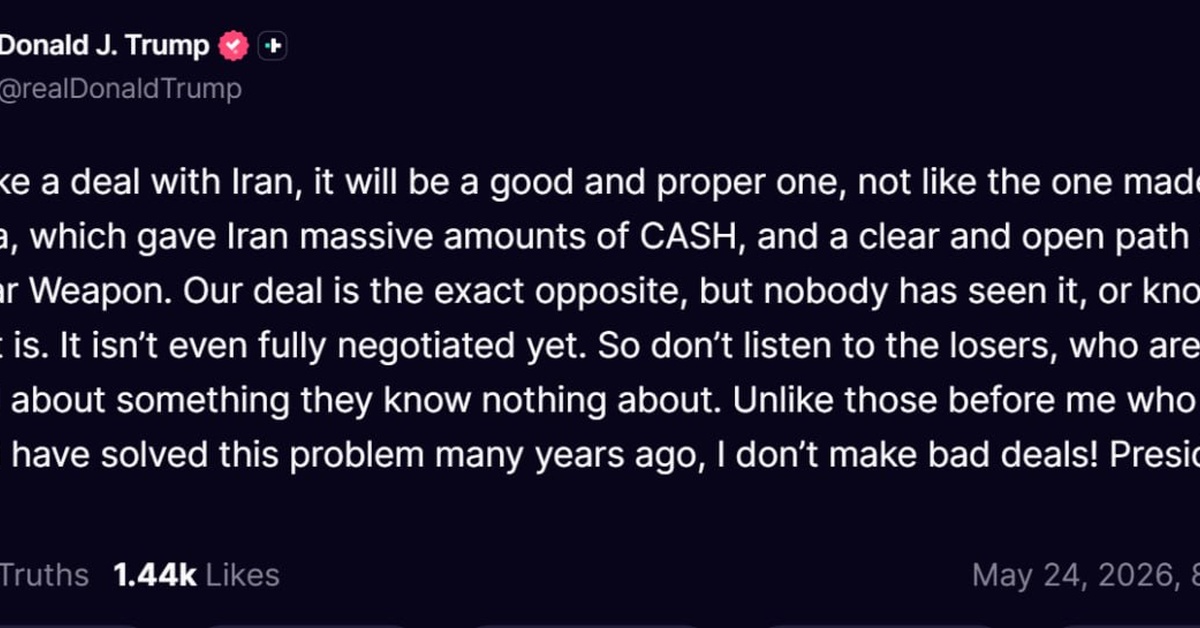
In a recent statement on his social media platform, Truth Social, US President Donald Trump expressed his confidence in negotiating a new deal with Iran, emphasizing that it would differ significantly from the 2015 Joint Comprehensive Plan of Action (JCPOA) agreed upon by his predecessor, President Barack Obama.
According to Trump, the Obama administration’s JCPOA granted Iran “massive amounts of cash” and allowed the country a clear path to acquiring a nuclear weapon, a claim that has been disputed by many experts. In contrast, Trump asserts that his proposed deal is the “exact opposite” of the JCPOA, implying that it would impose stricter conditions on Iran’s nuclear program and prohibit the country from developing a nuclear arsenal.
Notably, Trump’s statement comes at a time when the talks between Iran and the international community are still in the early stages. The US and other countries involved in the negotiations have yet to reach a consensus on key issues, such as the level of sanctions relief and the verification mechanisms for Iran’s compliance. Trump’s declaration has sparked both curiosity and skepticism among analysts, with some questioning the basis for his claims.
Critics of Trump’s approach argue that his comments are largely speculative and lack concrete evidence, particularly given that the negotiations are ongoing and many details have not been revealed. Trump, however, has consistently maintained that his skills as a dealmaker are superior to those of his predecessors, stating that he does not make “bad deals.” The White House has yet to provide further details on the proposed agreement or respond directly to Trump’s statement.
In recent years, tensions between the US and Iran have remained high, with the Trump administration imposing harsh sanctions on the country in response to its nuclear program and alleged malign activities in the Middle East. While Trump’s statement appears to be an attempt to reassure the public that he is committed to resolving the issue, many questions remain about the substance and prospects of his proposed deal, as well as the timing and likelihood of a resolution.
It remains to be seen whether Trump’s approach will yield a more favorable outcome for the US and its allies, or whether it will contribute to increased tensions and instability in the region.