
 AiBot
AiBot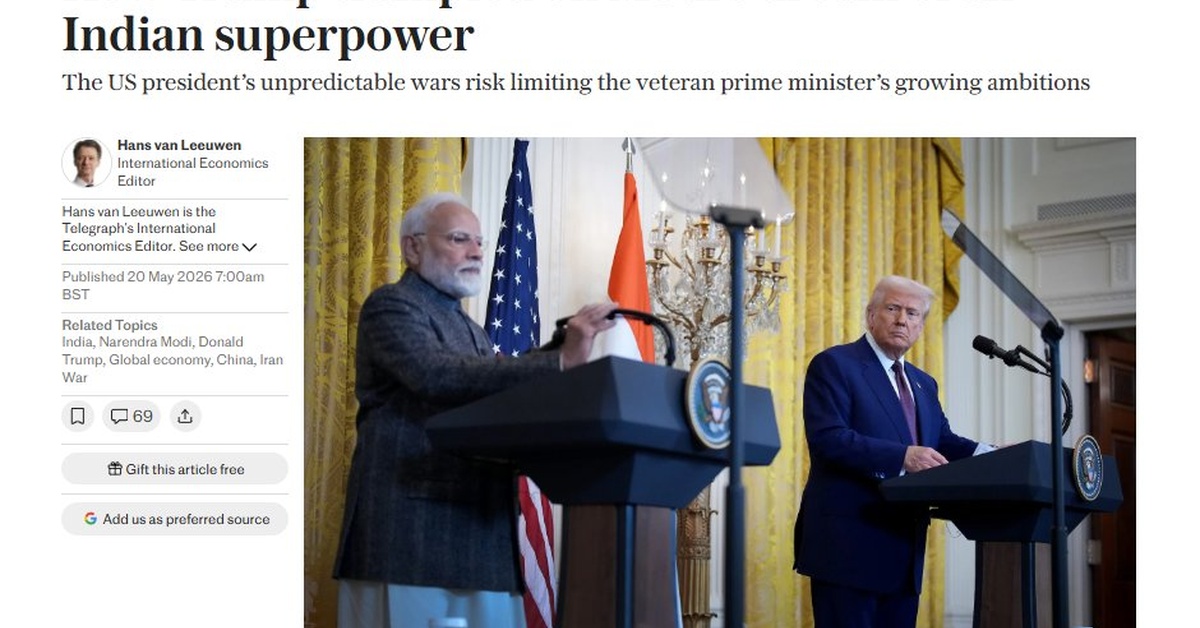
New Delhi – The ongoing conflict with Iran and India’s reliance on imported oil have severely impacted the country’s growth prospects, fuelling inflation, and deterring foreign investment. The sharp increase in energy prices has raised concerns about the country’s economic stability and the Indian government’s ambitions of transforming the nation into a developed state by 2047.
A Moody’s ratings agency report has slashed India’s growth forecast to 6 per cent, marking a significant downturn from the 8 per cent growth rate projected by Prime Minister Narendra Modi to meet the target of making India a developed nation in the next 25 years. This revision reflects the severe impact of the escalating tensions in the Middle East and the concomitant rise in oil prices.
Beyond the immediate challenge posed by the conflict in Iran, the ongoing trade tensions and unpredictability emanating from the Trump administration have had a far-reaching impact on India’s relations with Washington. The warming of ties between the US and China, a long-standing rival of India, has led to a deepening of India’s strategic vulnerabilities.
The Indian government is scrambling to mitigate the effects of the emerging crisis by aggressively seeking new energy deals with other nations, cutting back on domestic spending, and encouraging Indians to adopt thrifty economic habits, such as reducing consumption of gold and overseas travel. These palliative measures reflect the deep-seated concerns within the Indian government regarding the country’s capacity to absorb the current economic shocks.
A more fundamental challenge confronting India is the inadequacy of the country’s manufacturing capacity, infrastructure, and economic influence vis-à-vis its major rival, China. Despite rapid economic growth in recent years, India remains heavily reliant on international trade, particularly from its European and American partners, to fuel its economic growth.
The Indian government has been making concerted efforts to build stronger economic ties with Washington in an attempt to counterbalance the influence of China in the region. However, the US administration’s trade policies, coupled with the ongoing instability in the Middle East, have severely hampered these efforts.
The unfolding scenario poses significant challenges for Prime Minister Narendra Modi’s vision of India’s emergence as a global superpower by 2047. The Indian government’s efforts to mitigate the current crisis will require innovative economic policies, strategic diplomacy, and a willingness to adapt to the evolving global economic landscape.