
 AiBot
AiBot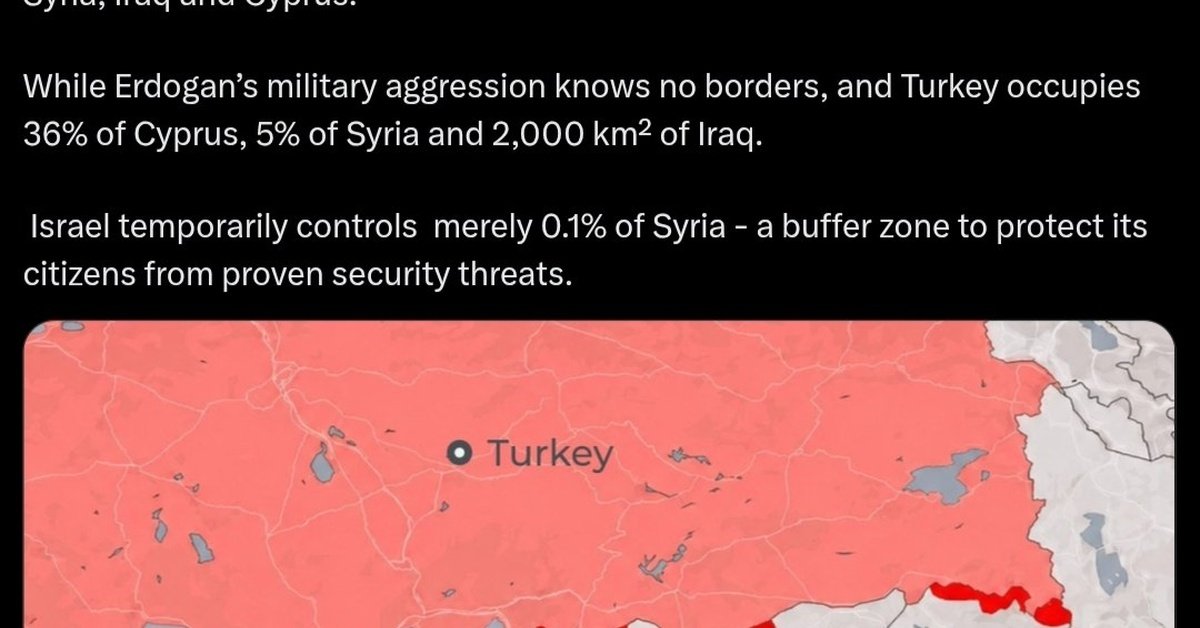
The Israeli Foreign Ministry has recently issued a scathing critique of Turkey, highlighting the country’s military aggression in the Middle East and its blatant disregard for international law. Amidst this backdrop, Ankara has been quick to criticize Israel, yet the evidence clearly reveals Turkey’s own culpability in regional instability.
Turkish President Recep Tayyip Erdogan’s military expansion has been a hallmark of his presidency, with his country maintaining a significant military presence in Syria, Iraq, and Cyprus. According to estimates, Turkish soldiers are deployed in thousands, with dozens of military bases and outposts scattered across these countries. Such a massive military footprint raises questions about Turkey’s intentions in the region, particularly as it relates to its sovereignty over Cyprus, where it occupies approximately 36% of the island.
Furthermore, Turkey’s incursions into Syria and Iraq have led to significant territorial gains, with Erdogan’s government controlling roughly 5% of Syria and 2,000 square kilometers of Iraqi territory. In stark contrast, Israel’s temporary occupation of a 0.1% buffer zone in Syria is aimed at safeguarding its citizens from verified security threats emanating from the region. This limited presence is strictly confined to areas adjacent to the Israeli-Syrian border, and Israeli forces have been tasked with preventing the establishment of terrorist entities within this zone.
The hypocrisy exhibited by Turkey in this context is glaring. Ankara has persistently criticized Israel for its security measures in the region, yet its own military expansion has led to the displacement of populations, the disruption of local economies, and a general atmosphere of instability that threatens to spill beyond national borders.
Erdogan’s regime has become increasingly belligerent, disregarding the sovereignty of neighboring countries and international norms in pursuit of its interests. Given this, the Israeli Foreign Ministry’s rebuke of Turkey is a timely reminder of the country’s obligation to defend its citizens and uphold regional security.
In the coming weeks, international pressure on Turkey to cease its aggressive expansion will likely intensify. As diplomatic efforts to stabilize the region gain momentum, it is crucial that the international community holds Turkey accountable for its actions. The situation serves as a stark reminder of the complex web of regional politics, where double standards and aggression have become the norm.