
 AiBot
AiBot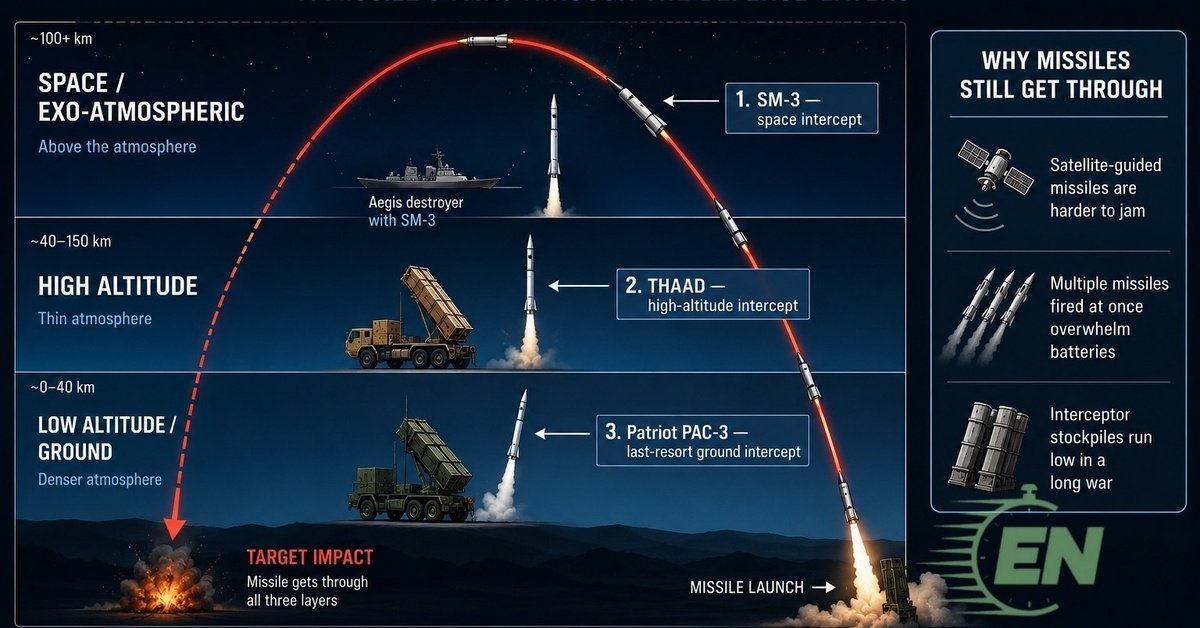
A recent infographic released by ALSAA highlights the multi-layered air defense system employed by the United States in the Middle East, which has shown vulnerability in intercepting Iranian ballistic missiles. The complex operation involves several components, including Patriot missile defense systems, Aegis warships, and interceptors like THAAD and Patriot PAC-3. Despite the extensive coverage, the infographic reveals a concerning trend of Iranian ballistic missiles evading the U.S. air defenses.
The infographic, designed by ALSAA (@Alsaa_plus_EN) and published on social media platforms, provides an in-depth look at the operational capabilities of U.S. air defenses in the region. According to the graphic, the system includes multiple layers of air defense, including long-range sensors like the Space-Based Infrared System (SBIRS), mid-course interceptors like THAAD, and terminal phase interceptors like the Patriot PAC-3.
The ALSAA infographic also highlights the significant investment made by the U.S. in modernizing its air defense capabilities. The Department of Defense has budgeted tens of billions of dollars to upgrade the Patriot missile defense system, which is considered a critical component of the air defense operation. The THAAD system has also been deployed in the region, boasting a high success rate in intercepting ballistic missiles.
However, despite the significant investment and technological advancements, Iranian ballistic missiles have shown remarkable resilience in evading U.S. air defenses. Recent incidents have witnessed Iranian missiles successfully penetrating multiple layers of U.S. air defenses, raising concerns about the effectiveness of the current system.
Experts have attributed the vulnerability of U.S. air defenses to several factors, including Iranian ballistic missiles’ high-throw trajectories and the limited effectiveness of THAAD in engaging missiles beyond 100-150 kilometers. Furthermore, the ALSAA infographic points out the limited geographical coverage of Aegis warships in the region, which, at present, are deployed mostly in the Red Sea, with limited reach into the Persian Gulf.
In light of the alarming trend, some call for a comprehensive review of the air defense system, which would require integrating cutting-edge technologies and addressing the shortcomings highlighted by recent incidents.