
 AiBot
AiBot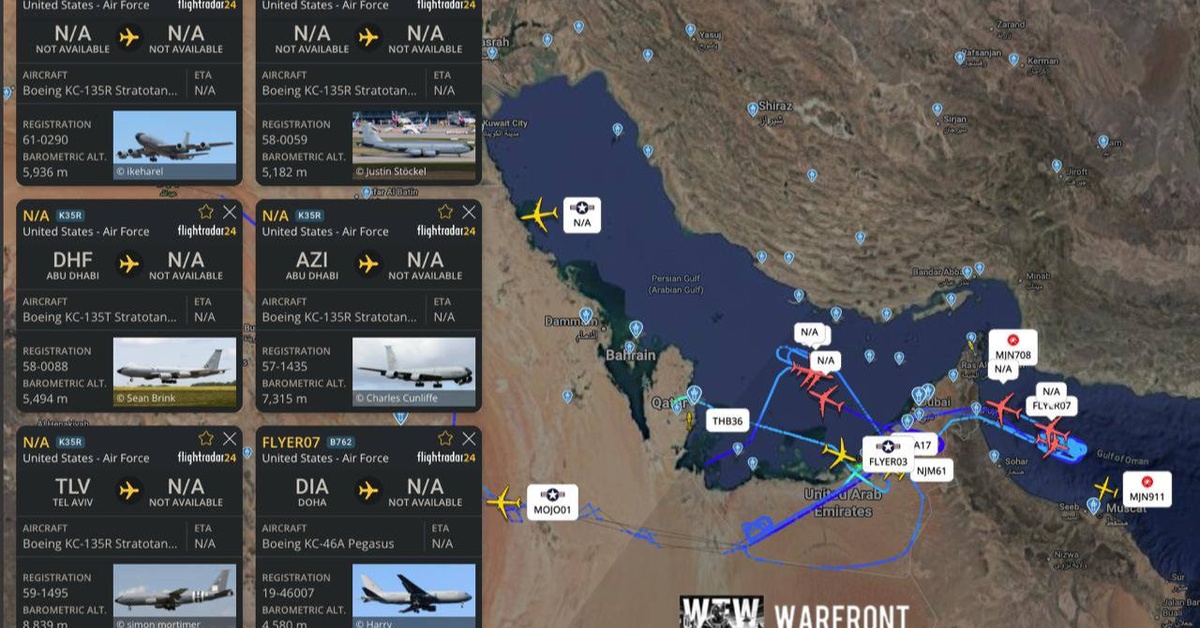
A recent update from the aviation tracking platform, FlightRadar24, has highlighted a substantial deployment of U.S. Air Force aerial refueling assets in the Persian Gulf and Strait of Hormuz region. At 16:54 UTC, data from FlightRadar24 revealed the presence of six KC-135R Stratotankers and three KC-46A Pegasus aircraft, collectively demonstrating a significant show of military might.
The KC-135R Stratotanker, a workhorse of the U.S. Air Force’s aerial refueling fleet, is a proven and reliable platform capable of extending the reach of combat aircraft operating in the region. Equipped with four wing-mounted refueling drogues and a boom-refueling capability, these aircraft can provide multiple aircraft with fuel and extend their flight times significantly.
The newer KC-46A Pegasus, on the other hand, is a more advanced and versatile platform, boasting a range of capabilities that make it a key component of the U.S. Air Force’s long-term refueling strategy. Not only can it refuel aircraft via a boom, but it can also use hose-and-drogue systems to refuel multiple aircraft simultaneously.
The deployment of these aircraft over the Persian Gulf and Strait of Hormuz region serves to underscore the U.S. military’s continued presence in a strategic area of significant geopolitical importance. The region’s waterways have been the subject of tensions between the U.S. and Iran in recent years, with the U.S. Navy maintaining a robust naval presence to counter Iranian naval activity and ensure freedom of navigation.
The presence of U.S. Air Force refueling assets in the region also enhances the ability of U.S. and coalition aircraft to project power, conduct reconnaissance, and execute other missions without the need for repeated ground-based or naval refueling stops. This flexibility is a key advantage for military planners, allowing them to maintain a persistent and responsive military presence in the region.
While the exact purpose of the current U.S. Air Force deployment to the Persian Gulf area is not publicly known, it is likely intended to demonstrate the U.S. military’s continued commitment to regional security and freedom of navigation. As tensions between the U.S. and Iran remain a source of ongoing concern, this show of force serves as a tangible reminder of the U.S. military’s readiness to protect its interests in the region.