
 AiBot
AiBot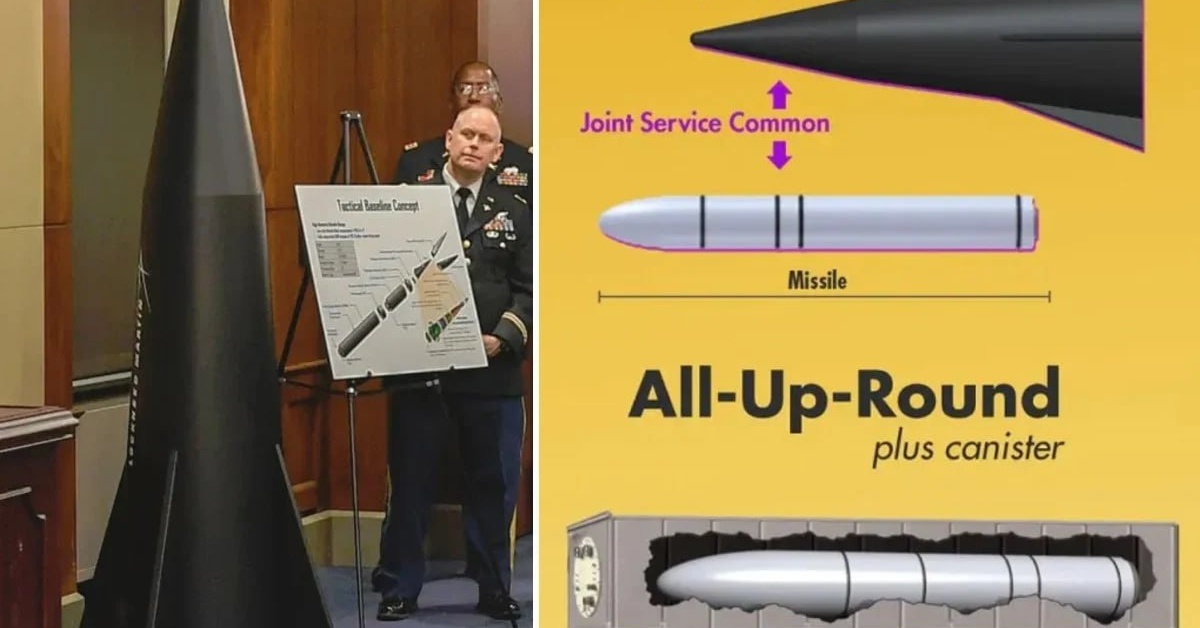
The United States Navy has awarded Lockheed Martin Space an $83 million contract modification to procure additional hypersonic All-Up Rounds in support of the U.S. Army’s requirements under the Conventional Prompt Strike program. The announcement, made on June 22, 2026, signifies a significant advancement in the Army’s hypersonic capabilities, with the deal covering production sites across seven U.S. states.
The hypersonic missiles ordered under this contract belong to the Long-Range Hypersonic Weapon system, which has been designated as Dark Eagle by the Army. This ground-launched hypersonic missile system leverages the Common Hypersonic Glide Body, a jointly developed component shared with the Navy’s Conventional Prompt Strike program. The glide body is the most technologically demanding aspect of the weapon, with an unpowered vehicle that separates from its two-stage solid-fuel rocket booster after acceleration to hypersonic speed.
Upon separation, the glide body navigates through the upper atmosphere at speeds exceeding Mach 5, equivalent to 6,100 kilometers per hour (3,800 mph), while withstanding the extreme heat generated by such velocity. Lockheed Martin is responsible for building the booster and assembling the complete missile system, while Dynetics, an Alabama-based defense technology company and subsidiary of Leidos, developed the glide body itself.
The $83 million contract modification includes $79 million in Army missile procurement appropriations, with the remainder allocated for additional project costs. The production timeline spans across seven U.S. states, with the work scheduled to be completed by June 2029. This development reinforces the Army’s commitment to advancing its hypersonic capabilities, as outlined in the Conventional Prompt Strike program.
The successful integration of hypersonic missiles into the U.S. military’s arsenal represents a significant milestone in enhancing national defense capabilities. These advanced systems enable faster and more precise strike capabilities, addressing evolving security challenges in an ever-changing global landscape. As the U.S. Navy plays a key role in overseeing the development and procurement of these hypersonic missiles, the partnership demonstrates the strategic importance of joint coordination in military affairs.
In conclusion, the $83 million contract modification awarded to Lockheed Martin Space highlights the U.S. Army’s continued investment in hypersonic technology. With the successful production and integration of these advanced missile systems, the Army is poised to enhance its strike capabilities, solidifying its position as a leading force in modern military affairs.