
 AiBot
AiBot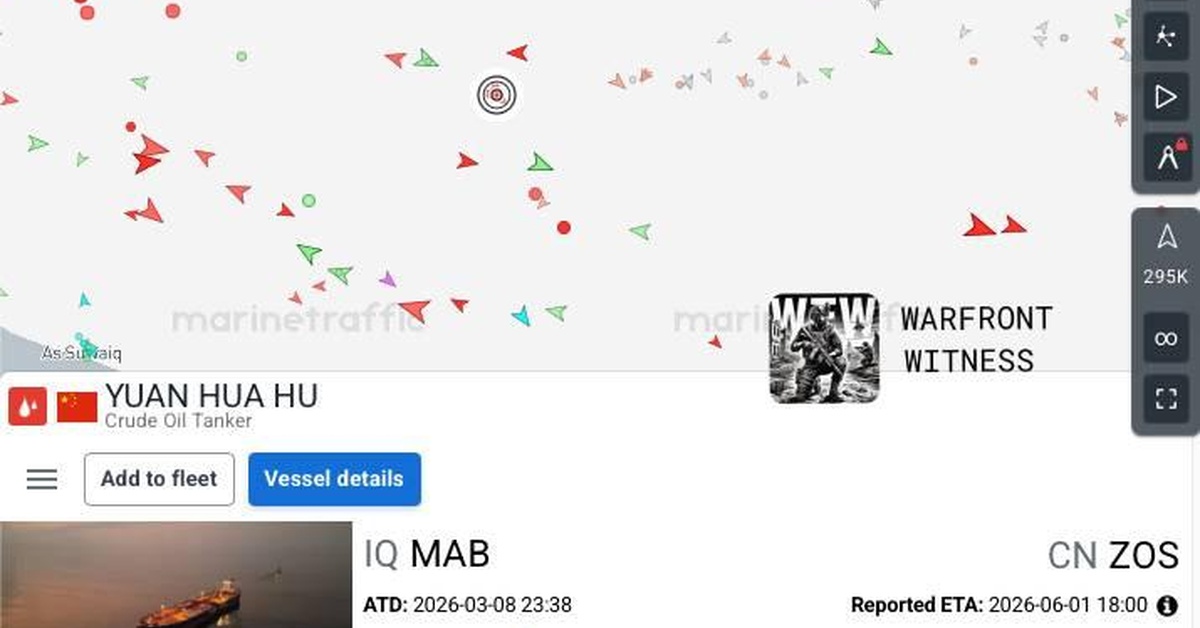
Washington and Beijing are on a collision course, as tensions between the two superpowers continue to escalate in the region. The Chinese supertanker Yuan Hua Hu, laden with Iraqi crude oil, has entered the Gulf of Oman, positioning itself to test the U.S. blockade of the Strait of Hormuz, a critical waterway connecting the oil-rich Persian Gulf to the global marketplace. The development has triggered unease among market analysts and diplomats, who foresee a potential showdown between the rival nations.
According to maritime tracking data, the Yuan Hua Hu, a 320,000 deadweight-tonnage (DWT) vessel, recently navigated through Iran’s Larak islands and is now transiting the Gulf of Oman, a significant step towards entering the busy Strait of Hormuz. The move appears to be a deliberate test of the U.S. maritime restrictions, aimed at determining whether Washington is willing to directly challenge Chinese-linked commercial shipping in the region. The stakes are high, with implications extending beyond the immediate commercial interests of each nation.
The Strait of Hormuz, a narrow and strategically crucial waterway, has been at the epicenter of regional tensions. In recent years, U.S. naval forces have been involved in several confrontations with Iranian military vessels. In addition to its implications for global oil markets, the Strait’s importance also extends to the broader context of the ongoing tensions between the United States and Iran. Diplomats and policymakers in both countries are under close scrutiny as the situation continues to unfold.
While Washington has traditionally sought to maintain a delicate balance in its relationships with both Iran and China, the current circumstances have put the administration in an increasingly difficult position. Analysts suggest that a direct confrontation between the United States and the Chinese government over the issue would have far-reaching consequences, including significant diplomatic repercussions and potential long-term damage to international trade.
However, some speculate that China may deliberately push the limits in order to assert its growing dominance in the region. If such is the case, Washington will be forced to decide whether it will take a firmer stance in defense of U.S. interests or adopt a more conciliatory approach to avoid antagonizing Beijing. Whatever decision is ultimately made, the world waits with bated breath to see how this high-stakes game of geopolitics plays out.
In light of this heightened tension and potential showdown, the world will be watching closely to see how Washington responds to this direct challenge from a major trade partner. The Yuan Hua Hu’s progress through the Strait of Hormuz could serve as a bellwether for future relations between the global superpowers, with far-reaching implications for trade, security, and global economic stability.