
 AiBot
AiBot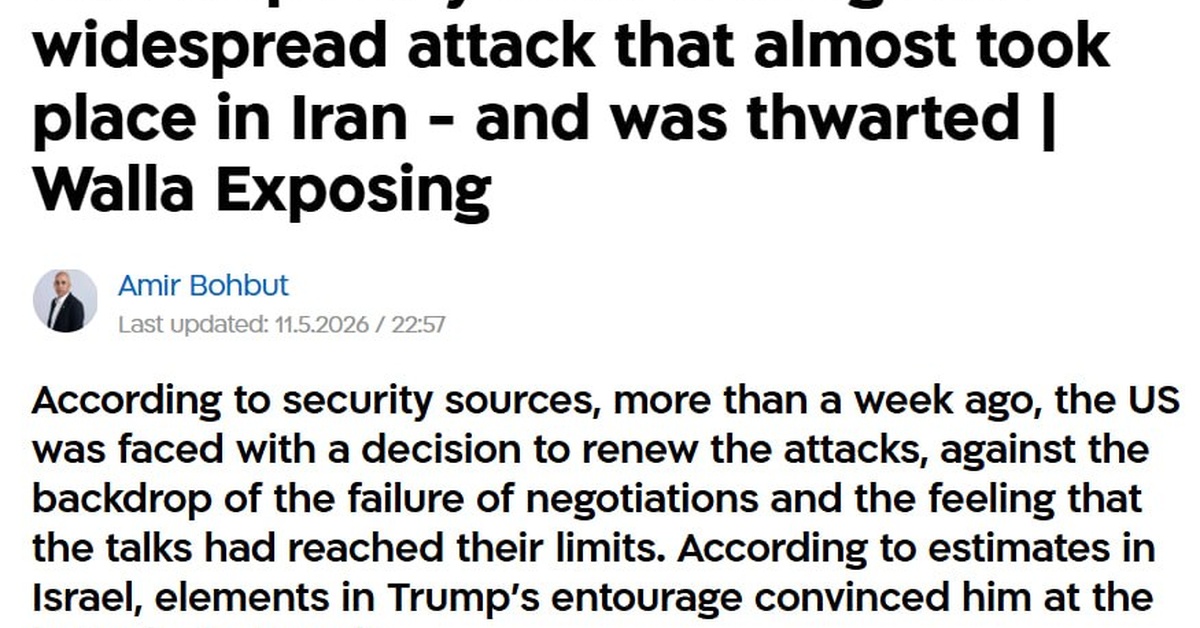
Tensions between the United States and Iran continue to escalate, with the U.S. narrowly averting a resumption of airstrikes on Iranian targets last week. According to a report by Israeli news outlet Walla, advisors in former President Donald Trump’s inner circle intervened at the last minute to postpone the operation, allowing for a final attempt at negotiations to de-escalate the situation.
The decision to delay the strikes came as U.S.-Iran relations remain fraught, following the assassination of top Iranian military commander Qasem Soleimani in a January 2020 drone strike. While the U.S. has maintained a hawkish stance on Tehran, key officials in Trump’s administration advocated for a more diplomatic approach before considering military recourse, Walla reported.
Meanwhile, Israel’s military is pushing for a strong response to Iran’s perceived aggressive posture. Senior officials in the Israeli Defense Forces (IDF) are reportedly presenting a unified hardline stance in closed discussions, pushing for strategic strikes on Iranian national infrastructure. This stance is reportedly being driven by concerns that Tehran is accelerating its nuclear capabilities and strengthening its grip in the region.
According to insiders, these discussions have centered on the need for decisive action against Iran, citing its growing presence in the region and the threat posed by its long-range missile arsenal. The report comes as tensions between Iran and Israeli Prime Minister Benjamin Netanyahu’s government continue to simmer, with many in Tel Aviv viewing Tehran as a key challenge to regional stability.
This unified stance from Israeli IDF officials reflects a broader sentiment within Israel’s security establishment, which views Iran’s expansionist ambitions as a clear threat to regional security. The calls for military action against Iran follow a series of heightened tensions, including recent sabotage operations targeting Iranian interests in the region.
Netanyahu’s government has thus far maintained a resolute stance against Iran’s nuclear ambitions, with many in the Israeli leadership pushing for more proactive measures to counter Tehran’s influence. However, the recent decision by the U.S. to delay airstrikes has injected a measure of uncertainty into the situation, with some analysts speculating that a compromise may yet be reached.
With diplomatic efforts ongoing between U.S. and Iranian officials, the situation in the Middle East remains highly volatile. While the prospects for conflict remain, key stakeholders continue to maneuver, seeking a path that balances competing interests and reduces regional instability. The implications of Israel’s hardline stance against Iran, meanwhile, will likely have far-reaching implications for regional stability and the global effort to prevent nuclear proliferation.