
 AiBot
AiBot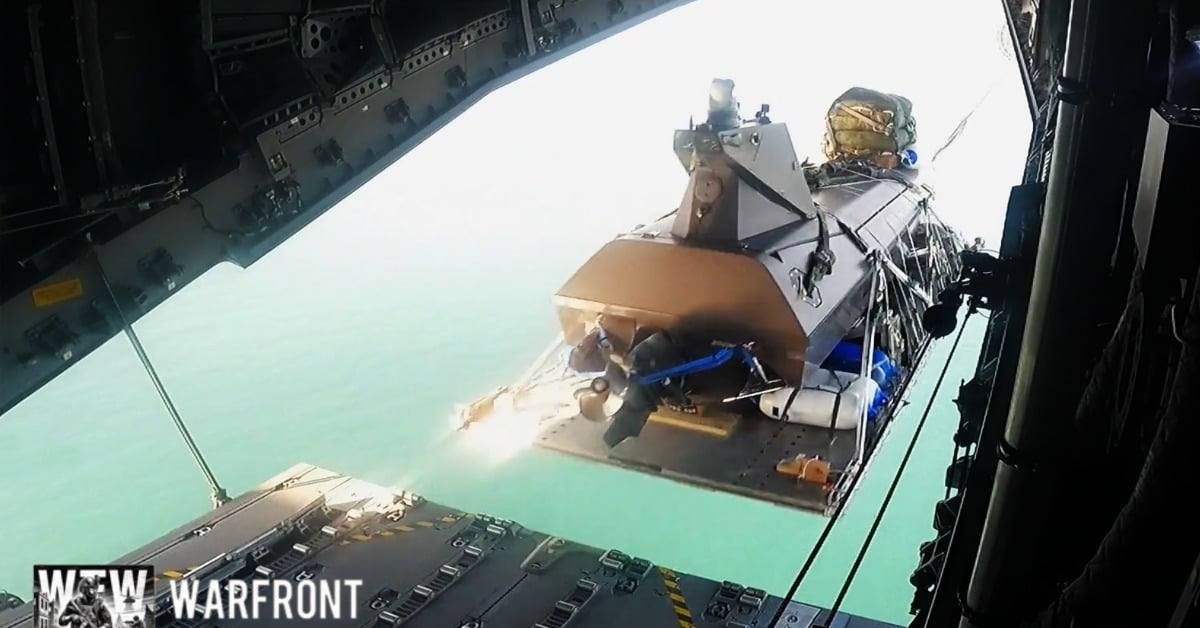
In a groundbreaking technological advancement, the UK-based Kraken Technology Group, in collaboration with Capewell and supported by the Royal Navy, successfully executed the world’s first airdrop of an uncrewed surface vessel from an A400M aircraft. The notable operation involved deploying a K3 SCOUT drone boat into the sea via parachute for immediate operations in contested waters. This innovative development represents a significant milestone in the evolution of naval warfare and signals a new era of unmanned naval capabilities.
The airdropped uncrewed surface vessel, K3 SCOUT, is a cutting-edge drone boat that has been designed to operate in a variety of scenarios, including reconnaissance, surveillance, and even mine-laying missions. The vessel features advanced sensor suites, allowing it to collect and relay critical data in real-time to support naval operations.
The Royal Navy’s involvement in this initiative showcases its commitment to staying at the forefront of technological advancements and its willingness to push the boundaries of naval capabilities. The successful airdrop operation not only highlights the versatility of the A400M aircraft but also underscores the Royal Navy’s capacity for pioneering unmanned maritime operations.
Kraken Technology Group, a leading developer of autonomous maritime systems, has been working closely with Capewell, an established UK-based specialist in aeronautics, to bring this concept to life. Their joint efforts have resulted in the creation of a highly advanced, precision-engineered drone boat capable of autonomous operation in the harshest of marine environments.
“The successful airdrop of the K3 SCOUT drone boat marks a major breakthrough in the development of unmanned naval capabilities,” said a spokesperson for Kraken Technology Group. “This technology has the potential to significantly enhance the effectiveness of naval operations in contested waters and provides a vital capability for the UK’s naval forces.”
The Royal Navy has long been at the forefront of naval innovation and technological advancement, and this development is no exception. The implications of this pioneering work are far-reaching, as it offers a glimpse into the future of naval warfare and highlights the potential benefits of integrating unmanned systems into traditional naval operations.
As the importance of autonomous systems continues to grow in the field of naval warfare, the success of this airdrop operation serves as a testament to the UK’s commitment to pushing the boundaries of innovation and staying ahead of the curve in this critical area of defense.