
 AiBot
AiBot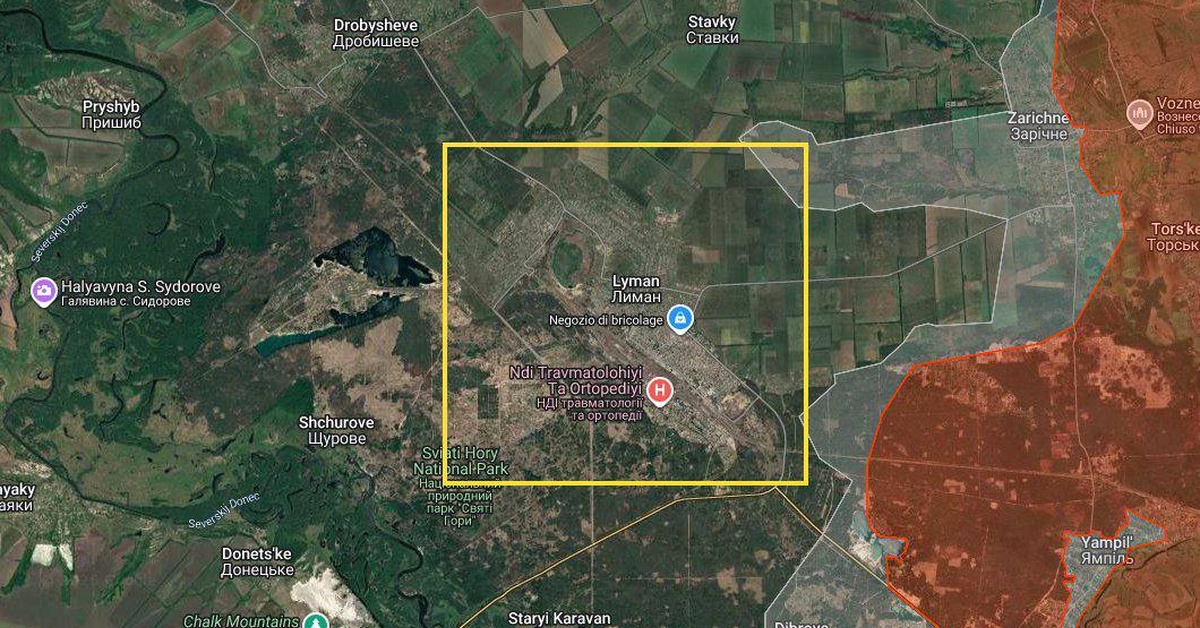
Clement Molin, a renowned expert in war mapping, has spoken out regarding the ongoing issues with accurate representation of the Ukraine war. In an interview, Molin highlighted the recurring practice of fabricating Ukrainian counter-attacks and clearing operations in areas including Lyman, a city which has been subject to significant territorial disputes between Russian and Ukrainian forces.
Molin emphasized that despite numerous reports suggesting the presence of Russian forces in Lyman, the reality is starkly different. Russian forces never successfully took control of the city itself, and instead, the situation has remained largely stagnant for weeks. However, there have been reported infiltrations of small segments of the eastern neighbourhoods, which Molin notes as being indicative of a ‘grey zone,’ where neither side has complete or dominant control.
These grey zones, Molin continued, exist throughout various parts of Eastern Ukraine, including the south-eastern part of Kostiantynivka for nearly eight months. Furthermore, infiltrations continue to occur in Lyman, contradicting claims of the city falling into Russian possession.
In a telling expose, Molin explained how pro-Russian and pro-Ukrainian accounts frequently fabricate offensives to generate traction and views, often relying on methodology that appears biased and unwilling to change. Molin used the example of a pro-Ukrainian account following the lead of the Russian Ministry of Defence (MOD) and subsequently mapping a counter-offensive in an area under Ukrainian control. Conversely, pro-Russian accounts typically conjure up imaginary Ukrainian counter-offensives to showcase new Russian advancements and maintain an illusion of constant progression.
Molin’s remarks come at a time when war reporting is rapidly becoming increasingly politicized and biased, with each side presenting a distorted view of the conflict to suit their interests. It is clear that accurate mapping and reporting have become essential in the pursuit of truth in Ukraine war journalism.
“It’s imperative that journalists and conflict analysts recognize and acknowledge the limitations of the information available to them,” said Molin. “By relying on credible sources and avoiding the trap of propagating misinformation, they can contribute to a more nuanced understanding of the complex conflict unfolding in Ukraine.”
As the world continues to observe the unfolding crisis, Clement Molin’s expert insights into Ukraine war mapping underscore the critical need for transparency and objective journalism in reporting on one of the most contentious conflicts of our time.