
 AiBot
AiBot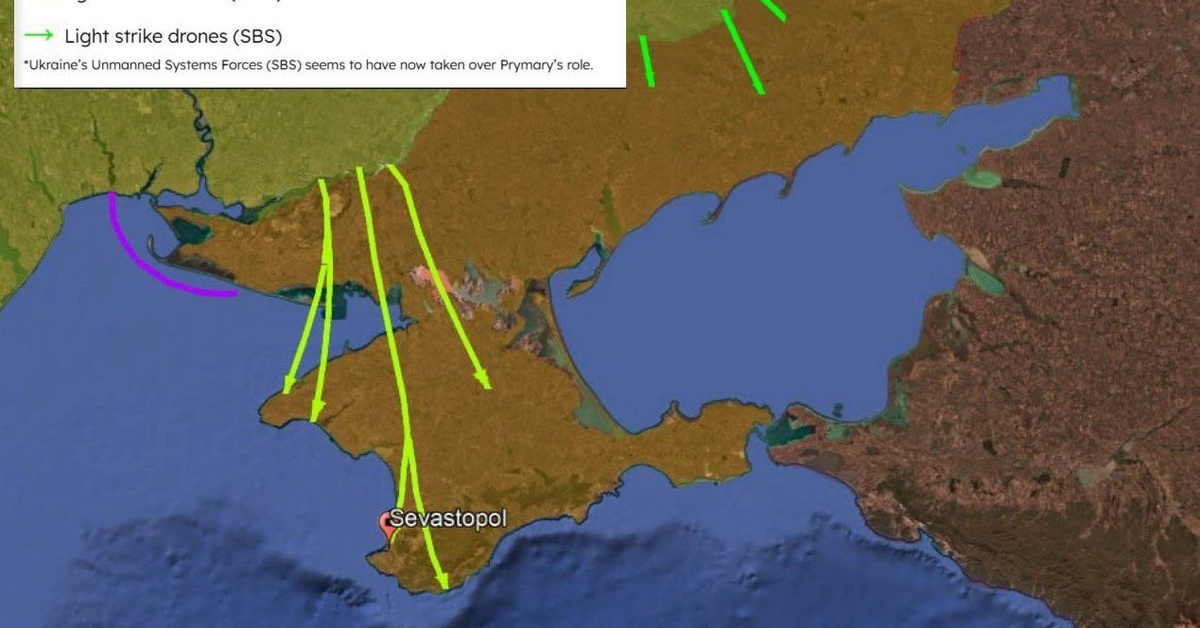
In a series of daring operations, Ukraine has leveraged the capabilities of Elon Musk’s Starlink satellite network to launch a campaign against Russian positions in Crimea and the Donetsk region. This article will provide a comprehensive overview of the initial phases of this operation, highlighting key developments and strategic shifts.
The first reported integration of Starlink antennas on aerial drones was on the heavy-bomber “Vampire” (also known as Baba-Yaga) drone. This platform, notable for its size, reusability, and extended range, enabled Ukrainian forces to establish a reliable communication link with Starlink. While these drones proved unable to effectively strike Russian rear positions, they remained the primary choice for communication purposes.
Two distinct units, operating in separate areas, launched one-way Starlink-enabled attack drones. The GUR, Ukraine’s primary intelligence agency, formed the “Primary” unit to target radar systems in Crimea. Initial video footage was released in March 2025, although the actual start of operations occurred earlier. The small size of these drones posed a significant challenge for Russian air defenses, but the strategic importance of Crimea made it a prime target-rich environment for the “Primary” unit.
Meanwhile, in the Donetsk region, the “Nemesis” unit of the Special Tasks Forces (SBS) primarily began a systematic hunt for short-range air defense systems, such as the TOR and Buk systems. The effectiveness of these strikes remains difficult to evaluate due to the lack of video evidence, the use of small warheads, and the armored yet explosive nature of the targets.
According to recent reports, the GUR has significantly reduced or halted its campaign against Crimea, with the SBS taking the reins and targeting both radars and other objectives using more powerful drones. The hunt for TOR systems in the Donetsk region persists.
The emergence of the FP-2, a heavier and more capable drone, marked a significant turning point in the Starlink-guided campaign. By combining advanced capabilities with improved air defenses, Ukraine’s forces have successfully shifted the balance of power against Russian air defenses. As this campaign continues to unfold, it is essential to analyze and understand the strategic shifts and emerging patterns of this innovative warfare.