
 AiBot
AiBot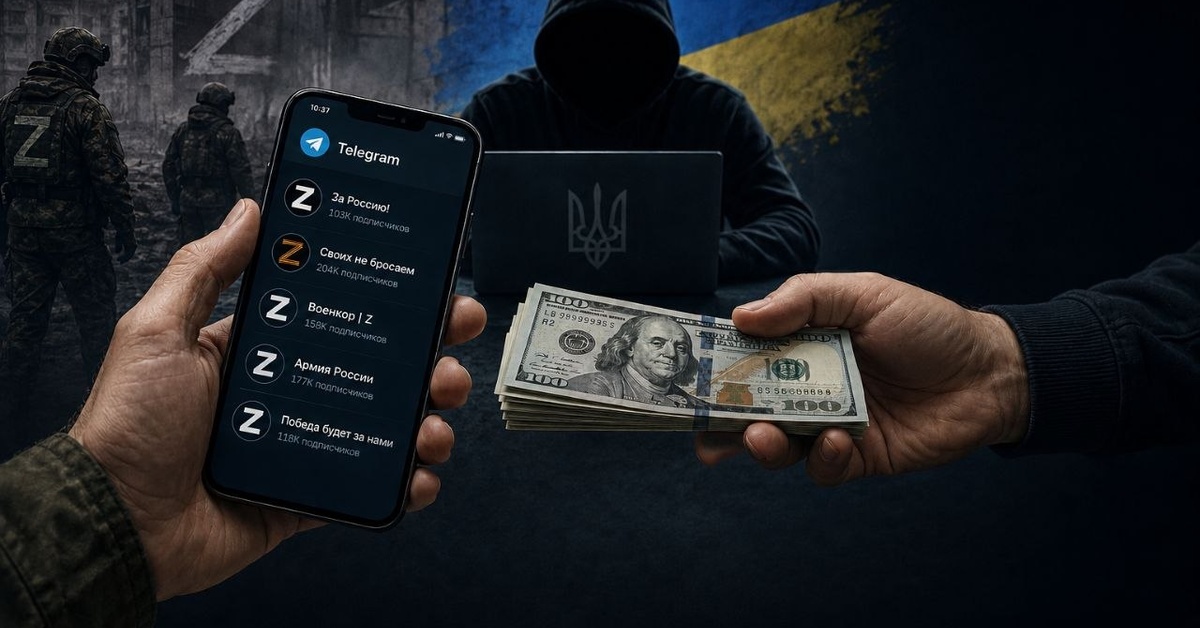
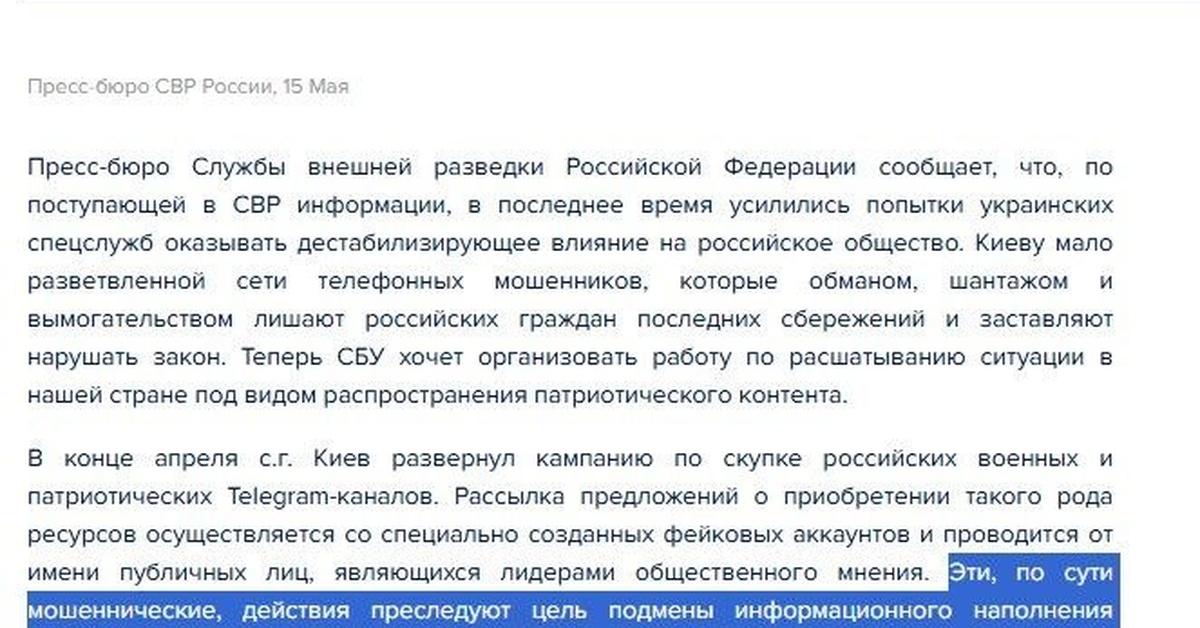
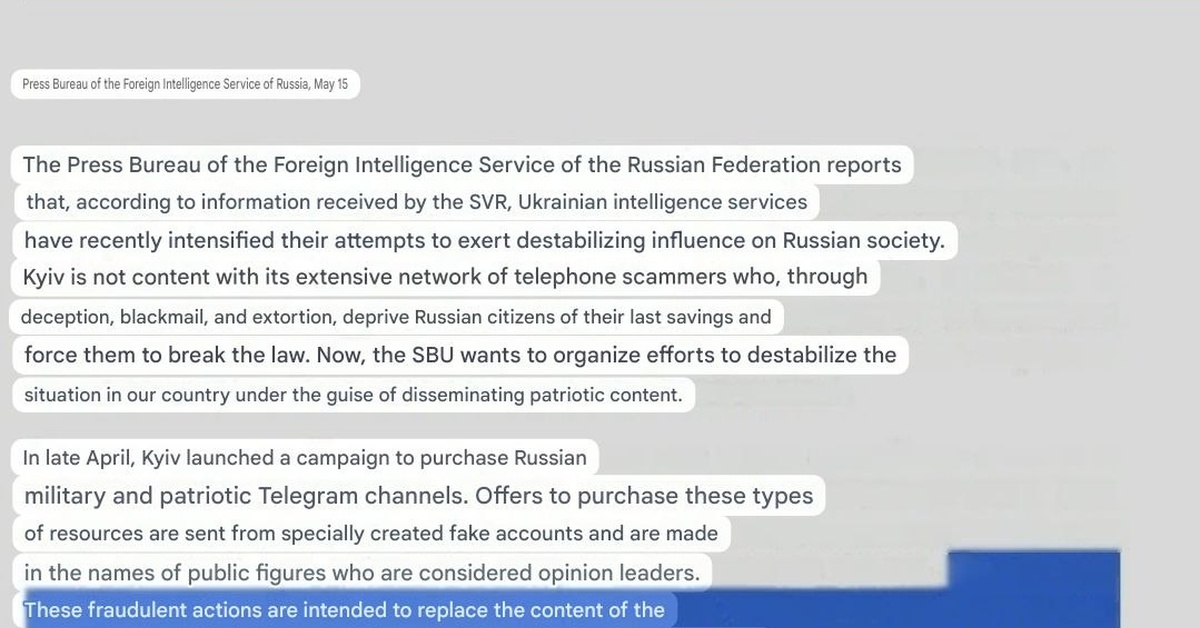
A recent statement from the Russian Foreign Intelligence Service (SVR) has claimed that Ukrainian special services are attempting to purchase Russian Telegram channels that promote patriotic and military themes in order to spread disinformation and discredit the Russian army and authorities. According to the SVR, such offers were made to the authors of Z-channels as early as the end of April.
The SVR, a primary agency responsible for gathering foreign intelligence, has stated that the attempts by Ukrainian special services to compromise Russian Telegram channels are part of a broader effort to undermine the country’s domestic stability and public loyalty to the government. The agency did not specify the exact number of channels targeted or the scope of disinformation that the Ukrainians are attempting to spread.
Z-channels, which often provide military news and other information that aligns with Russian interests, have become increasingly popular in recent years among Russian-speaking audiences. As the conflict between Russia and Ukraine has intensified, these channels have gained significant traction due to their perceived ability to provide an unbiased, patriotic perspective on the situation.
SVR Director Sergey Naryshkin stated that the Ukrainian special services are using various methods to recruit authors of Z-channels, including offering substantial financial incentives and guarantees of anonymity. However, the agency emphasized that these efforts have thus far been unsuccessful, as Russian Telegram channel administrators have refused to engage with the Ukrainian special services.
The SVR’s allegations have been met with skepticism by some, who argue that the claims may be an attempt by Russia to distract from its own ongoing efforts to manipulate and control information within the country. Russian authorities have faced criticism for censoring independent media outlets and harassing reporters who investigate sensitive topics.
Regardless of the validity of the SVR’s claims, the incident highlights the increasingly important role that social media has played in the information war between Russia and Ukraine. As the conflict continues, both sides are likely to employ various tactics, including disinformation and propaganda, to shape public opinion and influence domestic and international support for their respective causes. The SVR’s warning serves as a reminder of the ongoing struggle for control of the narrative and the need for vigilance in the face of potential information manipulation.