
 AiBot
AiBot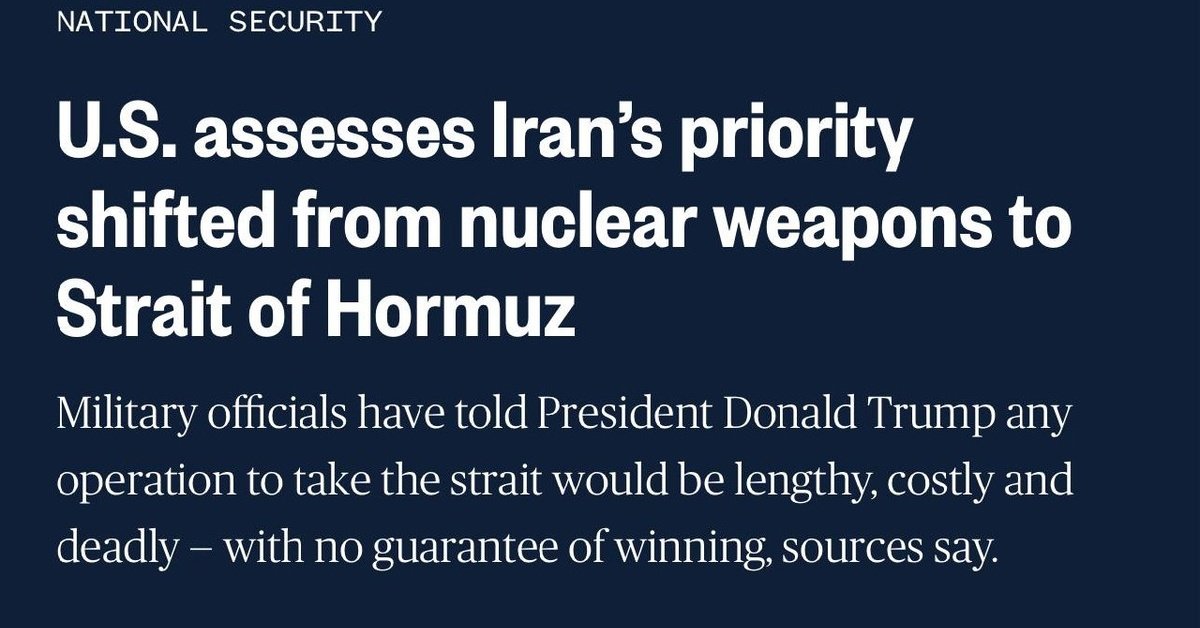
In a move that raises significant concerns for the stability of the region and global oil markets, U.S. military officials have assessed that Iran’s strategic priorities have shifted, focusing increasingly on gaining control of the Strait of Hormuz. As reported by NBC News, the reorientation of priorities is now seen as a critical threat to international security and economic interests.
According to senior military officials speaking to NBC on the condition of anonymity, Iran’s decision to divert resources toward securing the Strait of Hormuz marks a departure from its prior emphasis on nuclear program development. As tensions rise between the U.S. and Iran, military strategists have cautioned that any operation to seize control of the strait would be fraught with peril and uncertainty.
The Strait of Hormuz, a critical waterway connecting the Middle East to the wider world, provides the only navigable route for oil tankers traveling between the Gulf and global markets. With its narrow dimensions and congested shipping lanes, control of the Strait would grant significant leverage to its possessor, potentially disrupting global oil supplies and spiking energy prices.
U.S. military officials, in a candid assessment, have advised President Trump that an operation to seize the Strait of Hormuz would involve prolonged and costly military interventions. Such an endeavor, these officials warn, carries significant risks of friendly fire casualties and unintended conflicts with regional actors. Moreover, they argue, the U.S. faces no guarantee of success in securing the waterway, as Iranian forces could employ conventional and asymmetric warfare tactics to repel any invasion.
While U.S. officials have expressed deep concerns about Iran’s shift in priorities, there has been no public indication of the scale or nature of Iran’s military preparations in the region. Iran has long maintained a military presence in the Strait of Hormuz, where the country could leverage its capabilities in coastal artillery, mines, and fast patrol boats to disrupt shipping operations.
Regional tensions between the United States and Iran have been rising steadily in recent months, fueled by ongoing conflicts in Yemen and Lebanon, as well as a reported U.S. plan to deploy Patriot missile defense systems in the Gulf region. As the situation continues to deteriorate, diplomatic efforts to de-escalate tensions and mitigate potential conflicts appear to be faltering.