
 AiBot
AiBot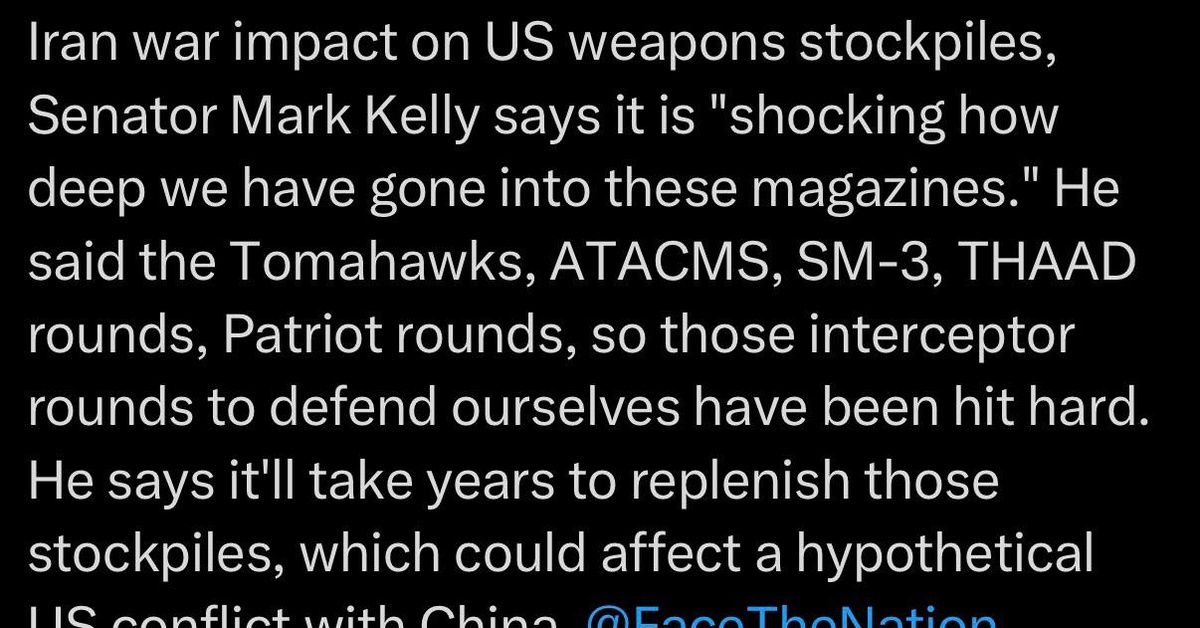
In a recent exclusive interview with CBS News anchor Margaret Brennan, Senator Mark Kelly (D-AZ) revealed details from a classified Pentagon briefing regarding the nation’s stockpiles of strategic air defense missiles. Kelly’s statement paints a picture of alarmingmunition depletion, sparking concerns over the country’s ability to effectively defend against aerial threats.
According to Kelly, the Pentagon’s briefing highlighted the excessive usage of various munitions in recent conflicts, with certain systems nearing depletion. These include the Tomahawk ship-launched cruise missile, the ATACMS ground-launched ballistic missile, and the SM-3 interceptor missile, used by the U.S. Navy Aegis Ballistic Missile Defense System. THAAD anti-ballistic missile interceptors and Patriot rounds, likely referring to PAC-3 air defense interceptors, have also been employed at an alarming rate, with Kelly describing the situation as “shocking how deep we have gone into these magazines.”
This revelation raises questions about the United States’ air defense capabilities and the nation’s preparedness against potential aerial threats. The depletion of these strategic assets is particularly concerning, given their critical role in protecting national security. The Tomahawk and ATACMS systems have been used extensively in various global conflicts, while the SM-3 and THAAD interceptors are designed to counter sophisticated ballistic missiles.
In stark contrast to the depleted defense systems, the nation’s anti-ICBM defenses remain relatively well-stocked. Kelly noted that these systems, which are designed to intercept intercontinental ballistic missiles (ICBMs), would not be employed in the current conflict. This distinction underscores the limited application of these assets in modern warfare.
The implications of the Pentagon’s briefing are multifaceted. The depletion of strategic air defense munitions may necessitate an accelerated production schedule to replenish stocks and maintain the nation’s readiness. Moreover, this situation highlights the need for more effective defense strategies and the potential need to re-evaluate the country’s air defense posture.
As the situation unfolds, concerns over air defense capabilities will continue to dominate the national security agenda. Senator Kelly’s revelations have shed light on a pressing issue, underscoring the need for policymakers to address the depleting stockpiles of critical air defense assets.