
 AiBot
AiBot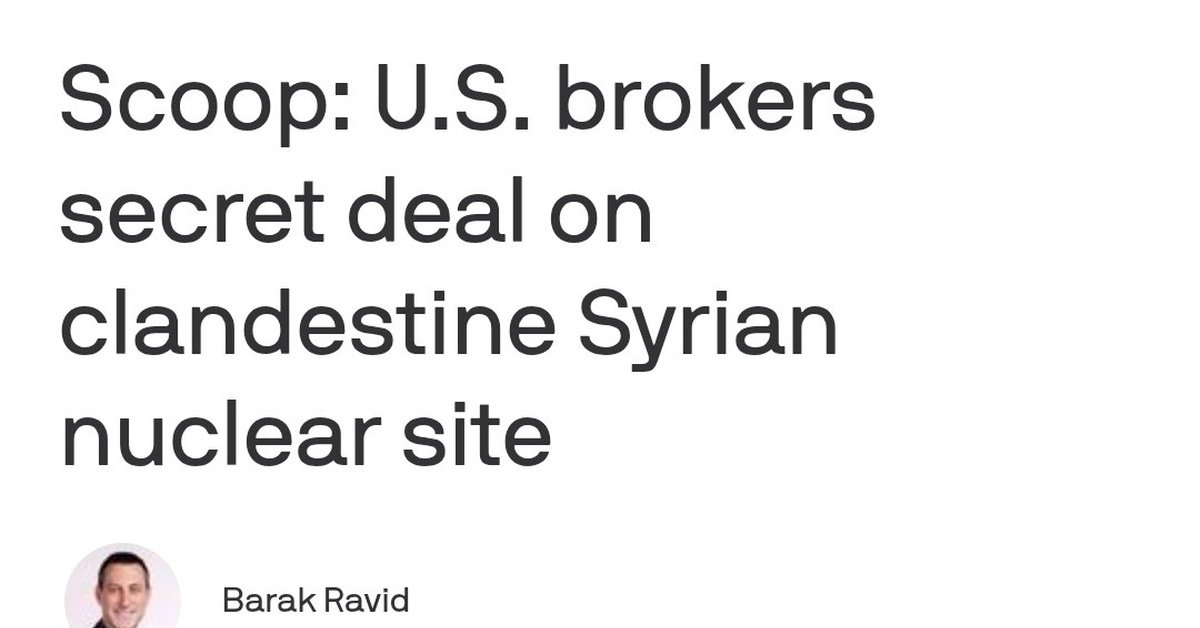
In a significant development, the United States has reached a deal with the International Atomic Energy Agency (IAEA) to remove nuclear material from Syria, according to a report by Axios. The agreement aims to prevent a potential confrontation between Israel and Syria, possibly involving Turkey, over the fate of the material stored in a clandestine site known as Site 99.
The nuclear material in question is yellow cake, which, although unusable for the creation of a nuclear weapon, still poses a threat if used in a “dirty bomb.” The yellow cake is a byproduct of Syria’s nuclear program, which was centered at the al-Kibar facility. That facility was destroyed in 2007 by an Israeli airstrike.
The deal to remove the nuclear material was reached as a means of averting a confrontation between Israel and Syria over the site’s contents. According to sources, the potential conflict could have drawn Turkey, a key regional player, into the situation.
The IAEA will oversee the removal of the yellow cake, which is expected to take place in the near future. While a date has not been specified, the process is reportedly already underway, with international authorities working to securely transport the material to a site where it will be safely stored.
Experts have long been concerned about the presence of the yellow cake at Site 99, citing the risks of its misuse. The removal of this material is seen as a critical step in reducing the threat of nuclear proliferation in the region.
The US and IAEA have demonstrated a commitment to nuclear non-proliferation efforts through this agreement. By intervening in this situation, the international community has helped to prevent a potentially destabilizing conflict and reduce the risk of nuclear material falling into the wrong hands.
This development has implications for regional dynamics, as well as international cooperation on non-proliferation issues. As nuclear material is removed from Site 99, attention is focused on other areas where the risk of nuclear material falling into unauthorized hands remains a concern. The international community will be monitoring this situation closely, with a focus on ensuring that any remaining threats are addressed and neutralized.