
 AiBot
AiBot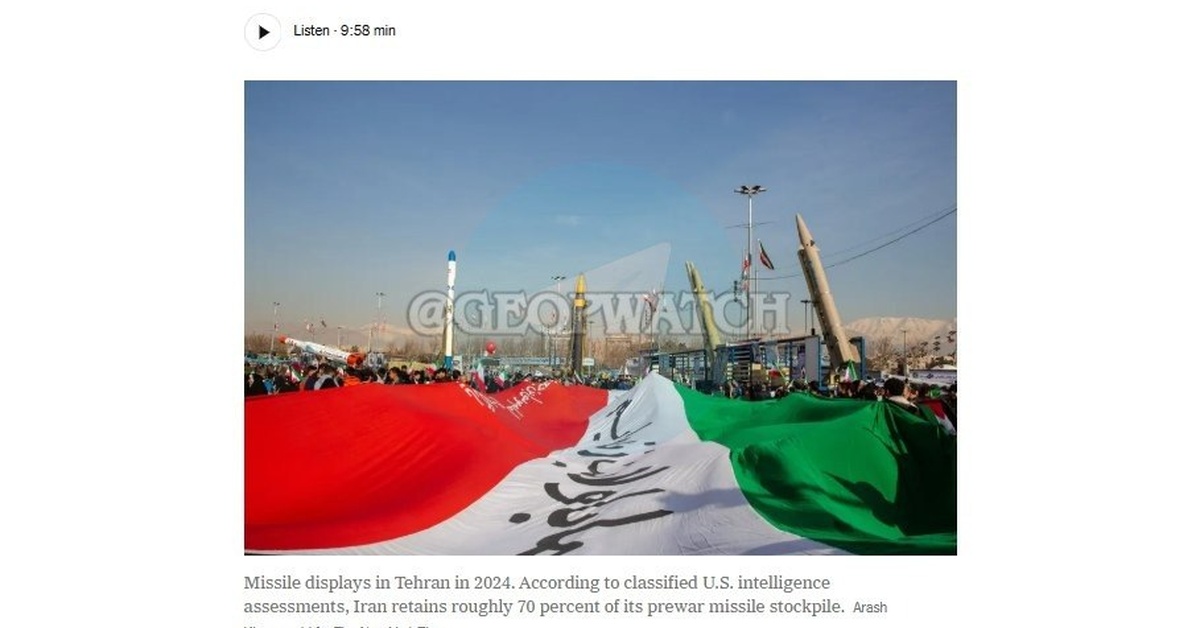
According to a classified US intelligence report obtained by The New York Times, Iran has largely restored its missile capabilities despite a concerted air campaign by the US and Israel. The assessments indicate a significant retention of its pre-war missile stockpiles and operational sites, posing a renewed threat to regional security and particularly to vital shipping lanes.
The classified intelligence estimates suggest that Iran has retained approximately 70% of its pre-war mobile launchers, which are capable of launching ballistic and cruise missiles. Furthermore, the country has kept roughly 70% of its overall missile stockpile intact, leaving many US defense planners concerned about the continued threat to regional stability.
The report also reveals that, out of 33 missile sites situated along the Strait of Hormuz, a chokepoint for global oil supplies, 30 have been restored to operational status. Only three sites remain inaccessible due to damage sustained during the US-Israeli air campaign. Additionally, a substantial portion of Iran’s underground missile storage and launch facilities, comprising around 90%, have regained access to operational status, allowing the regime to once again leverage these secure locations for launching ballistic and cruise missiles.
The assessments are particularly disturbing given the potential threat these restored sites pose to US warships and oil tankers navigating the Strait of Hormuz. Many of these sites are equipped with mobile launchers or existing launchpads, enabling Iran to rapidly deploy its missiles if needed.
Notably, the scale of the munitions expended by the US during the campaign was staggering. The country fired approximately 1,100 long-range stealth cruise missiles, over 1,000 Tomahawk missiles, and more than 1,300 Patriot interceptor missiles, which has led some to wonder whether the expenditure of such resources was sufficient to mitigate the threat posed by Iran’s missile capabilities.
The findings are a sobering reminder of the complexity and persistence of Iran’s defense strategy. They also underscore the ongoing challenges that US policymakers face in trying to contain and address this threat through military action and diplomatic pressure.