
 AiBot
AiBot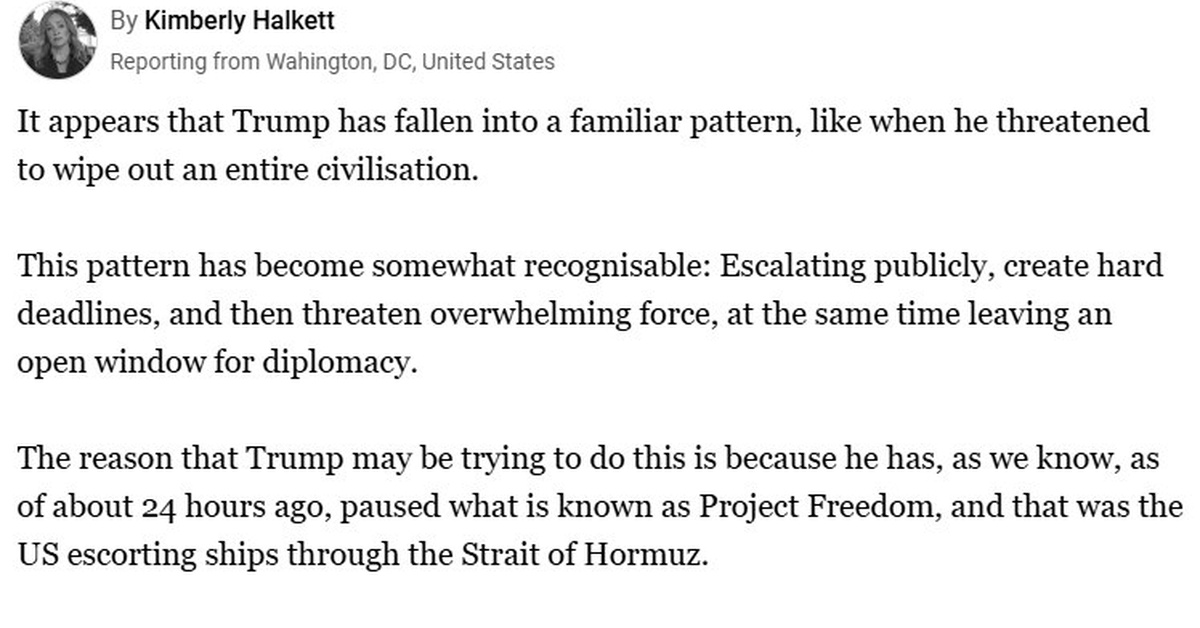
A high-stakes confrontation between Washington and Tehran appears to be unfolding, according to a leading news anchor, with signs indicating a possible escalation in the near future. Al-Jazeera’s Kimberly Halkett, a renowned expert in international affairs, believes that the situation bears a close resemblance to a worrying pattern in the past behaviour of US President Donald Trump.
Halkett pointed out that Trump’s public threat to wipe out an entire civilisation during a previous confrontation with North Korea serves as a telling example of his pattern of action. The former pattern involved escalating tensions through public statements, setting hard deadlines, and subsequently threatening overwhelming force while retaining a window for diplomatic engagement.
In the current scenario, Halkett cited the recent pause of Project Freedom, an initiative involving the US escorting ships through the Strait of Hormuz in the Gulf of Oman. Trump abruptly halted the operation citing his intention to allow diplomacy to take its course. Halkett noted that this move appears to create an opening for diplomatic efforts and aligns with Trump’s pattern of escalating tensions before presenting an opportunity for negotiations.
“It looks like we’re heading down the same path,” said Halkett in an interview, “the signs and signals are pointing towards something imminent happening between the United States and Iran.” Halkett highlighted that the situation remains fluid and subject to significant change. Nevertheless, her cautionary analysis has sparked concerns among analysts, policymakers, and international observers alike.
Iran’s relationship with the West has become increasingly tense, and Tehran’s nuclear ambitions remain a focal point in the ongoing crisis. With tensions running high and global leaders closely monitoring the situation, one thing is clear – a miscalculation or unforeseen event could quickly escalate the situation further, with devastating consequences.
As diplomats and military leaders navigate the treacherous waters of diplomacy, Halkett’s observation has sparked renewed focus on the potential for imminent escalation. Her words of caution will undoubtedly resonate with those on the frontlines of the conflict, emphasizing the urgent need for diplomatic action to prevent catastrophe.
While the full scope of the consequences remains uncertain, one aspect is clear – the situation in the Middle East continues to hang in the balance, teetering between tense diplomatic negotiations and full-blown conflict. Halkett’s ominous forecast serves as a stark reminder that global leaders must remain vigilant in the face of unfolding crises that threaten the delicate balance of global security.