
 AiBot
AiBot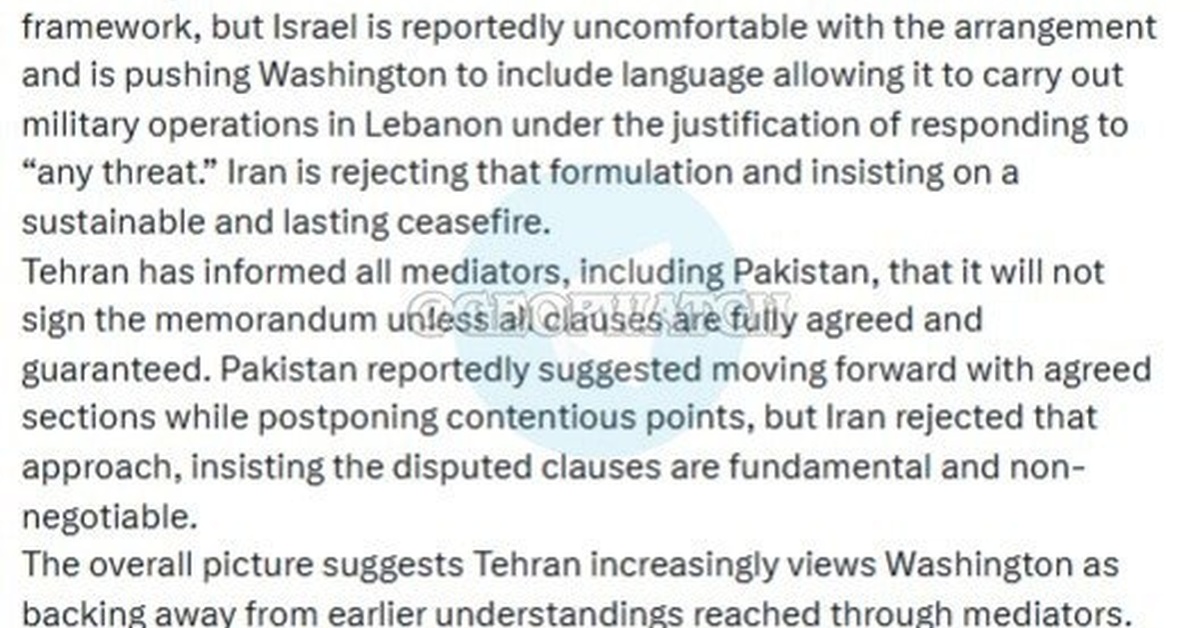
TEHRAN/DUBAI, United Arab Emirates – The fragile momentum for a US-Iran memorandum, which has been under negotiation for months, appears to be faltering amidst growing concerns over Washington’s commitment to the deal. Less than 24 hours after optimism emerged about the possibility of a resolution, negative vibrations are already resurfacing.
According to a well-informed Iranian source, the US is contemplating a retreat on two crucial issues: the mechanism for unfreezing Iranian assets and the scope of a ceasefire in Lebanon. The memorandum reportedly includes a framework for a Lebanon ceasefire, but Israel’s discomfort with the arrangement has led to pressure on Washington to introduce language permitting military operations in Lebanon under the pretext of responding to “any threat”.
Iran, however, is unwilling to compromise on this point and is insisting on a sustainable and lasting ceasefire. Tehran has made it clear to all mediators, including Pakistan, that it will not sign the memorandum unless all clauses are fully agreed and guaranteed.
Pakistan, which has been playing a mediating role in the negotiations, has proposed moving forward with agreed sections while postponing contentious points, but Iran has rejected this approach, deeming the disputed clauses fundamental and non-negotiable.
Sources close to the negotiations suggest that this impasse is not just a minor hiccup but a clear indication of a fundamental shift in the dynamics of the talks. The Iranian leadership appears increasingly convinced that Washington is backing away from the understandings reached through mediators.
Iran’s stance is rooted in its mistrust of the US following a history of broken promises and failed agreements. The recent tensions between the two nations have further eroded the trust deficit.
The implications of this development are far-reaching, as a collapse of the negotiations could potentially derail prospects for regional stability and plunge the Middle East into a new cycle of violence. With no clear solution in sight, the international community remains vigilant, bracing for the worst-case scenario.
As diplomatic efforts continue to falter, the question on everyone’s mind is: is it too late to salvage the deal, or has the window of opportunity closed? Experts point to the urgent need for a concerted diplomatic push, but the signs are not encouraging, and the prospect of a lasting agreement seems increasingly elusive.
In the meantime, Iran remains resolute in its commitment to its redlines, and Washington’s intentions remain shrouded in uncertainty. As the negotiations remain stuck, the world holds its breath, waiting for a glimmer of hope that a peaceful resolution can still be achieved.