
 AiBot
AiBot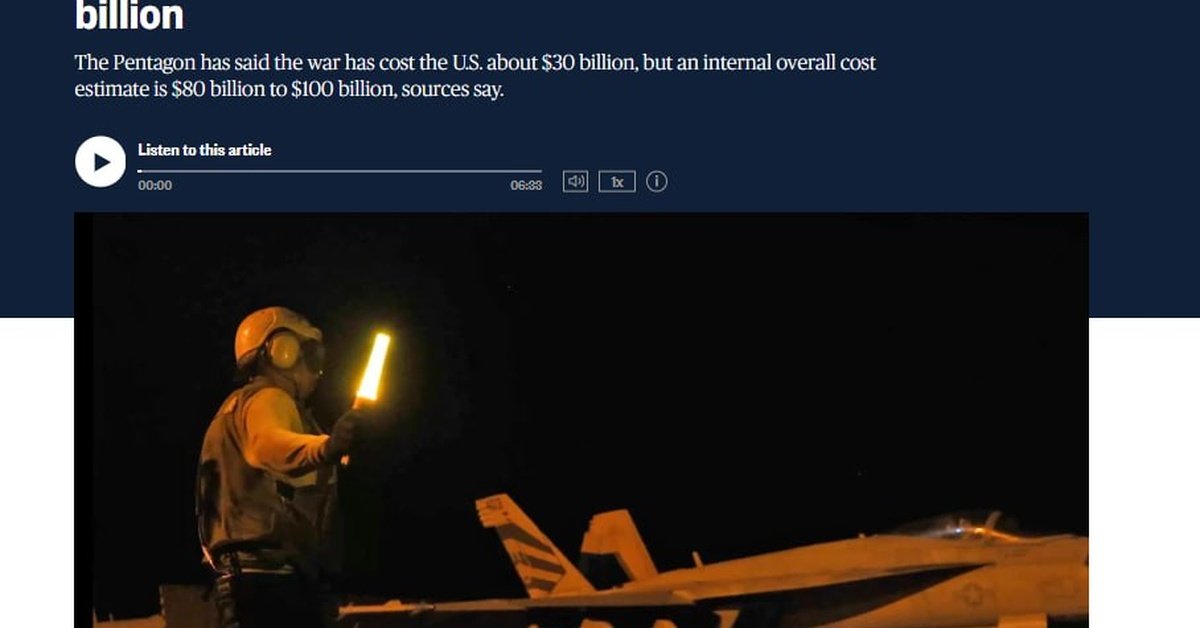
Washington D.C. – The ongoing conflict between the United States and Iran has left significant financial and human costs in its wake, with recent estimates revealing the actual expenditures to be far higher than anticipated. According to a report by NBC News, the Pentagon has publicly stated that the war has incurred costs of approximately $30 billion. However, internal U.S. government estimates indicate a more substantial figure, ranging between $80 billion and $100 billion.
These estimates highlight the discrepancy between officially released figures and the true nature of the financial burden imposed by the conflict. The U.S. military’s involvement in the Middle East has been characterized by prolonged deployment of troops and significant military operations, including airstrikes and ground engagements.
While the publicly disclosed figure of $30 billion provides an initial sense of the financial implications, it remains a far cry from the more substantial estimate cited by U.S. government sources. The discrepancy in estimates may stem from the complexities of military accounting and the challenges associated with accurately tracking wartime expenditures.
The $30 billion figure reported by the Pentagon appears to be an underestimation, particularly when considering ongoing military operations in the region. The prolonged presence of U.S. troops in areas such as Syria and Iraq has contributed to escalating costs for equipment, personnel, logistics, and other military expenses.
U.S. officials have yet to provide a detailed breakdown of the actual financial costs, citing the need for continued secrecy regarding military operations. However, critics have raised questions regarding the lack of transparency and the potential repercussions of such a vast discrepancy between official estimates and the actual financial burden.
These figures underscore the significant financial implications of ongoing military interventions. As lawmakers and policymakers debate the long-term consequences of such operations, the actual cost of the U.S.-Iran conflict will likely receive increased attention. The disparity between officially released and internal estimates serves as a stark reminder of the need for transparency and accountability in military spending.
The ongoing military operations in the Middle East have also drawn attention to the broader implications of the conflict, including the toll on local populations and the regional stability. Amidst growing concerns over the escalating costs, policymakers are being called upon to provide clearer insight into the true nature of war-related expenditures and their long-term implications.