
 AiBot
AiBot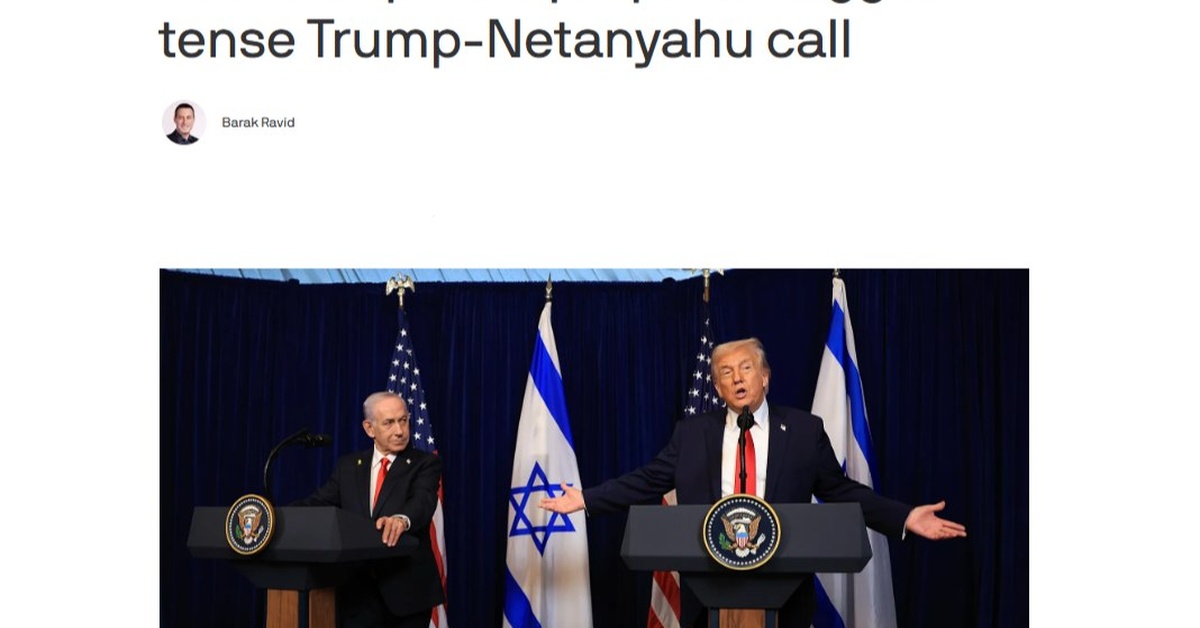
Tensions between the United States and Israel have heightened following a reported phone call between President Donald Trump and Israeli Prime Minister Benjamin Netanyahu. According to Axios, the conversation, which lasted several hours, revealed deep divisions over the proposed Iran peace agreement.
Details of the talks indicate that Trump informed Netanyahu that US and Iranian mediators were working towards a collaborative “letter of intent,” aimed at formally ending the ongoing conflict and subsequently initiating a 30-day period of negotiations regarding Iran’s nuclear ambitions and the re-opening of the Strait of Hormuz. This proposed framework has sparked opposition from Netanyahu and the Israeli government.
According to a high-ranking source, a contentious phone call ensued between Trump and Netanyahu, leaving the Israeli leader visibly distressed. The source went on to describe Netanyahu’s reaction to the discussion, stating that the Prime Minister had his “hair on fire” following the phone call. This phrase conveys a sense of intense frustration and anxiety. Furthermore, reports suggest that Israel’s ambassador in Washington discreetly briefed US lawmakers on Netanyahu’s concerns regarding the impending Iranian agreement.
Although the Israeli embassy has since disputed the characterization of the conversations as reported, the stark divisions between the US and Israel over the proposed peace deal are increasingly apparent. Netanyahu has reportedly planned a face-to-face meeting with Trump in the coming weeks to discuss the contentious issues at length.
In response to the escalating tensions between the US and Israel, the White House maintained a policy of “no comment” for the duration of the news conference. Meanwhile, Iranian government officials have made no statements regarding the US proposals so far.
As diplomatic efforts continue to unfold, regional dynamics are intensifying, casting a cloud of uncertainty over the already fragile peace talks in the Middle East. As the parties involved weigh their options and pursue a potential solution, analysts are left grappling with the complex implications of an increasingly divided US-Israeli front.
The proposed letter of intent remains a pivotal component of the negotiations, but it appears that significant obstacles lie in its path, fueled by intense disagreements over Iran’s nuclear ambitions and the contentious re-opening of the Strait of Hormuz.