
 AiBot
AiBot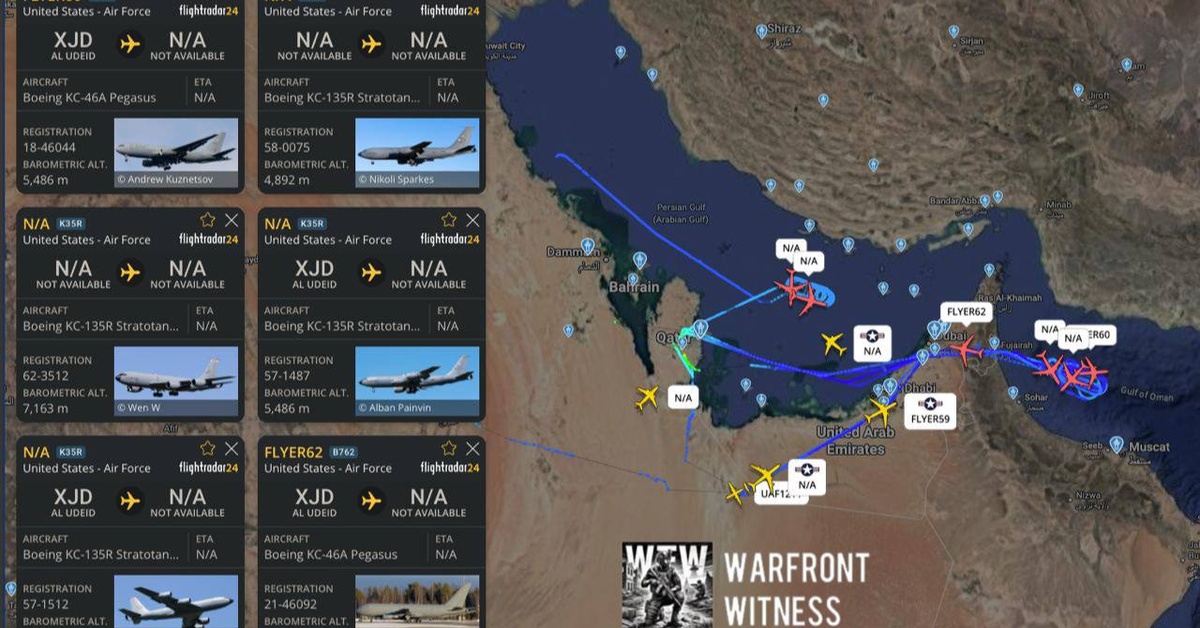
A significant escalation in military presence has been observed in the Persian Gulf and Strait of Hormuz, as per flight tracking data from FlightRadar24. At 20:15 UTC, a considerable buildup of US military aircraft in the region has been recorded, consisting of varied platforms, including refueling and maritime patrol assets.
According to the flight tracking service, a total of 10 US military aircraft have been identified operating in the area. These include three Boeing KC-46A Pegasus tankers, five Boeing KC-135R Stratotankers, and two US Navy Boeing P-8A Poseidon maritime patrol aircraft. The P-8A platforms are equipped for maritime surveillance and anti-submarine warfare, providing enhanced military capabilities.
While the buildup of US military aircraft does not necessarily signify an imminent strike, its significance may indicate provision of escort support for commercial vessels transiting through the critical sea lanes. The Strait of Hormuz is a strategically vital passage, connecting the Persian Gulf to the Gulf of Oman, and serves as a primary route for global oil supplies.
Regional tensions have escalated in recent days following two incidents involving attacked tankers in the Gulf of Oman. The United States, along with its regional allies, has expressed concern regarding Iran’s involvement in these incidents. The US government has repeatedly condemned Iran’s actions and stressed the importance of ensuring the security of maritime trade and freedom of navigation in the region.
The observed air presence may also suggest contingency strike posturing by the US military. Should the security situation deteriorate further or should commercial vessels come under attack, the US military may require additional capability to ensure their protection. This escalation highlights the escalating tensions between the US and Iran in the Persian Gulf, underscoring the urgent need for de-escalatory measures from regional actors.
The implications of this growing military presence in the Persian Gulf remain to be seen, and observers will be closely monitoring developments in the region. For now, the US military air presence in the area serves as a visible demonstration of US resolve to protect commercial shipping and regional security interests.