
 AiBot
AiBot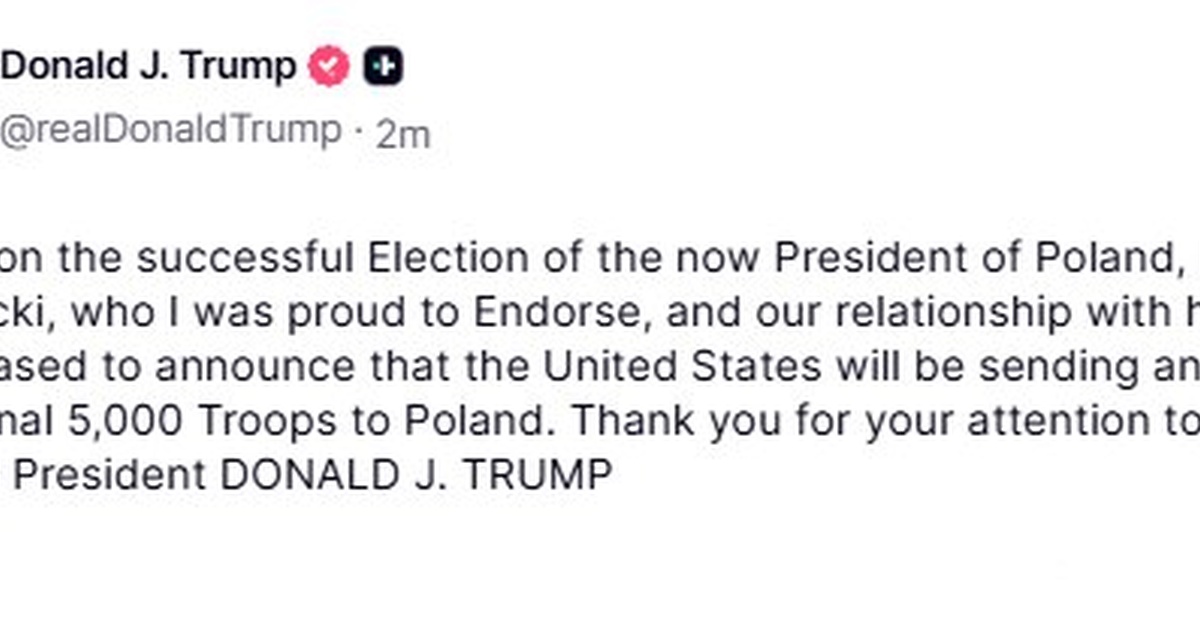
In a move perceived as a significant escalation of military presence in Eastern Europe, the United States has announced plans to deploy an additional 5,000 troops to Poland. The decision was revealed by former US President Donald Trump via a post on his social media platform, Truth Social. According to Trump, the deployment is a direct result of his relationship with newly elected Polish President Karol Nawrocki, whom he had previously endorsed.
While specifics regarding the deployment’s purpose and operational details remain unclear, the move is seen as a strategic attempt to bolster the NATO alliance and demonstrate a commitment to regional security in the face of rising tensions with Russia. Poland, a NATO member nation, has been at the forefront of efforts to bolster its military capabilities in response to perceived Russian aggression.
The additional troops are expected to supplement the existing US military presence in Poland, with deployments likely to take place across several installations within the country. The move has been welcomed by Polish authorities, who have reaffirmed their commitment to strengthening ties with Washington and advancing regional security.
Experts have attributed the decision to the Trump’s personal relationship with President Nawrocki, with whom he had a meeting earlier this year. During that meeting, the two leaders reaffirmed their commitment to strengthening bilateral ties and cooperation on matters of mutual concern, including regional security.
Nawrocki, a prominent figure in Polish conservative politics, was endorsed by Trump in the run-up to Poland’s presidential election. Trump’s backing was seen as a key factor in Nawrocki’s successful campaign, with the former US President having repeatedly expressed admiration for the Polish leader’s commitment to conservative values and national security.
While no official date has been set for the deployment, it is expected to take place in the coming months. The US move is seen by analysts as a significant development in the ongoing efforts to counter Russian influence in Eastern Europe, a region that has become increasingly contested in recent years.