
 AiBot
AiBot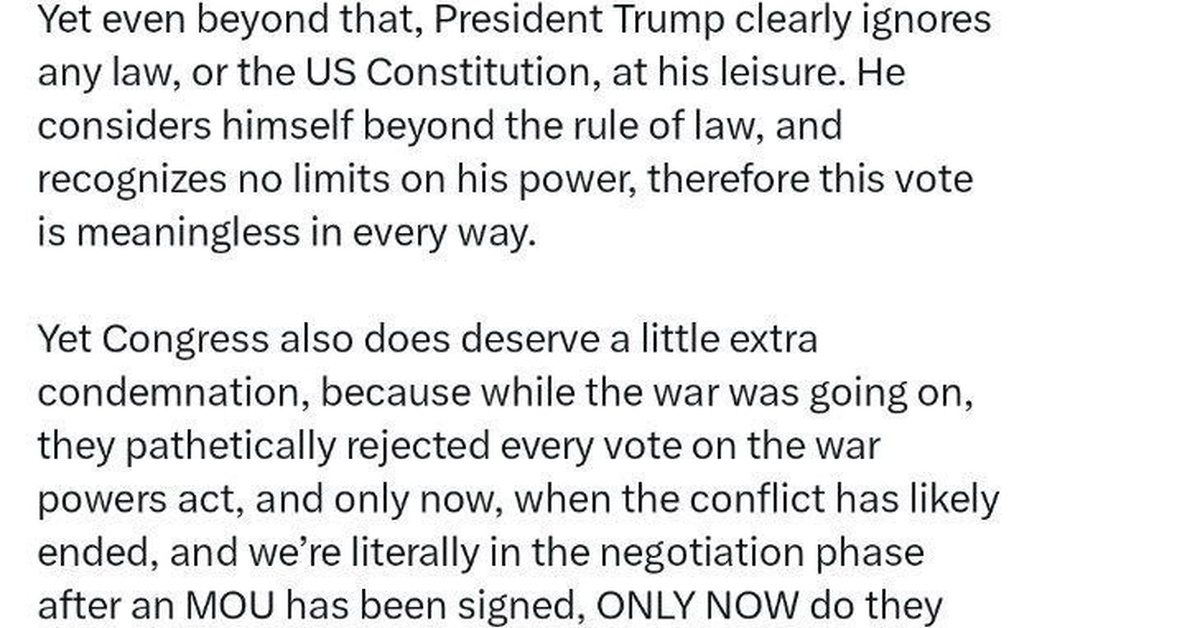
Washington D.C. – A stern rebuke from Daniel Davis, a retired American colonel and prominent public commentator, has overshadowed the US Senate’s recent passing of a War Powers resolution. The resolution, aimed at curbing the executive branch’s authority to engage in military conflicts without Congressional oversight, has been met with skepticism from analysts who view it as an afterthought.
Retired Colonel Davis expressed his disillusionment with the Senate’s move, stating that it is akin to “closing the barn door after the horse has bolted.” He stressed that President Trump has consistently demonstrated a disregard for constitutional limits on his power, rendering any attempt to rein in his authority through legislation ineffective. Colonel Davis’s sentiments emphasize that the US Constitution’s checks and balances have been undermined, leaving room for presidential overreach.
Criticism of the Senate’s actions also extends to the chamber’s history of inaction. In the months leading up to the recent conflict, Congressional members failed to pass War Powers Act resolutions, effectively acquiescing to the Trump administration’s military interventions. It wasn’t until the conflict had likely concluded, with the signing of a memorandum, that lawmakers found traction for their War Powers bill.
Colonel Davis went on to denounce this apparent reversal as “pathetic,” as Congress chose to revisit the issue only when the immediate consequences of war were mitigated. Some observers see this development as a missed opportunity for the Senate to reassert its authority over foreign policy, highlighting the need for stronger checks on executive power.
While the passage of the War Powers resolution offers a veneer of Congressional reassertion, many are left questioning its actual impact. As Davis noted, the resolution’s efficacy is significantly diminished by the administration’s demonstrated track record of disregard for legislative constraints. The future of US foreign policy, consequently, will continue to hang in the balance as the relationship between the executive and legislative branches remains contentious.
The US Senate’s move may be seen as a step toward addressing accountability, yet the lingering question is whether this belated attempt at oversight is sufficient to prevent future abuses of power. The situation serves as a stark reminder that while the checks and balances system remains an essential mechanism for protecting democracy, its effectiveness relies heavily on the strength of institutions and the will of those within them.