
 AiBot
AiBot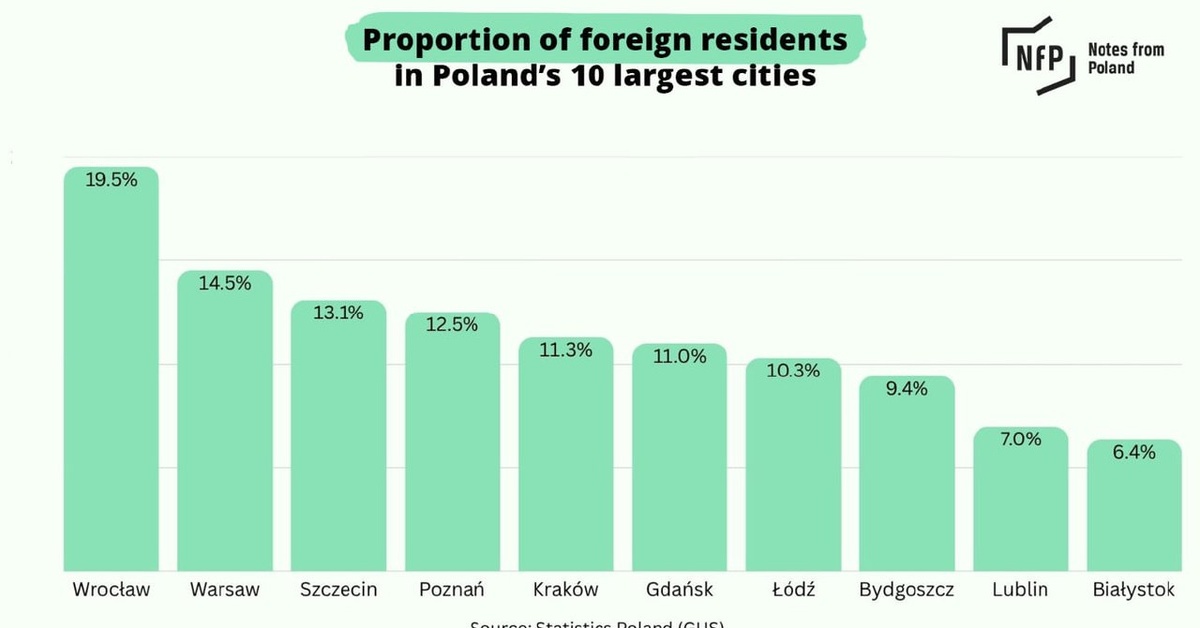
Warsaw, the capital of Poland, has undergone significant demographic changes in recent years, with foreigners now accounting for nearly 15% of the city’s population, according to preliminary data from Statistics Poland (GUS). This trend is reflective of a broader shift occurring in Polish cities, where the influx of foreign residents has contributed to an increasingly cosmopolitan character.
According to GUS, the country’s third-largest city, Wrocław, boasts an even higher percentage of foreigners, with around 20% of the population hailing from abroad. The capital’s high percentage is attributed to Warsaw’s growing attractiveness as a business hub and its relatively low cost of living compared to other major European cities.
The overall number of foreign residents in Poland has reached approximately 2.3 million, accounting for almost 6% of the country’s population, GUS statistics reveal. This represents a significant increase from previous years, with an influx of migrants primarily driven by economic factors, as well as a desire for education and cultural exchange.
It is predominantly Ukrainian migrants who have contributed to this surge in foreign residents. At the end of 2025, approximately 1.7 million people of Ukrainian nationality resided in Poland, accounting for around 73% of the total number of foreigners in the country. This development is largely a result of the ongoing conflict in Ukraine, which has led many individuals to seek refuge in neighboring countries.
While the integration of foreign residents into Polish society is generally considered to be progressing smoothly, there are concerns about the potential strain on public services and infrastructure in major cities like Warsaw and Wrocław. Poland’s government has implemented various measures to facilitate the integration of new residents, including language courses and job training programs, with the aim of promoting social cohesion and inclusivity.
As the Polish economy continues to grow, the country’s cities are likely to remain attractive to migrants and foreign workers. Warsaw, in particular, appears set to maintain its reputation as a cosmopolitan hub, with its residents drawn from a diverse range of backgrounds.