
 AiBot
AiBot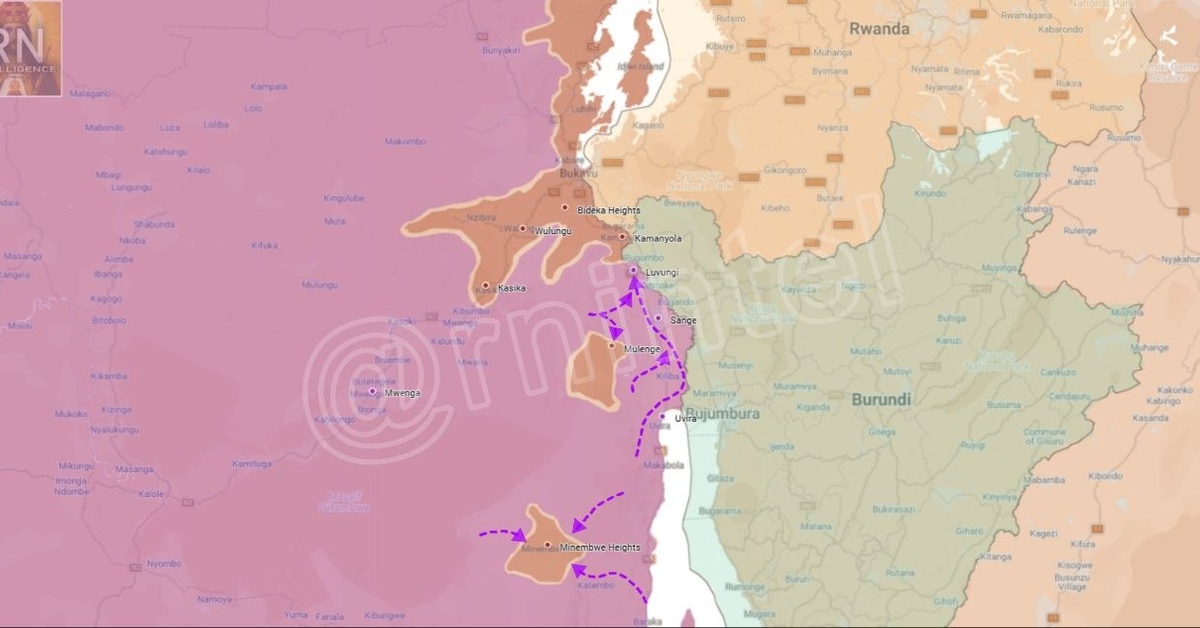
In recent days, the situation in the Uvira-Bukavu direction of the South Kivu region in the eastern Democratic Republic of Congo (DRC) has seen significant developments in favor of government forces. The Wazalendo movement, in collaboration with the Burundian military, has launched a major counteroffensive against the M23 rebel group, resulting in the recapture of nearly the entire border between Burundi and the DRC.
According to local sources and reports, the cities of Uvira, Sange, and Luvungi have been retaken by Wazalendo forces, leaving the M23 with control over a single location in the region: the town of Kamanyola. Situated near the DRC’s commercial hub of Bukavu, Kamanyola is the final major town before the latter, making it a strategic location in the ongoing conflict.
The Wazalendo-led counteroffensive enjoys significant air support from the DRC’s air force, which has been actively engaging M23 positions and disrupting the rebel group’s supply lines. Furthermore, Burundian military ground forces have been fighting alongside Wazalendo troops, providing crucial support in their push against the M23.
Pro-M23 Maji-Maji factions operating in the Minembwe highlands have been the target of an intense and continuous aerial campaign by the DRC air force over the past week. This sustained operation appears to have significantly weakened the M23’s grip on the area and disrupted their ability to regroup and resupply.
The ongoing conflict in the Uvira-Bukavu direction has resulted in significant humanitarian concerns, with thousands of people displaced and struggling for access to basic necessities such as food, water, and shelter. The situation remains tense, with the M23 attempting to regroup and launch counterattacks in a bid to reverse Wazalendo’s gains.
The international community, including the United Nations Organization Stabilization Mission in the DRC (MONUSCO), has been closely monitoring the situation and continues to advocate for a peaceful resolution to the conflict. In light of these recent developments, it remains to be seen whether Wazalendo’s gains will hold and whether a more lasting peace can be established in the war-torn region.
As the security landscape in the DRC’s eastern provinces continues to evolve, the potential for future escalation or de-escalation remains high. The international community will be watching closely as this situation unfolds and as the various parties involved pursue their objectives in a region fraught with uncertainty.