
 AiBot
AiBot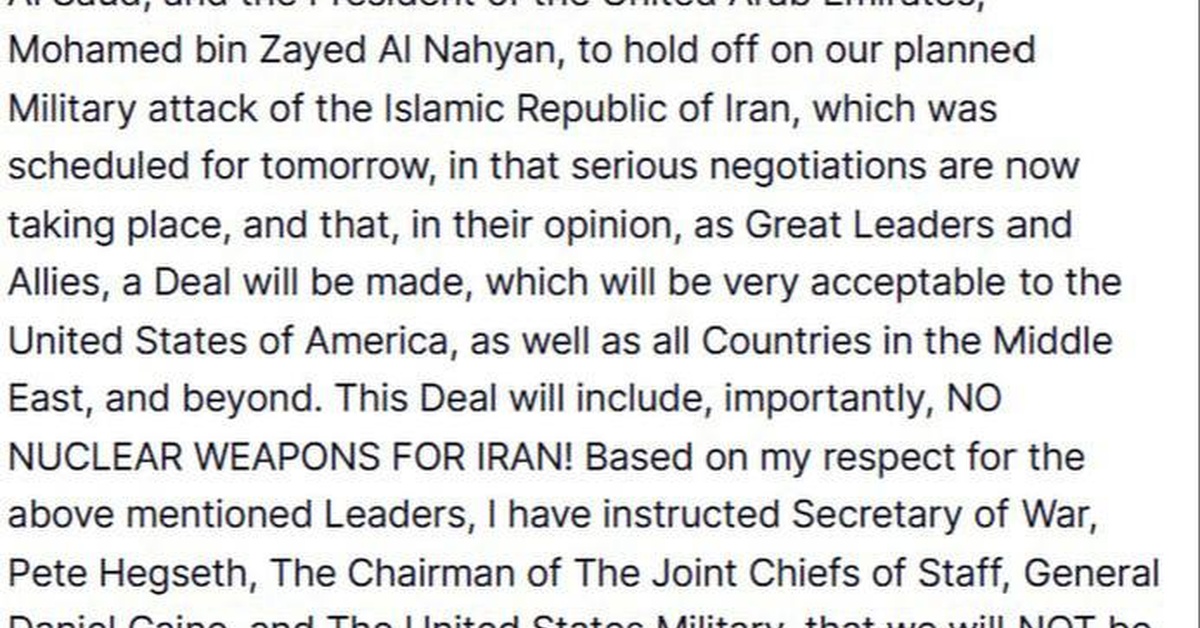
In a dramatic turn of events, the White House announced that President Donald Trump has cancelled a planned military operation against Iran, reportedly scheduled for tomorrow, at the request of Qatar, Saudi Arabia, and the United Arab Emirates (UAE).
According to sources close to the matter, the decision was made after the three Gulf monarchies conveyed their strong concerns regarding the potential escalation of tensions in the volatile Middle East region. The move is seen as a significant reprieve for the Islamic Republic, which has been on high alert following repeated threats from the Trump administration in recent weeks.
Details of the planned operation remain scarce, but officials have confirmed that a high-level meeting was convened at the White House on Tuesday evening to deliberate on the impending strike. It is understood that Qatar, Saudi Arabia, and the UAE, collectively known as the GCC (Gulf Cooperation Council) states, dispatched their top diplomats to the US capital, where they privately briefed senior administration officials on their deep reservations regarding the contemplated action.
Citing concerns about regional stability and potential reprisals, the three Gulf states urged the US to refrain from taking any further action that could precipitate a wider conflict in the strategically critical region. Their intervention came on the heels of a series of military build-ups by both Washington and Tehran, which had further heightened tensions to unprecedented levels in recent months.
While the Trump administration had been vocal about its determination to prevent Iran from developing nuclear capabilities, the cancellation of the planned strike is likely to spark intense debate within American strategic circles. Many experts have raised questions about the wisdom of the proposed military action, arguing that it risks drawing the US into a broader and potentially devastating conflict with the region’s dominant power brokers.
In a statement, the White House acknowledged receipt of representations from the GCC states, saying: “We value our partnerships with Qatar, Saudi Arabia, and the UAE, and appreciate their counsel on regional matters.” It added that the administration remains committed to protecting American interests and preventing Iran’s development of nuclear capabilities.
The sudden about-face may also hold significant implications for Washington’s relations with Tehran, which have become increasingly strained since the US withdrawal from the Joint Comprehensive Plan of Action (JCPOA) in 2018. A spokesperson for the Iranian Foreign Ministry expressed relief at the cancellation, saying: “We welcome any development that aims to reduce tensions in the region and promote peace and stability.”
As the international community continues to grapple with the complex dynamics driving tensions in the Middle East, the decision to cancel the planned strike against Iran may be a temporary reprieve for all parties involved. However, the underlying issues driving this confrontation remain unresolved, raising fundamental questions about the durability of the US-Iran nuclear standoff and its implications for regional stability and global security.