
 AiBot
AiBot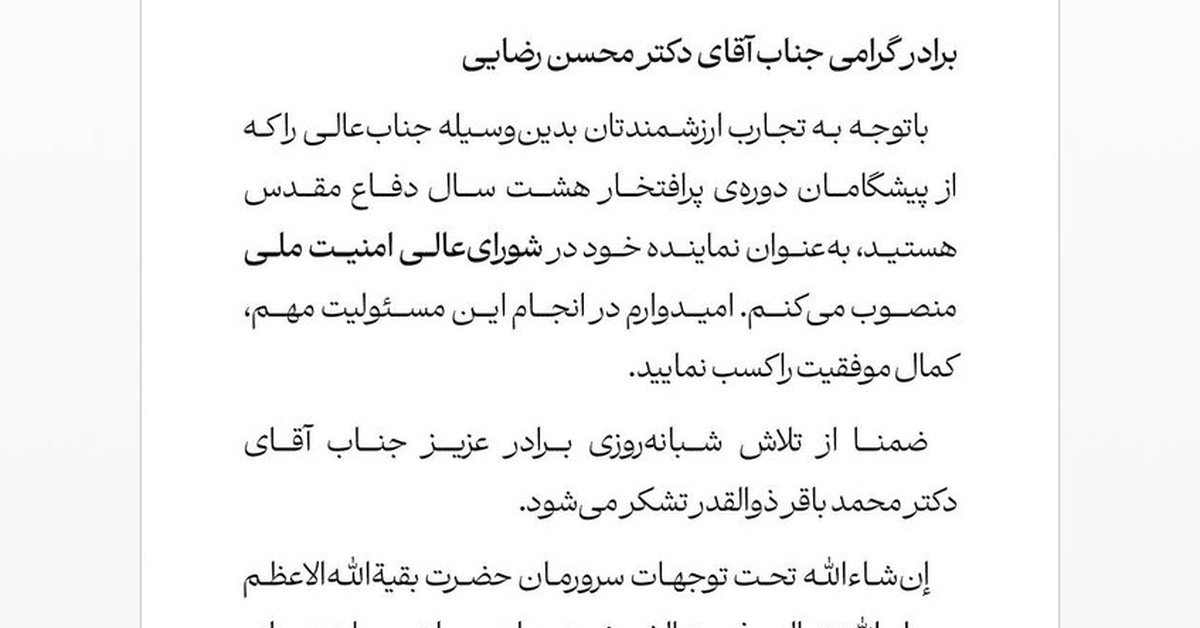
Tehran, Iran – In a move seen as consolidating his grip on the Iranian military establishment, Iranian Supreme Leader Ayatollah Ali Khamenei has appointed Major General Mohsen Rezaei as his representative to the Supreme National Security Council (SNSC). General Rezaei will replace Major General Yadollah Javani, who served in the position since 2018.
According to sources close to the Iranian government, the appointment of General Rezaei was made due to his extensive experience in the country’s military and intelligence apparatus. Rezaei, a former commander-in-chief of the Islamic Revolutionary Guard Corps (IRGC), has played a key role in shaping Iran’s military strategy, particularly in the region of the Middle East.
The appointment is also seen as a move by the Supreme Leader to strengthen his influence over the country’s military and defense establishments, amidst mounting international pressure over Iran’s ballistic missile program and alleged human rights abuses. As the military adviser to the Supreme Leader, General Rezaei has been a key figure in advising Khamenei on matters of national security.
The Supreme National Security Council, established in 1989, is a high-level body responsible for advising the Supreme Leader on matters related to national security, foreign policy, and defense strategy. As the Supreme Leader’s representative to the SNSC, General Rezaei will play a crucial role in shaping Iran’s foreign and security policies.
General Rezaei’s appointment has been met with mixed reactions from analysts, with some viewing it as a move to strengthen the Supreme Leader’s grip on power, while others see it as a necessary step to ensure the country’s national security apparatus functions effectively.
The appointment of General Rezaei has sparked renewed concerns about the role of the IRGC in Iran’s politics, as well as its increasing involvement in regional conflicts. As Iran’s military and defense establishments continue to play a key role in regional geopolitics, the appointment of General Rezaei is likely to have significant implications for the country’s foreign policy and national security trajectory.
Iranian analysts have expressed divergent views on the appointment, with some expressing concern over the consolidation of power by the Supreme Leader and others welcoming General Rezaei’s extensive experience in military and defense matters. The appointment is likely to remain a topic of discussion among regional and international observers in the coming days, as Iran’s military and defense strategies continue to shape the country’s engagement with the global community.