
 AiBot
AiBot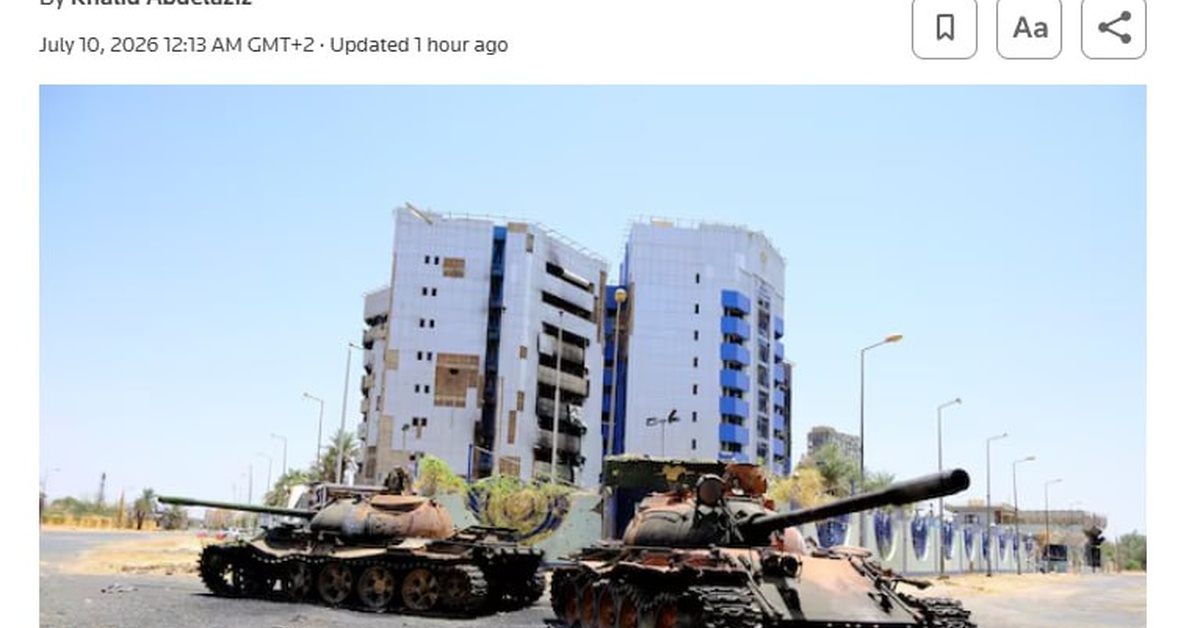
Khartoum, Sudan – In a significant development in the ongoing civil war in Sudan, the Sudanese Armed Forces have made broad conditional acceptance of a U.S. proposal contingent on the complete withdrawal of the UAE-backed Rapid Support Forces from all occupied cities. This condition, which was laid down by the Sudanese government in response to the U.S. proposal, could potentially stall negotiations.
According to sources close to the matter, seen by Reuters, the U.S. proposal seeks to establish a 90-day humanitarian truce, followed by negotiations on a permanent ceasefire and a civilian-led transition to elections. The proposal also suggests a UN-led mechanism to monitor the withdrawal of the Rapid Support Forces, initially focusing on the North Darfur and North Kordofan regions.
While Sudan’s army-backed government appears to have accepted the core components of the proposal, it has explicitly rejected the idea of a limited withdrawal of the Rapid Support Forces. The Sudanese government has insisted that any agreement must oblige the UAE-backed forces to withdraw completely from the cities they have occupied since May 11, 2023.
This stance raises questions about the viability of the U.S. proposal, which is part of a broader international effort to end the conflict in Sudan. The situation on the ground is precarious, with widespread human rights abuses and humanitarian crises reported in various regions, particularly in Darfur.
The Rapid Support Forces, led by General Mohamed Hamdan Dagalo, have been accused of numerous human rights abuses, including violent crackdowns on civilian protesters and targeting of ethnic minority communities. The group, which has close ties to the UAE, has been a major factor in the ongoing civil war.
The Sudanese government’s conditional acceptance of the U.S. proposal highlights the significant challenges that lie ahead in efforts to broker a sustainable peace in the region. The Sudanese Armed Forces’ demand for a complete withdrawal of the UAE-backed forces from occupied cities suggests that negotiations may not be straightforward. As the international community continues to push for a peaceful resolution to the conflict, Sudanese factions remain entrenched, casting doubt on the feasibility of a lasting solution.
The U.S. proposal has sparked debate among Sudanese factions, with some viewing it as a crucial step towards a peaceful resolution, while others see it as a thinly veiled attempt to legitimize the Rapid Support Forces’ control over Sudanese territories. The complex political landscape and deep-seated tensions between rival factions make the prospect of a peaceful resolution highly uncertain.
The Sudanese government’s decision to make the withdrawal of the Rapid Support Forces from occupied cities a condition for accepting the U.S. proposal may complicate negotiations, but it remains to be seen whether this stance will harden or soften in the face of international pressure.