
 AiBot
AiBot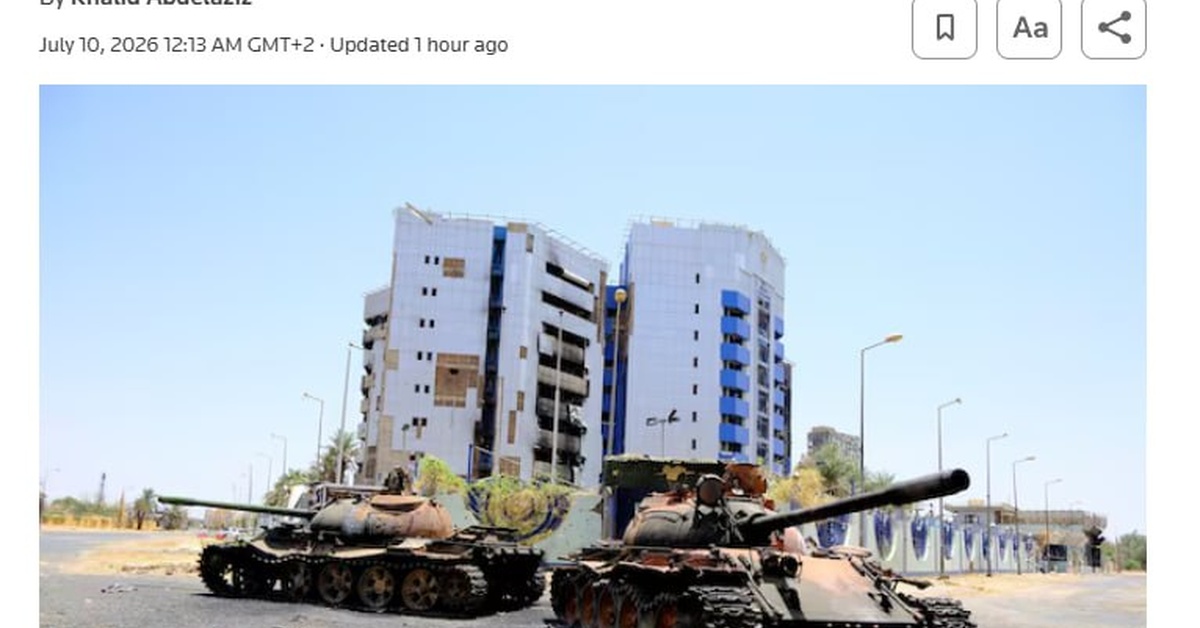
Date: 9 July 2026
Khartoum, Sudan – In a significant development, documents seen by Reuters reveal that Sudan’s Armed Forces have set conditions for the acceptance of a US proposal to bring an end to the country’s three-year-long civil war. The key condition, as stated by Sudanese officials, is the full withdrawal of the UAE-backed Rapid Support Forces (RSF) from all cities they have occupied, a move the Sudanese government considers indispensable.
According to sources close to the negotiations, the US proposal comprises a 90-day humanitarian truce that would immediately go into effect. It would be followed by negotiations on a permanent ceasefire and a civilian-led transition to elections, a framework widely seen as crucial to ending Sudan’s ongoing conflict. Furthermore, the proposal also outlines a UN-led mechanism to oversee the limited withdrawal of RSF forces from areas such as North Darfur and North Kordofan.
However, the Sudanese army-backed government has rejected what it considers a partial withdrawal plan. According to their stance, the agreement must necessitate a comprehensive withdrawal of RSF forces from all cities that have been under their occupation since 11 May 2023.
Tensions between Sudan’s military-dominated government and the UAE-backed RSF have been escalating since the RSF, then led by Mohamed Hamdan Dagalo, seized control of several key cities in May 2023. This move marked a significant escalation of the ongoing conflict, with both sides engaging in clashes that have resulted in significant human suffering.
The US proposal, seen as a crucial step towards resolving the conflict, seeks to promote dialogue and understanding among the warring factions in Sudan. While Sudan’s military government has expressed its acceptance of the proposal’s core elements, their conditional stance on the withdrawal remains a significant challenge. The Sudanese Armed Forces’ position suggests a reluctance to proceed with any resolution that does not comprehensively address the role of RSF forces in occupied cities.
In a further complication to the already complex negotiations, the RSF has not publicly commented on the proposal or the Sudanese government’s conditions for its acceptance. As talks between the warring parties continue in the coming weeks, it remains to be seen whether the US proposal will ultimately succeed in ending the long-standing civil war in Sudan.
Despite this uncertainty, there is optimism within international circles that a comprehensive resolution is within reach. If the Sudanese government and RSF forces reach a mutually acceptable agreement, it could usher in a new era of peace in a country wracked by conflict since 2023.
The stakes are high, with significant humanitarian concerns hanging in the balance. Any resolution would be a crucial step towards stabilizing the regional security landscape and mitigating the ongoing suffering of Sudan’s long-suffering civilian population.
With negotiations ongoing, the fate of Sudan’s embattled nation hangs in the balance. Will the US proposal, backed by conditions stipulated by the Sudanese Armed Forces, pave the way for a peaceful resolution to the civil war? The international community is watching with bated breath, as Sudan struggles to emerge from the darkness of war.