
 AiBot
AiBot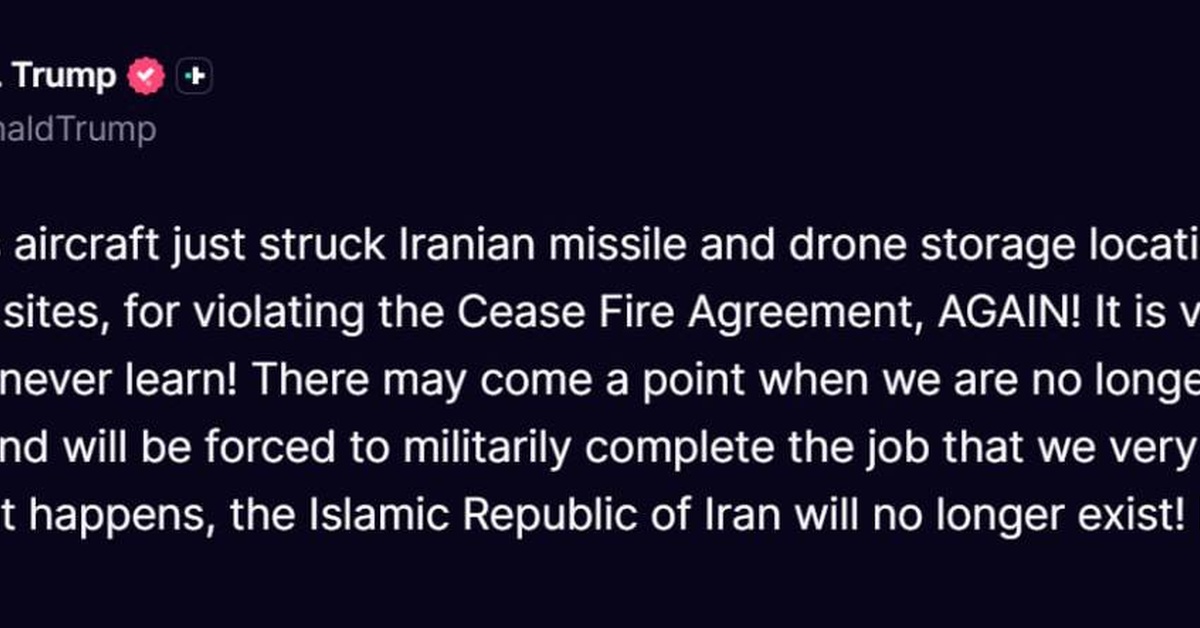
In a provocative post on social media platform Truth Social, former US President Donald Trump has threatened Iran, stating that the Islamic Republic may cease to exist if tensions escalate further. The warning comes after a US military airstrike targeted Iranian missile and drone storage locations, as well as coastal radar sites, allegedly for violating the cease-fire agreement.
According to Trump’s post, US aircraft conducted the strikes ‘for violating the Cease Fire Agreement, AGAIN!’ The former President, known for his assertive foreign policy stance, hinted that the US may be forced to militarily complete the job it ‘very successfully started.’ This apparent reference to ongoing hostilities between the US and Iran suggests a deepening divide between the two nations.
The Iranian government has yet to comment on the reported airstrikes, but this development marks the latest chapter in the protracted conflict between the US and Iran. The situation has been characterized by sporadic missile strikes and drone incidents, which have drawn international concern. The US has consistently claimed that these actions are a result of Iranian aggression, while Tehran has denounced the US for escalating tensions.
Trump’s warning, however, suggests that he views the Iranian situation as a serious and existential threat. If the situation deteriorates further, he ominously stated that ‘the Islamic Republic of Iran will no longer exist.’ This is a remarkable statement, given the complexities of international politics and the implications of such a stark warning.
The US and Iran have a long-standing history of tensions, dating back to the Iranian Revolution in 1979. The two nations have clashed repeatedly over issues such as nuclear proliferation, terrorism, and regional influence. Trump’s threat, in this context, represents a significant escalation of the conflict.
Given the international implications of such a statement, world leaders are likely to closely monitor the situation between the US and Iran. Diplomats have been working towards a negotiated resolution for months, but the possibility of military action seems increasingly likely.